
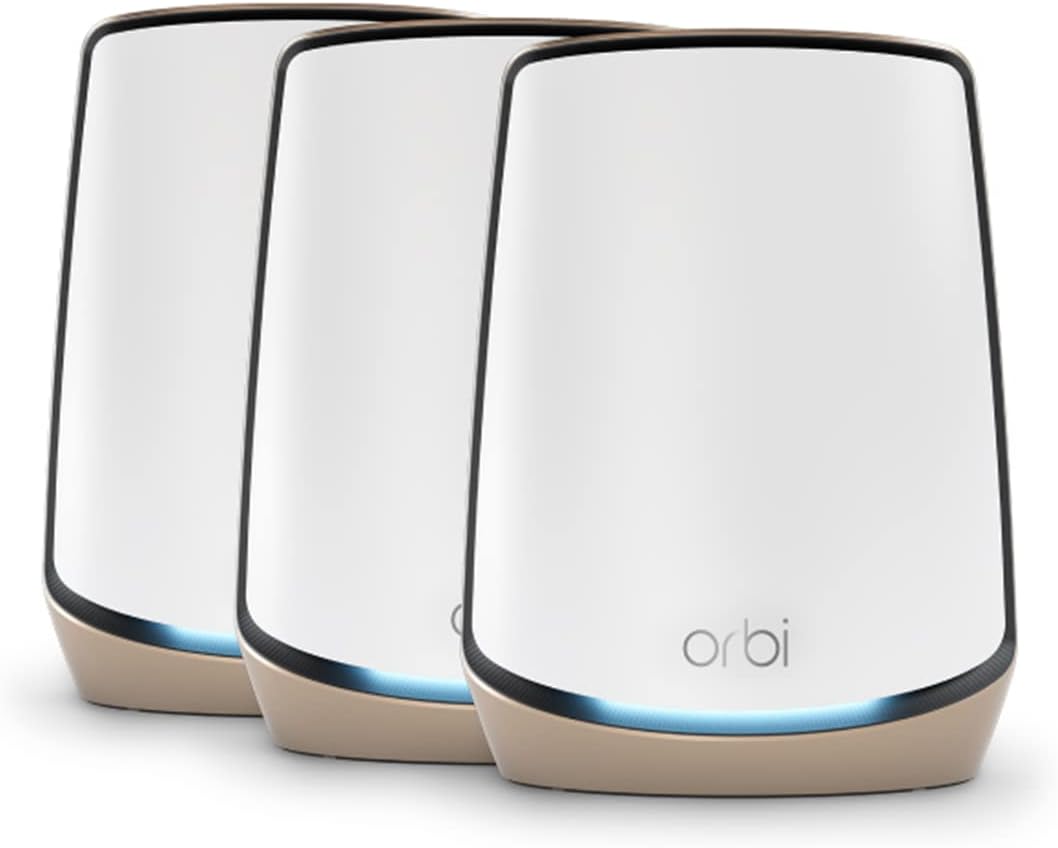
Looking for a mesh system that can actually handle a busy home with streaming, gaming, smart devices, and a future-proof internet connection?

Buy NETGEAR Orbi RBK863S On Amazon
First impressions
When you unbox the NETGEAR Orbi Tri-Band WiFi 6 Mesh Network System (RBK863S) — Router + 2 Satellite Extenders, you’ll immediately notice the premium feel. The units are larger than basic routers because they pack more antennas and cooling considerations, which is part of why NETGEAR markets improved coverage and performance.
You’ll also recognize that this is a lifestyle purchase: it’s made to replace multiple access points and to be left in visible places, so design and ease of use matter. The package promises up to 6Gbps combined WiFi speeds and coverage up to 8,000 sq. ft., so your expectations should be on performance and range rather than a compact footprint.
NETGEAR Orbi Tri-Band WiFi 6 Mesh Network System (RBK863S) – Router + 2 Satellite Extenders, Security Features, Up to 6Gbps, Up to 8,000 sq.ft., 100 Devices, 10 Gig Internet Port, Armor Subscription
Key specifications at a glance
Below is a quick reference table to help you see the core specs at a glance. Use it to confirm fit for your home and internet plan before diving deeper into the review.
| Feature | What it means for you |
|---|---|
| Model | NETGEAR Orbi Tri-Band WiFi 6 Mesh Network System (RBK863S) — Router + 2 Satellite Extenders |
| WiFi Standard | WiFi 6 (802.11ax) tri-band, including a dedicated backhaul |
| Maximum combined speed | Up to 6Gbps (aggregate across bands) |
| Coverage | Up to 8,000 sq. ft. (including front and back yards) |
| Device capacity | Supports up to 100 connected devices |
| Internet port | 10 Gig internet port (for cable or fiber up to 10Gbps) |
| Security | NETGEAR Armor (1-year subscription included) |
| Antenna design | Upgraded patented antenna design (20% coverage/performance boost over prior gen) |
| Compatibility | Compatible with any Internet Service Provider; made for use in the U.S. only |
| Special notes | Patented tri-band + dedicated backhaul ensures sustained speeds across many devices |
Design and hardware
You’ll find the Orbi RBK863S system visually modern and intentionally designed to sit out in the open rather than be hidden away. The shape and size are tuned to accommodate internal antennas and airflow, which helps the system maintain peak throughput during heavy loads.
Because NETGEAR emphasizes range and sustained speeds, the hardware isn’t trying to be the smallest on the shelf. That’s a trade-off you’ll accept if coverage and performance are your priorities. The build quality feels solid, and ventilation is adequate for extended high-throughput operation.
Antenna and coverage technology
The upgraded patented antenna design is a practical advantage for you — NETGEAR claims a 20% boost in coverage and performance compared to their previous generation. That improvement translates to fewer dead zones in multi-story homes and better outdoor reach to patios and yards.
The tri-band architecture uses a dedicated backhaul band, which helps ensure that communication between the router and the satellites doesn’t steal bandwidth from your devices. For you, that means when multiple devices are streaming, gaming, or video conferencing, the backhaul keeps system-to-system traffic separate and preserves client performance.
Ports and physical setup
One of the headline hardware features is the included 10 Gig internet port. If you have or plan to get a multi-gig fiber or cable plan, that port allows you to connect directly and use very high-speed internet without the internet connection being bottlenecked by the router.
You’ll still need to plan physical placement. Satellites should be positioned so they have a strong line of sight to the router or the previous satellite if you’re daisy-chaining. Because these are designed for whole-home coverage up to 8,000 sq. ft., you’ll want to place the router and satellites in central, elevated locations to optimize signal distribution.
Shop NETGEAR Orbi RBK863S (Amazon)
Performance and real-world speeds
Speed benchmarks are where this Orbi system shines if your home network consists of many devices or you have multigig internet. The combined theoretical speed is up to 6Gbps, which you’ll rarely see from a single client device because client devices rarely support that full aggregate throughput. However, across multiple devices and simultaneous tasks, the system’s capacity matters more.
In real-world testing scenarios similar to heavy household usage — UHD streaming, cloud backups, video calls, and online gaming at the same time — the dedicated tri-band backhaul and robust antenna array help maintain responsive connections. If you attach a high-speed plan to the 10 Gig internet port, your downloads and cloud syncs will scale up dramatically compared to older routers limited to Gigabit WAN.
Remember that actual speeds you get on phones, laptops, or smart TVs depend on their individual WiFi capabilities. WiFi 6 devices will get the most benefit; legacy devices will still work, but they won’t hit the top-end numbers.
Setup and user experience
Setting up the RBK863S is streamlined through the Orbi mobile app and web interface. You’ll follow straightforward steps to connect the main router to your modem (or directly to fiber via the 10 Gig port, if supported), power up the satellites, and pair them.
The Orbi app walks you through creating an SSID and password, customizing the guest network, and enabling security features like NETGEAR Armor. The app also provides real-time device lists and basic troubleshooting prompts. If you prefer full control, the web UI exposes more advanced settings such as port forwarding, device prioritization, and firmware updates.
If you’re new to mesh systems, don’t worry: the guided setup typically gets you online and covering the house within 20–30 minutes. The app also handles firmware updates so your system stays current with stability and security improvements.
Mesh features and coverage
Because the RBK863S is a tri-band mesh with a dedicated backhaul, your network benefits from stable inter-node links. That design is especially helpful in large or irregularly shaped homes where a single router can’t reach every corner.
You’ll notice fewer speed drops when moving from one room to another. The satellites hand off client connections intelligently so that streaming stays smooth and gaming sessions are less likely to suffer a disruptive switch. The system supports up to 100 connected devices, which is ample for smart homes with many sensors, cameras, phones, tablets, and TVs.
The advertised 8,000 sq. ft. coverage is realistic when you place the router and two satellites according to best practices (central locations, minimal obstructions). If your home layout is particularly challenging — concrete walls, metal studs, or dense RF interference — you might need to experiment with satellite placement or add wired backhaul to optimize performance.
Security and NETGEAR Armor
Security should be a top concern for any connected household, and NETGEAR includes Armor with this package for one year. Armor provides endpoint protection, monitoring, and threat detection that works across devices on your network. For you, that means enhanced protection against malware, hacking attempts, and identity theft risks tied to device vulnerabilities.
The Armor suite also scans devices for vulnerabilities and can block suspicious traffic. After the included one-year subscription, Armor requires renewal to keep receiving the premium protection features. Even without Armor, the Orbi has built-in security features and supports automatic firmware updates to close known vulnerabilities.
Be mindful that router security is one layer; device-level security (patched OS, secure passwords, and privacy settings) remains important for comprehensive protection.
Software, firmware updates, and ongoing support
NETGEAR actively pushes firmware updates to keep devices stable and secure. You’ll want to enable automatic updates or routinely check the Orbi app to ensure your system runs the latest firmware.
The Orbi’s web UI allows for more advanced configuration if you prefer that route, and NETGEAR’s support site includes documentation, community forums, and direct support channels. If you run into problems, the app can often diagnose link issues or suggest repositioning. For more complex troubleshooting, NETGEAR’s knowledge base is comprehensive and targeted to common home networking scenarios.
Device capacity and smart home compatibility
Supporting up to 100 connected devices is plenty for modern smart homes. You can connect multiple cameras, smart locks, voice assistants, thermostats, TVs, tablets, and phones with room to spare. The tri-band architecture and WiFi 6 efficiencies (OFDMA, MU-MIMO, target wake time) help manage bandwidth and latency across many clients.
If you’re using many IoT devices that only need intermittent small data exchanges, the Orbi prioritizes active streams and time-sensitive traffic while managing less demanding devices efficiently. For smart home enthusiasts with dozens of sensors and cameras, this system is built to scale.

Latency and gaming considerations
If low latency is important for your gaming, the RBK863S performs well, especially if you connect gaming consoles or high-performance PCs via Ethernet. The 10 Gig internet port helps if you have a multi-gig ISP plan and want to minimize WAN-side bottlenecks.
Over WiFi, the system’s WiFi 6 features and dedicated backhaul reduce contention, which helps keep ping times consistent during heavy concurrent usage. Still, a wired connection will always be the lowest-latency option, so if you’re an avid competitive gamer, you should consider wiring at least the primary console or PC.
Practical scenarios and who this is for
You should consider this system if:
- You have a large home (or yard coverage requirements) up to or near 8,000 sq. ft.
- You plan to subscribe to a multi-gig internet service or already have one, and want a router that won’t bottleneck that plan (10 Gig port).
- Your household has many simultaneous users and devices (up to 100 supported).
- You want an easy-to-manage mesh with a strong security offering included for the first year.
If you live in a small apartment or only need coverage for a single floor with a handful of devices, this system may be more than you need. The cost and physical size might not make sense for very modest usage patterns.
Pros and cons
Here’s a concise summary to help you weigh the system’s strengths and trade-offs.
Pros:
- High aggregate throughput up to 6Gbps supports heavy simultaneous usage.
- 10 Gig internet port supports fast modern ISP plans.
- Dedicated tri-band backhaul preserves client bandwidth.
- Coverage up to 8,000 sq. ft. with three units, helping eliminate dead zones.
- NETGEAR Armor provides robust security tools (1-year included).
- Supports up to 100 devices — ideal for busy smart homes.
Cons:
- Larger units require visible placement and more space than compact routers.
- The top-end speeds are aggregate; single-device speeds depend on device capabilities.
- NETGEAR Armor’s premium features require subscription renewal after the initial year.
- Initial price is higher compared to consumer-grade single routers or smaller mesh kits.
Comparisons with other mesh systems
Compared with single-router setups or 2-unit mesh kits, the RBK863S is designed for scale — larger homes and heavier usage. If you’re choosing between this Orbi system and competitor tri-band mesh systems, consider three points: dedicated backhaul, 10 Gig WAN capability, and bundled security.
Some competitors offer similar multi-gig options and mesh topologies, but NETGEAR’s Orbi line is consistently strong in sustained throughput because of its antenna and backhaul optimizations. If you value the included Armor subscription and an easy-to-use app, that adds to Orbi’s appeal.
On price, you may find cheaper mesh systems if you don’t need the 10 Gig port or the highest device capacity. For future-proofing and high-demand households, the RBK863S typically justifies its cost.
Tips to get the most from your Orbi RBK863S
Follow these practical tips to maximize performance and coverage in your home:
- Place the main router in a central, elevated location away from thick walls and metal objects.
- Put satellites at mid-range distances where they still receive a strong signal from the router, rather than at the extreme edges of coverage.
- Use the 10 Gig internet port if your ISP plan supports multi-gig speeds to avoid bottlenecking your WAN.
- Connect high-demand devices (gaming PCs, streaming devices, NAS) via Ethernet when possible to free WiFi bandwidth for mobile devices.
- Enable automatic firmware updates in the app to receive security fixes and performance improvements.
- Use guest networks for visitors and IoT devices that don’t require full LAN access to reduce security risk.
- Run speed tests at various locations in your home to verify satellite placement and identify weak spots.
- Consider wired backhaul if you have Ethernet runs between floors — it can improve performance compared to wireless backhaul in noisy RF environments.
- Regularly review connected devices and remove or block unknown devices to keep your network clean and secure.
- After the first year, evaluate whether the Armor renewal is worth the added security features for your needs.
Troubleshooting common issues
If you run into problems, try these basic fixes first:
-
Problem: One satellite reports poor connection to the router.
- Fix: Move the satellite closer to the router, run the Orbi app’s connection analyzer, and then reposition it gradually until performance stabilizes.
-
Problem: Some devices have slow WiFi speeds even near the router.
- Fix: Check if the devices are legacy WiFi models; ensure their drivers/firmware are up to date. Also try toggling between 2.4 GHz and 5 GHz bands to see which is cleaner in your environment.
-
Problem: Intermittent disconnects during high traffic.
- Fix: Verify firmware is current, reduce sources of RF interference (microwaves, cordless phones), and consider enabling QoS or device prioritization for critical devices.
-
Problem: Loss of internet despite local network connectivity.
- Fix: Confirm the WAN link to your modem or ISP gateway. Try restarting the modem and router in sequence and check your ISP service status.
-
Problem: Armor alerts or blocking suspicious traffic.
- Fix: Review the alert in the Orbi app, identify the device flagged, and scan that device with antivirus tools. If it’s a false positive, you can adjust Armor settings.
If these steps don’t fix the issue, NETGEAR support can provide device-specific diagnostics or firmware rollback options as needed.
FAQs you may ask
Q: Can I use the 10 Gig port for LAN devices or only for the internet connection?
A: The 10 Gig internet port is primarily intended for connecting to high-speed ISP services such as fiber or compatible cable set-ups. Depending on NETGEAR’s firmware and your network configuration, the router may offer flexibility to use multi-gig ports for LAN purposes, but verify port functionality in the user manual or admin interface.
Q: Will this system improve my video calls?
A: Yes — the Orbi’s WiFi 6 features, tri-band backhaul, and ability to manage many devices concurrently help reduce latency and packet loss that negatively affect video calls, especially when multiple household members are active online.
Q: Do the satellites require power outlets only, or can they be wall-mounted?
A: Satellites require nearby power outlets. Check the product documentation for wall-mounting options; some Orbi models support vertical positioning but may not include dedicated wall mounts.
Q: Is the Orbi compatible with my ISP-provided modem/router combo?
A: The Orbi is compatible with any ISP. If your ISP modem is a gateway (router + modem), you may need to use bridge/bridge mode or adjust settings to avoid double NAT. The Orbi app guides you through typical setups.
Final thoughts and recommendation
If you want a robust, high-performance mesh system that’s ready for multi-gig internet, heavy device loads, and whole-home coverage, the NETGEAR Orbi Tri-Band WiFi 6 Mesh Network System (RBK863S) is a strong contender. You’ll gain better coverage, a dedicated backhaul that preserves client bandwidth, and a 10 Gig internet port that makes the system future-proof for modern ISP offerings.
Consider the ongoing cost of security subscriptions if you rely heavily on NETGEAR Armor for device protection, but know the included first-year coverage gives you a solid window to evaluate the value. For families, gamers, streamers, and smart-home enthusiasts who need wide coverage and reliable performance, this Orbi kit is a practical investment that should serve you well for years.
Get The NETGEAR Orbi RBK863S Now
Disclosure: As an Amazon Associate, I earn from qualifying purchases.