
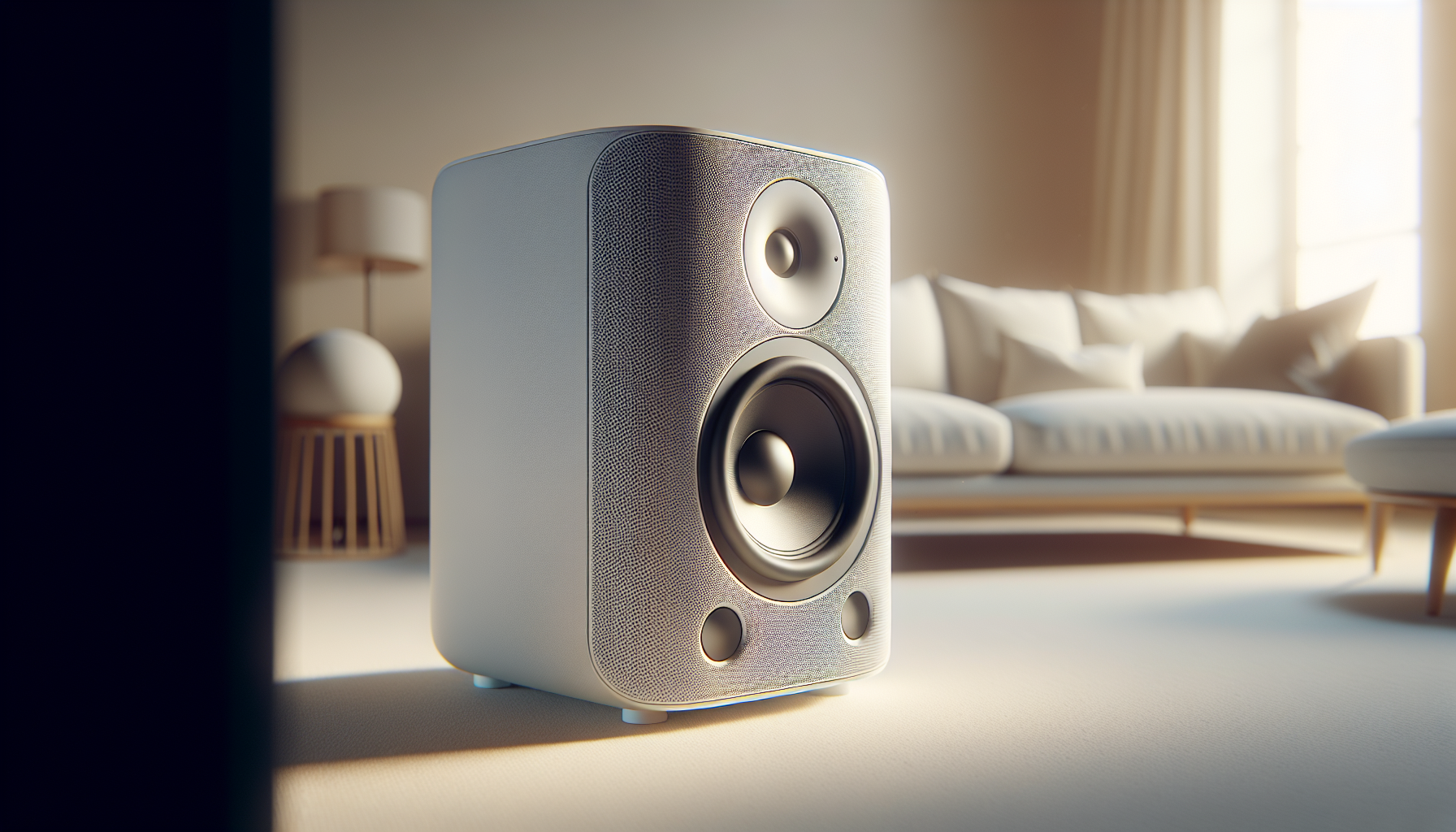
Want a speaker that fills your room with Dolby Atmos sound while letting you control music hands-free with Alexa?

First Impressions of the Sonos Era 300 – White – Wireless, Alexa Enabled Smart Speaker with Dolby Atmos
You’ll notice right away that the Era 300 looks modern and substantial without trying too hard. The white finish and sculpted profile make it easy to place in living rooms, bedrooms, or larger open-plan spaces where it can breathe and project sound effectively.
The product branding already hints at premium audio: six drivers, custom waveguides, and Dolby Atmos music support. When you unbox it, you’ll appreciate the quality of materials and the weight that communicates solidity and durability.
Sonos Era 300 - White - Wireless, Alexa Enabled Smart Speaker with Dolby Atmos
$479 In Stock
Design and Build
You’ll find the Era 300’s design to be both attractive and functional, with drivers positioned to support a wide soundstage. The aesthetic is minimalist and unobtrusive, which helps the speaker integrate well in most home setups.
Physically, the Era 300 uses carefully arranged drivers on the front, sides, and top to push sound in multiple directions. That layout is part of what allows it to create a room-filling stereo image and convincing height effects without external modules.
Materials and Finish
You’ll notice the matte white finish is forgiving of fingerprints and blends into bright interiors. The grille and casing feel premium to the touch and avoid cheap plastics or flimsy construction.
Small design choices—like a rubberized base and subtly integrated controls—mean the speaker stays put and is comfortable to operate. The build suggests Sonos aimed for longevity as well as aesthetics.
Size and Placement Considerations
You’ll want to give the Era 300 some breathing room so those side- and top-firing drivers can do their job. Placing it directly against a wall will still work, but the more open the placement, the more pronounced the three-dimensional effects become.
If you plan to use it as part of a stereo pair or a surround setup with a Sonos Arc or Beam (Gen 2), think about symmetry and how it matches with other speakers in your room. Matching placement improves imaging and preserves the immersive experience.
Key Specifications at a Glance
You can get a quick technical snapshot to help compare the Era 300 with other options. Below is a simple table that breaks down the most relevant specs so you know what the speaker offers without scrolling through a lot of fine print.
| Feature | Details |
|---|---|
| Drivers | Six optimally positioned drivers (front, sides, top) |
| Dolby Atmos | Supports Dolby Atmos Music for lateral and overhead channels |
| Voice Assistant | Alexa enabled; also supports Sonos Voice Control and others |
| Connectivity | Wi‑Fi, Bluetooth pairing button, Line-In via Sonos Line-In Adapter |
| Multiroom | Works with Sonos ecosystem for multiroom and surrounds |
| Streaming | Wi‑Fi streaming from services, Sonos Radio included |
| Compatibility | Pair with Sonos Arc / Beam (Gen 2) for surround; AirPlay support |
| Updates | Regular software updates for new features and services |
| Color | White (as specified) |
| Use Cases | Standalone stereo, part of stereo pair, surround speaker |
You’ll find that table makes it easier to compare the Era 300 to other speakers, and it highlights the multipurpose nature of the product without complicating the basics.
Sound Performance Overview
You’ll appreciate that Sonos prioritized a spacious soundstage and immersive presentation. The Era 300 is tuned to produce a wide, room-filling sound that emphasizes dimensionality and clarity.
Across genres, from orchestral pieces to electronic music, the speaker aims to create an enveloping field that places instruments and effects around and above you. That’s particularly useful for music mixed in Dolby Atmos.
Soundstage and Imaging
You’ll be struck by how the Era 300 projects sound wider than its physical footprint. The custom waveguides and driver arrangement push sound left, right, forward, and above to form a stereo field that feels larger than the speaker itself.
Imaging is precise for many tracks, especially when the mix includes distinct spatial cues. If you’re sitting near the sweet spot, vocals and lead instruments lock into place with pleasing specificity.
Dolby Atmos and Height Effects
You’ll experience a tangible uplift when you play Atmos-encoded tracks: sounds can feel like they’re coming from above as well as around you. Sonos has engineered the Era 300 to support lateral and overhead channels, which adds a new dimension to familiar songs.
That said, the height effects are constrained by physics—you won’t get the same three-dimensional ceiling-filling effect as a full multichannel home theater array, but for music and casual movies, the Atmos enhancement is impressive.
Bass and Low-End Extension
You’ll notice bass that’s punchy and controlled rather than exaggerated. The Era 300 delivers satisfying low frequencies that support rhythm and foundation without muddiness.
If you love very deep sub-bass at high SPLs, you might still want to add a Sonos Sub for the fullest low-end impact. For most listeners, however, the built-in drivers provide a pleasing balance that won’t drown out mids and highs.
Mids and Vocals
You’ll find vocals and midrange instruments to be natural and forward in the mix. Sonos typically tunes mids to keep the human voice intelligible and present, and the Era 300 follows that tradition.
Whether you’re listening to podcasts, acoustic sets, or vocal-centric pop, the clarity in this band will likely meet your expectations and keep dialogue and lyrics clear.
Highs and Detail
You’ll hear crisp and detailed highs without harshness. Treble is well-managed, preserving sparkle and air without causing fatigue on bright recordings.
The sense of detail contributes to the impression of spaciousness, allowing you to pick out subtle reverbs, hi-hat patterns, and ambient cues that add realism to the listening experience.
Connectivity and Streaming Options
You’ll appreciate Sonos’s emphasis on versatile connectivity: Wi‑Fi streaming, Bluetooth pairing, and physical line-in options are all available. That mix lets you connect virtually any source, from streaming apps to turntables.
The Era 300 plays nicely within the Sonos ecosystem, which means you can mix and match speakers via the Sonos app and create multiroom groups with ease. That flexibility is a core strength of Sonos products.
Wi‑Fi Streaming and Supported Services
You’ll stream over your home Wi‑Fi to access major services like Spotify, Apple Music, Amazon Music, and others through the Sonos app. Sonos supports numerous services and makes adding them straightforward.
Sonos Radio is included and gives you access to free music, original content, and thousands of live stations. It’s a nice built-in option if you want variety without managing subscription services.
Bluetooth Pairing
You’ll be able to pair a Bluetooth device with the press of a button for quick, temporary connections. Bluetooth is handy for guests or when you’re away from your Wi‑Fi network and want a straightforward method to play audio.
Keep in mind Bluetooth on Sonos is meant for convenience rather than primary streaming; Wi‑Fi still delivers the best integration with multiroom features and higher reliability for continuous playback.
Line-In and Analog Sources
You’ll be able to connect a turntable or other analog source using an auxiliary cable and the Sonos Line-In Adapter. This makes the Era 300 friendly to vinyl enthusiasts and those with legacy audio gear.
The Sonos app helps you manage the line-in source, and you can include it in groups or send it to other Sonos speakers—useful if you want to play the same analog signal around the house.
AirPlay and Other Protocols
You’ll have AirPlay support for iOS and macOS devices, enabling easy streaming from Apple devices without routing through the Sonos app. This is particularly convenient for direct streaming from apps that don’t have native Sonos support.
Sonos also supports a range of integrations and third-party services that increase the ways you can send audio to the speaker.
Setup and User Experience with the Sonos App
You’ll find the initial setup process guided and simple if you follow the Sonos app prompts. Sonos has refined its onboarding to be smooth for most users, including automatic network setup and firmware updates.
The app also provides options for personalization and room naming, and it’s where you’ll manage cross-room playback, speaker grouping, and system-level settings.
Trueplay Tuning and Room Adaptation
You’ll be able to tune the Era 300 to your room with Sonos’s Trueplay (where available), which helps the speaker compensate for room acoustics and placement. The tuning can make a notable difference in clarity and balance.
Trueplay adapts sound to your physical room and can be updated as you change placement. If you want consistent performance, spend a few minutes running the tuning routine.
Firmware Updates and Feature Rollout
You’ll benefit from regular software updates that bring new features, services, and improvements. Sonos is known for iterative updates, and the Era 300 will receive enhancements over time.
That means the speaker can gain new capabilities and stay compatible with emerging services, which adds long-term value beyond the hardware itself.
Voice Control and Privacy
You’ll get hands-free control through Alexa and Sonos Voice Control, which makes interacting with your speaker convenient. Multiple voice assistants are supported, giving you choice depending on privacy and ecosystem preferences.
Sonos emphasizes privacy; its voice controls are engineered with options to mute or disable them. You can choose how much voice interaction you want and still retain local control via the app or physical buttons.
Alexa vs Sonos Voice Control
You’ll find Alexa useful for accessing a wide range of Amazon services and smart-home control, while Sonos Voice Control is tuned for a privacy-centric approach and deep Sonos app integration. Each assistant has strengths and trade-offs.
If you prefer granular control over data, Sonos Voice Control limits certain cloud processing, whereas Alexa offers a broader skill and smart-home ecosystem. Your choice will depend on the balance you want between convenience and privacy.
Privacy Controls and Local Features
You’ll be able to manage voice data, mute the mic, and control permissions directly from the Sonos app. Sonos provides settings that let you disable cloud-based voice processing if you prefer local-only responses.
These options make it easier for you to decide what level of voice capability and data sharing is acceptable in your home.
Multiroom and Surround Capabilities
You’ll enjoy Sonos’s multiroom strengths—pair multiple Era 300s or add other Sonos products to create a coordinated audio system. The speaker integrates seamlessly, letting you play the same track across rooms or different tracks in different rooms.
For home theater, pair two Era 300s with a Sonos Arc or Beam (Gen 2) to create a highly convincing surround array that leverages Atmos for lateral and overhead channels.
Using Era 300 as Surround Speakers
You’ll get true multichannel surround sound when you pair two Era 300 speakers with a Sonos Arc or Beam (Gen 2). The Era 300s act as rear or side channels, adding depth and height for movies and compatible content.
The result is more enveloping sound for films and shows, especially when the content is mixed in Dolby Atmos. It’s a compelling way to expand your system without running cables through walls.
Multiroom Playback and Grouping
You’ll find it easy to group the Era 300 with other Sonos speakers from the app, creating synchronized playback throughout the house. Sonos’s multiroom play is reliable and low-latency, especially on a good home network.
Grouping lets you set different zones for different activities—party mode in the living area and calm background music in the bedroom—while maintaining centralized control.
Content and Services: Sonos Radio and Streaming
You’ll get access to Sonos Radio in addition to all your subscription services, which broadens your listening options. Sonos Radio provides curated stations and exclusive content that’s free and built into the Sonos ecosystem.
Streaming services are handled within the Sonos app and many platforms offer native Sonos support for quick setup and stable playback.
Sonos Radio and Exclusive Content
You’ll find Sonos Radio a handy fallback when you don’t feel like selecting a playlist or when you want discovery. The curated stations and original programming are a neat addition for listening variety.
If you like discovering new music or want a radio-like experience tuned to specific moods or genres, the Sonos Radio library will be useful.
Supported Streaming Services
You’ll be able to use major streaming platforms like Spotify, Apple Music, Amazon Music, Tidal, and many more through Sonos. Adding these services in the app is straightforward, and they integrate with voice control and multiroom play.
Service availability can evolve, but Sonos strives to support a wide range of partners so you’re unlikely to be blocked from using the service you prefer.
Performance in Real-World Use
You’ll appreciate how the Era 300 handles everyday listening—from background music during a dinner to immersive listening sessions. It scales well with volume and remains articulate across genres.
People you host will likely comment on the spatial effects, and you’ll notice that even casual listening reveals detail and presence that draws you into the music or movie.
Practical Listening Scenarios
You’ll find the Era 300 excels at vocal-heavy media, cinematic soundtracks, and atmos-driven mixes. For podcasts and audiobooks, clarity and midrange presence make dialogue effortless to follow.
If you host movie nights or play a lot of spatial music, pairing the Era 300 in a surround setup delivers a more convincing theater-like experience without a full AV receiver.
Battery and Portability Considerations
You’ll mostly keep the Era 300 as a stationary home speaker; it’s not designed as a battery-powered portable unit. Its size and power requirements imply permanent placement on a shelf, stand, or table.
If portability is a priority, you might consider other Sonos models or portable speakers designed for battery operation, but for home audio quality, the Era 300 is a strong choice.
Comparisons: How It Stacks Up Against Alternatives
You’ll want to compare the Era 300 to other Sonos models and competitors when choosing a speaker. It sits between compact smart speakers and larger, dedicated hi-fi components.
Compared to the Era 100, the Era 300 delivers wider spatial effects and stronger Atmos support. Against larger Sonos options (like the Five or a full home theater), it prioritizes immersive stereo and multichannel integration while keeping a smaller footprint.
Sonos Era 300 vs Era 100
You’ll notice that the Era 300 adds height and lateral dispersion over the Era 100 thanks to its six-driver design. If you care about Atmos and a larger soundstage, the Era 300 is the better choice.
If you prefer a more compact speaker for smaller rooms, the Era 100 still offers excellent clarity and Sonos features at a lower price and smaller size.
Sonos Era 300 vs HomePod and Other Brands
You’ll find the Era 300 competes well with premium smart speakers from other brands, offering broader multiroom integration and a stronger ecosystem for multi-speaker setups. Apple’s HomePod lineup has strengths in integration with iOS and spatial audio, but Sonos provides a more flexible multiroom platform and broader streaming support.
Brands like Bose and others offer different tuning and features, but Sonos’s combination of spatial music, Atmos support, and ecosystem maturity often tips the scale if multiroom and ecosystem are priorities.
Setup Tips and Tricks
You’ll get the most from the Era 300 if you place it thoughtfully and take advantage of the Sonos app features. Small placement changes and app-based tuning can significantly improve performance.
Use the Sonos app’s Trueplay, avoid placing the speaker in tight corners, and experiment with height and distance to the listening position to refine the soundstage.
Optimizing Placement
You’ll want the Era 300 at ear height when possible, and away from obstructions that block the side- and top-firing drivers. A little space on either side helps the waveguides project sound as intended.
Angling the speaker slightly towards the main listening area can also make imaging more precise, especially if you’re using a single unit for critical listening.
Making the Most of the Sonos App
You’ll use the Sonos app for everything from setup to updates and grouping. Keep the app updated and periodically revisit tuning settings after you rearrange furniture or move the speaker.
Explore the app’s service integrations, voice assistant settings, and line-in management to tailor the speaker to how you actually use it.
Who the Sonos Era 300 Is For
You’ll love the Era 300 if you want a versatile home speaker that delivers immersive, Atmos-enhanced music and integrates into a multiroom system. It’s ideal for those who want premium sound without a complex AV setup.
If you frequently host movie nights, appreciate spatial music mixes, or plan to build a Sonos home theater over time, the Era 300 is particularly well suited to your needs.
Who Might Want Something Else
You’ll want to consider other options if you need battery portability, extreme low-end power without adding a sub, or if you’re committed to a different voice-assistant ecosystem without concern for Sonos’s multi-assistant support. For extremely audio-critical two-channel listening at high volumes, a dedicated amplifier and bookshelf/tower speakers might be preferable.
Pros and Cons
You’ll benefit from a clear overview of strengths and trade-offs when deciding whether the Era 300 fits your home and listening habits. This short list captures the main points.
Pros:
- You get a spacious, immersive soundstage and Atmos music support.
- You can stream over Wi‑Fi, use Bluetooth pairing, and connect analog sources with a Line-In Adapter.
- It integrates seamlessly into Sonos multiroom and surround setups.
- Native Sonos Radio and regular software updates extend value over time.
- Privacy-focused voice control options and Alexa support.
Cons:
- You’ll likely consider a Sonos Sub if you crave very deep, room-shaking bass.
- It isn’t a portable, battery-powered speaker.
- Height effects are impressive but still limited compared to a full surround array with on-ceiling speakers.

Final Verdict
You’ll find the Sonos Era 300 – White – Wireless, Alexa Enabled Smart Speaker with Dolby Atmos to be a compelling choice if you want immersive music and a flexible, upgradable home audio system. It balances great day-to-day utility with advanced spatial features and strong ecosystem support.
For most users, the Era 300 is a smart purchase: it sounds larger than it looks, offers modern connectivity, and integrates with Sonos’s well-tested multiroom world. If you want immersive sound without overcomplicating setup, you’ll likely be very satisfied.
Frequently Asked Questions
You’ll likely have a few practical questions before buying or after setup, so here are direct answers to common concerns.
Q: Can you use the Era 300 as rear surrounds with a Sonos Arc?
A: Yes, pairing two Era 300 speakers with a Sonos Arc or Beam (Gen 2) produces rich multichannel surround sound leveraging Dolby Atmos elements.
Q: Do you need a Sonos Line-In Adapter for every analog source?
A: You’ll need the Sonos Line-In Adapter to connect analog devices via auxiliary cable. One adapter per source is recommended if you want to keep multiple legacy devices connected.
Q: Will the Era 300 work with my current Sonos system?
A: Yes, the Era 300 is designed to integrate with existing Sonos speakers for multiroom playback and surround setups.
Q: How does the Era 300 handle voice commands and privacy?
A: You’ll be able to choose between Alexa and Sonos Voice Control, and you can mute or disable voice features in the app to manage privacy.
Q: Is Dolby Atmos supported for movies as well as music?
A: The Era 300 supports Dolby Atmos Music and contributes to Dolby Atmos multichannel playback when used with compatible Sonos soundbars for movie content.
If you want more specific help configuring the Era 300 in your home—like placement for best Atmos effect or step-by-step connection options—I can walk you through it based on your room layout and devices.

Disclosure: As an Amazon Associate, I earn from qualifying purchases.