
Looking for a reliable way to warm your floors and control that warmth from your phone?

Product overview
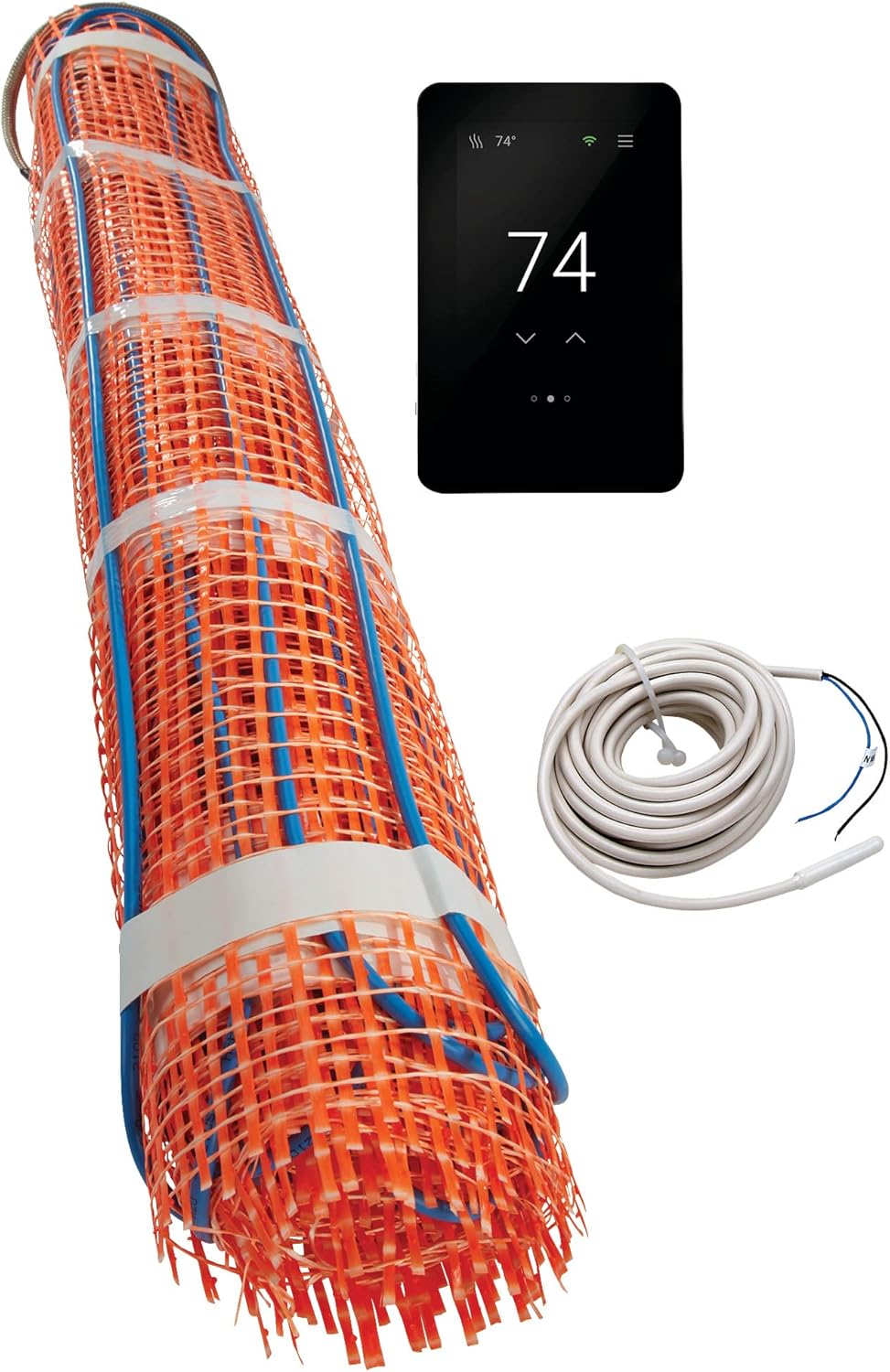
You’ll find the SunTouch TapeMat Electric Under Floor Heating Kit with ConnectPlus Smart Thermostat, 2.0′ x 7.5′ (15 Sq. Ft.), 120V (12000725-KIT-CPWiFi) is a packaged solution that includes the heating mat, a floor sensor, and the ConnectPlus Wi‑Fi thermostat. The kit is intended to simplify installation and give you both local and remote control over floor temperature, helping you keep bathrooms, kitchens, and entryways comfortable and dry.
You’ll like that SunTouch positions this kit as an all-in-one option: the mat is pre-spaced on mesh, the thermostat supports floor- or air-sensing control, and the app/voice controls make modern smart-home integration straightforward. The 15 sq. ft. mat fits small to medium zones and works under tile, stone, many vinyl installations, and some laminate floors when installed according to instructions.
What’s included
You’ll receive the TapeMat floor heating mat sized at 2.0′ x 7.5′ (covering 15 sq. ft.), a floor temperature sensor, and the SunStat ConnectPlus Wi‑Fi thermostat. Everything you need for completing the heating portion of the job is bundled, which reduces shopping around and compatibility worries.
You should double-check the box contents when they arrive to confirm you have the mat, sensor, thermostat, installation instructions, and any small accessories or wiring components. If something’s missing, SunTouch support or the retailer can help, but most users report complete kits arriving ready for installation.
Key features
You’ll appreciate the mat’s flexible roll-out mesh that lets you cut and position the heating wire layout to work around fixtures and irregular shapes. This flexibility reduces waste and makes fitting the mat into practical room layouts much faster than loose‑wire systems.
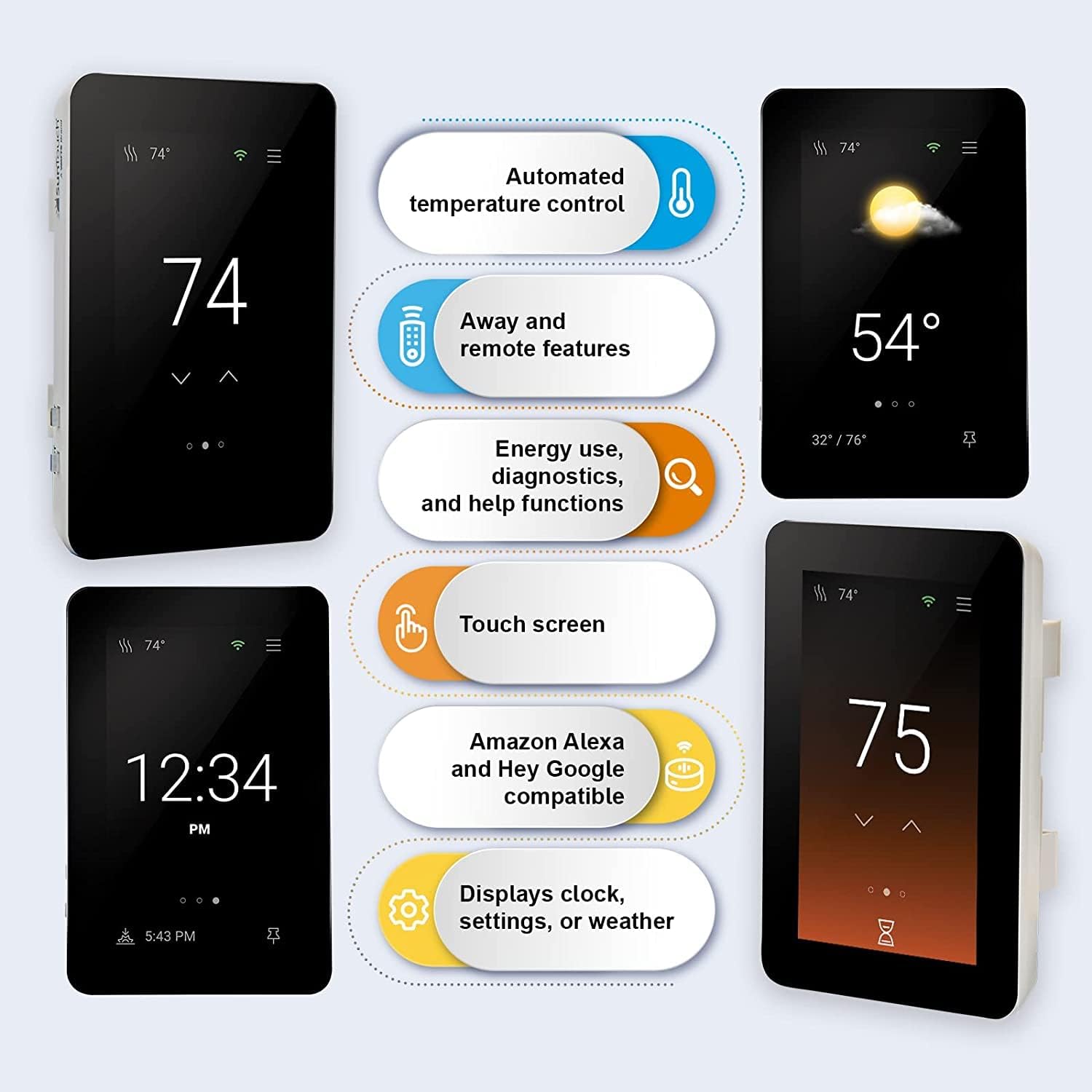
You’ll also get a touchscreen thermostat with energy monitoring, overcurrent and voltage-level sensing, and both Alexa and Google voice control compatibility. The thermostat’s portrait/landscape display and the free Watts Home app let you schedule, monitor energy usage, and control the system remotely.
Intended uses and compatibility
You’ll find this kit is designed primarily for indoor areas where radiant floor heat is welcomed, such as bathrooms, kitchens, entryways, mudrooms, and small laundry rooms. The mat is designed to be embedded in thin-set mortar or self-leveling compound, which integrates well with tile and stone installations.
You should verify compatibility before buying if you plan to install under vinyl or laminate; those flooring types often have manufacturer limits about in-floor heating temperatures and required installation methods. When used as recommended, this system is versatile but you must follow both floor manufacturer and SunTouch guidelines.
SunTouch TapeMat Electric Under Floor Heating Kit with ConnectPlus Smart Thermostat, 2.0' x 7.5' (15 Sq. Ft.), 120V (12000725-KIT-CPWiFi)
Specifications and technical breakdown
You’ll want a clear snapshot of the kit’s technical specs so you can confirm it fits your space and electrical setup. Below is a compact breakdown that covers dimensions, voltage, area, and the thermostat features included in the kit.
| Attribute | Details |
|---|---|
| Product name | SunTouch TapeMat Electric Under Floor Heating Kit with ConnectPlus Smart Thermostat, 2.0′ x 7.5′ (15 Sq. Ft.), 120V (12000725-KIT-CPWiFi) |
| Mat size | 2.0′ x 7.5′ (15 sq. ft.) |
| Voltage | 120 VAC |
| Mat thickness added | ~1/8″ to typical tile installation |
| Heating wire type | Pre-spaced heating wire embedded on blue mesh (can be cut from mesh, not cut through wire) |
| Floor sensor | Included (for floor probe control) |
| Thermostat | SunStat ConnectPlus Wi‑Fi touchscreen with portrait/landscape display |
| Smart features | Wi‑Fi remote access via Watts Home app; Alexa & Google voice control |
| Installation method | Embed mat in thin-set or self-leveling mortar |
| Floor types | Tile, stone, many vinyl and laminate installations (follow floor manufacturer guidelines) |
| Warranty / support | SunTouch product support and warranty (verify current terms at purchase) |
You should note that the kit does not specify a single wattage number in the provided copy; electric floor mats typically range from about 10–15 W per sq. ft. as a general guideline. For a 15 sq. ft. mat, that range might translate roughly to 150–225 watts under typical loads, but you should verify the exact wattage printed on the mat label or in the technical datasheet before finalizing circuit sizing and breaker selection.
Power and circuit considerations
You’ll need to confirm the mat’s actual wattage and the thermostat’s electrical requirements to size your circuit properly. Most 120V mats of this size can be accommodated on a dedicated 15A circuit, but verification with the label and local electrical codes is necessary.
You should also plan for the thermostat connection: the ConnectPlus thermostat may require a neutral and a ground, and wiring should be handled by a qualified electrician if you’re not confident with electrical work. The thermostat also has protective features like overcurrent sensing, which adds a layer of system protection.
Installation — what to expect
You’ll find that installing a TapeMat kit is meant to be straightforward for someone comfortable with basic tile installation and electrical work, but it still requires careful planning and adherence to instructions. If you’re installing tile, you’ll lay the mat on the subfloor (adhered with the included double-sided tape), run the blue lead around obstacles, embed in thin-set or self-leveler, and then tile over.
You should never cut the heating wire itself; you can cut the mesh backing to reposition or route the wire, and you’ll pull the blue lead out to run it past fixtures. The floor sensor must be installed in a proper conduit and positioned between heating wires to get accurate floor temperature readings.
Preparing the subfloor
You’ll need a clean, dry, and structurally sound subfloor before you install the TapeMat. Any loose debris, dust, or surface irregularities should be removed because the mat adheres to the substrate and needs a good bond for the thin-set or self-leveler.
You should repair any cracks, level the surface as needed, and ensure the subfloor is compatible with the tile or finish you plan to use. If installing over plywood or wood products, follow SunTouch and tile manufacturer guidelines for uncoupling membranes or cement backer boards as required.
Laying the TapeMat
You’ll roll out the TapeMat mesh to determine layout and use the included double-sided tape to hold it in place on the subfloor. You can cut and remove mesh sections to reroute the heating cable, but never cut the heating cable itself.
You should maintain the specified spacing between wires and keep the blue power lead accessible for connection to the thermostat. The mat’s thin profile adds about 1/8″ to the tile assembly, so you won’t dramatically change thresholds or transitions when installed correctly.
Thermostat wiring and setup
You’ll mount the SunStat ConnectPlus thermostat to the wall, wire the power and mat leads to the thermostat per instructions, and plug in the floor sensor to the thermostat’s sensor port. If you’re not comfortable with electrical wiring, you should hire a licensed electrician for the thermostat wiring and verification.
You should follow the thermostat’s on-screen setup and pair it with the Watts Home app for Wi‑Fi control. The thermostat supports floor or air-sensing modes, but floor-sensing is recommended for accurate floor temperature control and to comply with many floor manufacturer limits.
Time and difficulty
You’ll likely spend a few hours prepping and laying a 15 sq. ft. mat if you’re experienced with tile work, while the thin-set or self-leveler cure time will add to the total project timeline before you can grout and finish. The electrical hookup and thermostat setup usually add an hour or two depending on your wiring skill and whether an electrician is involved.
You should budget time for curing of additives and for syncing and testing the thermostat and sensor after the tile and mortar have fully set. Rushing the process or skimping on curing can cause issues with tile adhesion or thermostat sensing accuracy.


Performance and comfort
You’ll notice that radiant floor heating produces a surface-warmth sensation that many people find more comfortable and efficient than forced-air heating for local zones. The TapeMat system provides gentle, consistent warmth across the mat area, and the floor-sensing thermostat helps maintain a comfortable surface temperature without overheating floor materials.
You should expect faster perceived comfort when stepping onto the warmed floor—especially in colder months—because tile and stone surfaces warm evenly underfoot. In small spaces like bathrooms, the difference is particularly noticeable and can change how you use the room, reducing chill and improving comfort.
Heating speed and uniformity
You’ll get relatively fast warming compared to hydronic systems in small areas, with the mat able to bring tile up to comfortable temperatures in a reasonable timeframe depending on the tile mass and ambient conditions. The embedded wire spacing and thermostat control aim for an even heat distribution across the covered area.
You should keep in mind that the actual speed depends on floor covering, mortar thickness, and room insulation. Thicker stone slabs or poorly insulated subfloors will slow warming, while thin tile over a well-insulated substrate warms faster.
Floor compatibility
You’ll be able to use this mat under tile and stone without major changes to the installation process. For vinyl and laminate, you’ll need to follow flooring manufacturer temperature limits and installation methods to avoid voiding warranties or damaging the floor.
You should always check the flooring manufacturer’s recommendations for maximum surface temperature and approved heating products. When used within those limits, this kit is compatible with a wide range of finished floor surfaces.
Energy consumption and cost of operation
You’ll save in perceived heating demand by confining warmth to the floor area you use, which can reduce reliance on whole-house heating for bathroom comfort. Electric radiant mats do consume electricity directly, and the cost depends on your local kWh rates, the mat’s wattage, and how often you run the system.
You should program the thermostat to use schedules and lower standby temperatures where possible to reduce energy use. The ConnectPlus thermostat’s energy monitoring helps you see usage patterns so you can optimize schedules for cost efficiency.
Smart features and mobile control
You’ll appreciate the ConnectPlus Wi‑Fi thermostat for enabling remote control, scheduling, and energy monitoring through the Watts Home mobile app. The ability to switch between floor and air sensing, set schedules, and monitor energy usage from your phone adds convenience and potential savings.
You should be aware that proper Wi‑Fi setup requires reliable home network coverage near the thermostat; if your router is weak in that area, performance like remote connectivity or voice control responsiveness could suffer.
Thermostat interface and controls
You’ll interact with a touchscreen interface that can be oriented portrait or landscape for a clear view, and the thermostat shows temperature, schedules, and energy usage stats. The display is designed for easy navigation so you can set temperature limits, choose floor or air control, and check system status quickly.
You should also use the thermostat’s built-in safety features, like overcurrent sensing and voltage-level sensing, which help protect the system and alert you to abnormal electrical conditions.
Watts Home app and voice assistants
You’ll pair the thermostat with the free Watts Home app to control the floor heating remotely, create schedules, and monitor energy consumption from anywhere. Voice control via Alexa or Google Assistant lets you issue quick commands when your hands are full or you want a simple temperature change.
You should ensure you have the latest app version and follow pairing steps carefully. Once set up, you can make changes on the go, such as preheating the bathroom floor before you get home or adjusting schedules for seasonal patterns.
Pros and cons — practical considerations
You’ll find several advantages to this kit, especially the bundled thermostat and sensor which simplify smart control. The pre-spaced mesh mat reduces installation time and the mat’s thin profile keeps threshold issues minimal.
You should also consider some downsides: a 15 sq. ft. mat is limited to small zones, installation under certain floor types may be conditional, and you need to verify your circuit capacity and wiring before installation. The need to embed the mat in mortar means this is best done during a tile installation or a remodel rather than as a quick afterthought.
Pros
You’ll enjoy easy layout and cutting of the mesh to fit the room, a touchscreen Wi‑Fi thermostat with remote access and voice control, and compatibility with common tile and stone installations. The kit bundles components to reduce guesswork about compatibility and often shortens shopping lists.
You should also value SunTouch’s 30+ years in electric radiant heating—this company background suggests better documentation and support compared with unknown brands.
Cons
You’ll be limited to small spaces with this specific kit size; for larger rooms, you’ll need multiple mats or a larger product. You should also be aware that installing under vinyl or laminate may require additional checks and that the mat itself will require embedding in thin-set, which lengthens the install timeline.
You should also factor in electrical work: while the kit includes the thermostat, you may need a professional electrician for wiring the thermostat to a dedicated circuit depending on local codes.

Who should buy this kit
You’ll want this kit if you’re finishing or remodeling a small bathroom, powder room, or entry area and want a clean, integrated electric radiant solution with smart controls. It’s ideal if you prefer an out-of-the-box option that includes a modern thermostat and floor sensor and you want direct app and voice control.
You should not choose this product if you need whole-house heating or if you’re installing over floor types that don’t tolerate surface heat without special procedures. For large open areas, multiple mats or other system types may be more cost-effective.
Comparison with alternatives
You’ll weigh electric mat systems like this against loose-wire electric systems and hydronic (water-based) radiant floors depending on your budget, installation timeline, and heating goals. Mats are faster to install than loose-wire for small to medium areas because the wire is already properly spaced and secured on a mesh.
You should consider hydronic systems if you’re building new and want whole-house radiant heating integrated with a boiler or heat pump, but for retrofit or small-room comfort, electric mats are usually more cost-effective and simpler to implement.
Electric mats vs hydronic systems
You’ll get quicker installation and simpler control with electric mats, and you’ll avoid the complexity of plumbing and pumping required by hydronic systems. Electric mats are ideal for retrofit bathroom projects or spaces where you want zoned, quick-warming comfort.
You should expect hydronic systems to be more efficient for heating large areas over the long term, but they come with higher initial installation complexity and cost. Electric mats shine for small zones and straightforward smart control.
SunTouch TapeMat vs competing electric mats
You’ll find SunTouch is a recognizable brand in electric radiant heating with long-standing product lines and documentation, and the ConnectPlus thermostat provides a polished smart control option. Some competitors offer similar mats, but not all include a high-end Wi‑Fi thermostat or the same degree of app/voice integration.
You should evaluate price, warranty, and available support when comparing products, and consider the ease of obtaining replacement parts or help—established brands often make service and troubleshooting easier.
Maintenance and troubleshooting
You’ll find that electric mat systems are low maintenance once installed, as there are no moving parts and the heating wire is protected under the tile or floor covering. Periodic checks of thermostat schedules and app reports are usually all that’s needed to keep things running smoothly.
You should keep installation records, the thermostat model and serial numbers, and photos of the mat layout before tile goes down; this helps if you need to locate the sensor or diagnose a problem later.
Common issues and quick fixes
You’ll occasionally run into connectivity hiccups with Wi‑Fi thermostats; a router reboot or thermostat reset often resolves simple drops. If the thermostat shows a fault or the mat doesn’t heat, verify the breaker, wiring connections, and sensor continuity before calling support.
You should also test resistance of the mat with a multimeter before and after installation (per SunTouch instructions) to confirm there’s no damage to the heating element. If the resistance reads out of specified range, contact SunTouch support or your installer.
When to call professional support
You’ll call a licensed electrician if there are wiring issues, breaker trips, or if you’re uncomfortable with the electrical hookup. For mat damage, electrical anomalies, or thermostat hardware faults, contact SunTouch technical support or a certified installer.
You should stop and get professional help if you detect burning smells, repeated breaker trips, or if the thermostat displays an overcurrent or voltage fault that you can’t isolate safely.
Warranty, documentation, and support
You’ll want to keep the product paperwork and registration details handy because SunTouch offers product support and warranties on its heating systems. Warranty terms can vary, so check the current policy and any registration steps at the time of purchase.
You should also review SunTouch installation manuals and wiring diagrams before starting the project; following the manufacturer’s instructions is crucial to avoid voiding warranties and ensuring safe operation.
Cost considerations and ROI
You’ll pay both for the kit itself and for any professional labor you need for electrical work or tile installation. For small spaces, the fast installation and zoned comfort often provide a good return in terms of daily comfort and reduced reliance on whole-house heating.
You should calculate runtime costs using local electricity rates and expected daily usage; the thermostat’s energy monitoring can help you refine those estimates post-installation. Over time, zoned radiant heating can reduce the need to increase central heating just to warm a single room.
Final verdict
You’ll find the SunTouch TapeMat Electric Under Floor Heating Kit with ConnectPlus Smart Thermostat is a strong choice if you want a compact, smart-enabled solution for warming floors in small rooms. The bundled thermostat, included sensor, and brand reputation add value and make installation planning simpler.
You should buy this kit if you’re remodeling a bathroom or creating a cozy tile surface in an entryway and want the convenience of app control and voice integration. If you need a larger area or whole-house solution, compare larger mats or different system types to find the best fit for your project needs.
Frequently asked questions (short answers)
You’ll find answers to common questions below to help with quick decisions and planning.
-
Can you cut the TapeMat?
You’ll cut the mesh backing to reroute the wire but must never cut the resistance heating wire itself. Always follow SunTouch instructions when modifying the mesh. -
Do you need a dedicated circuit?
You’ll likely need a dedicated circuit sized to the mat’s wattage and local codes; verify the mat label and consult an electrician for final circuit sizing. -
Can it be used under vinyl or laminate?
You’ll be able to use it under some vinyl or laminate, but only when the floor manufacturer permits it and you follow maximum surface temperature limits. Always check both the mat instructions and flooring manufacturer guidelines. -
How do you measure mat resistance?
You’ll measure resistance with a multimeter per the manufacturer’s instructions before and after installation to verify the mat is intact. -
Is professional installation required?
You’ll be okay installing the mat if you’re comfortable with tile work and basic wiring, but hiring a licensed electrician for the thermostat hookup is recommended and may be required by code.
If you want, you can tell me about your room dimensions, floor type, and whether you already have a dedicated circuit, and I’ll help you check if this 15 sq. ft. kit is the right match or if you should consider a different size.

Disclosure: As an Amazon Associate, I earn from qualifying purchases.