
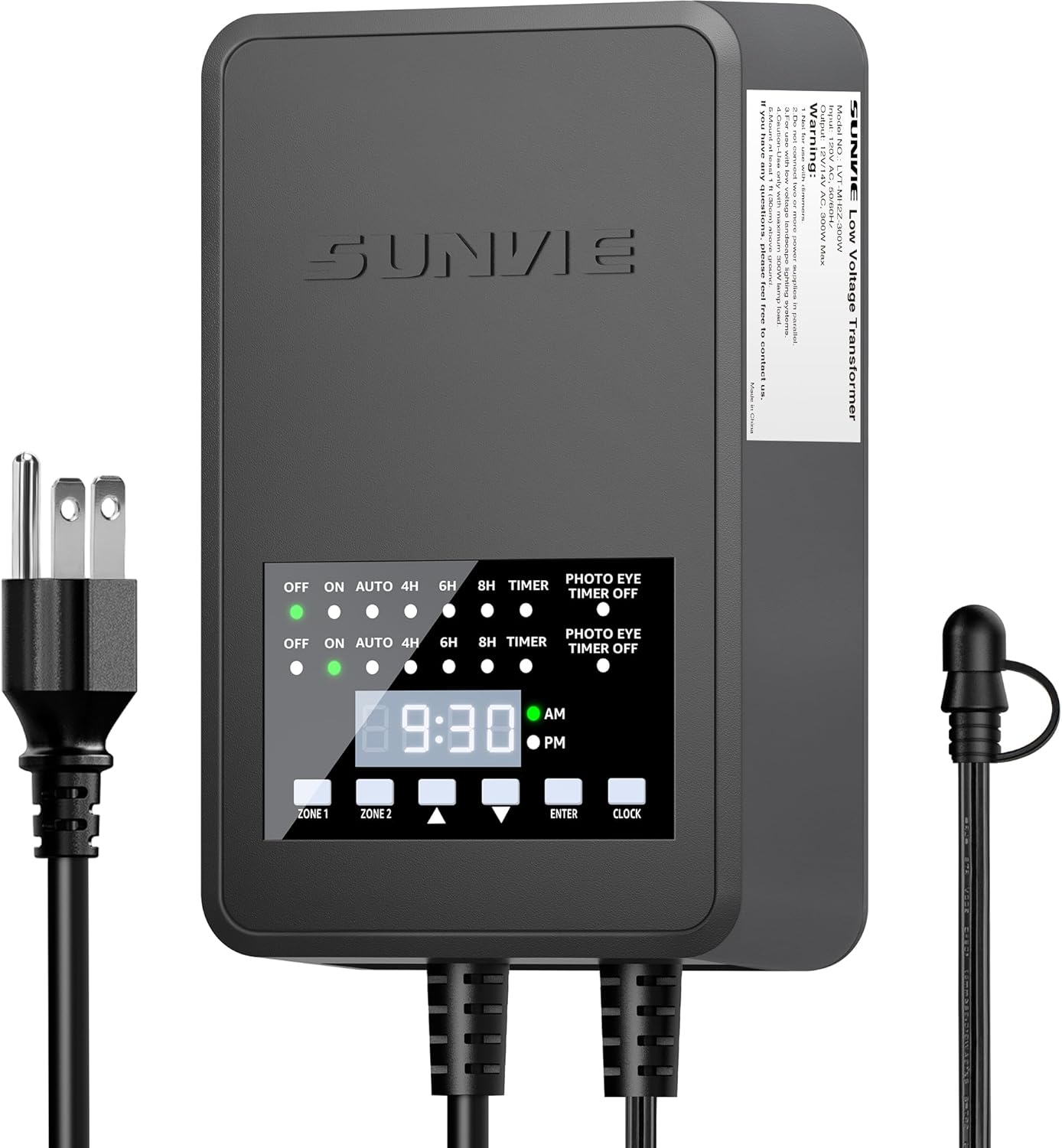
Are you trying to decide whether the SUNVIE 300W Low Voltage Landscape Transformer is the right choice for your outdoor lighting setup?
Buy SUNVIE 300W Low Voltage Landscape Transformer On Amazon
Product at a glance
You’ll find the SUNVIE 300W Low Voltage Landscape Transformer converts your household 120V AC to 12/14V AC, which is compatible with most low-voltage LED and halogen landscape lights. The unit includes a removable external photocell sensor, two independently controlled outputs, multiple timer modes, and weatherproof construction for outdoor use.
What this product claims to do for you
The transformer gives you simple power conversion and flexible control so you can set different lighting behaviors for two separate zones. It also claims circuit protection and memory functionality so your settings persist after power interruptions and the unit can protect itself and your fixtures if something goes wrong.
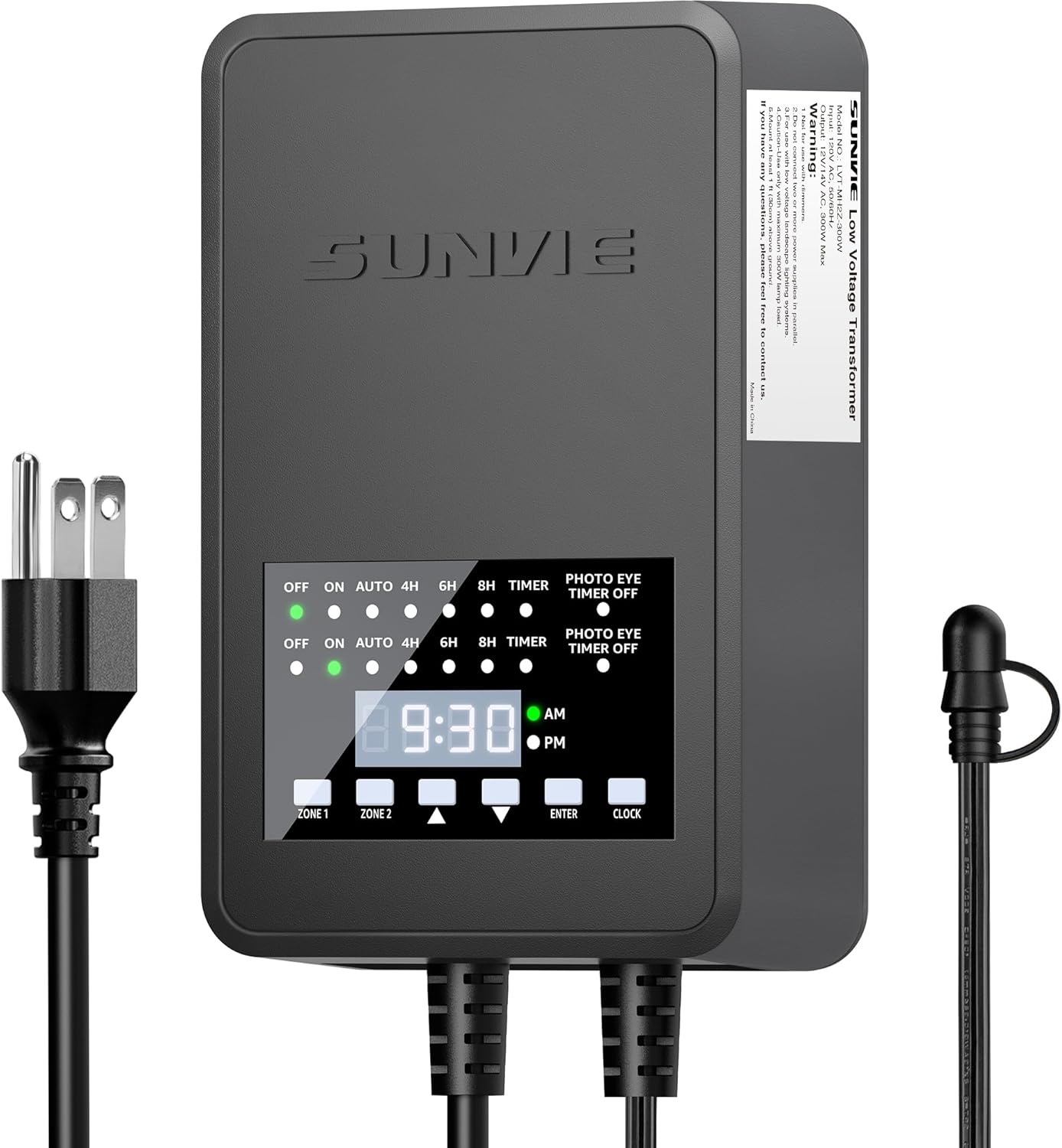
SUNVIE 300W Low Voltage Landscape Transformer with 2 Independent Control Output Landscape Lighting Transformer with Timer and Photocell Sensor 120V AC to 12/14V AC Weatherproof Low Voltage Transformer
$119.99 In Stock
Key specifications
This section lists the most important technical specifications and features you’ll want to know before you buy. You’ll be able to quickly compare numbers such as wattage, output voltage, sensor length, and control modes.
| Feature | Specification |
|---|---|
| Product name | SUNVIE 300W Low Voltage Landscape Transformer with 2 Independent Control Output Landscape Lighting Transformer with Timer and Photocell Sensor 120V AC to 12/14V AC Weatherproof Low Voltage Transformer |
| Input voltage | 120V AC |
| Output voltage | 12V / 14V AC selectable |
| Rated output power | 300W |
| Recommended load per zone | Total load for zone 1 + zone 2 should not exceed 80% of rated power |
| Number of independent zones | 2 |
| Photocell sensor | Removable, 6.8 ft UL listed cord |
| Control modes | Manual On/Off, Auto On/Off (dusk-dawn), Countdown (4/6/8 hr), Timer (custom on/off), Photocell On Timer Off |
| Memory function | Yes (retains last mode after power loss) |
| Protection | Built-in circuit protection (resettable) |
| Environmental rating | Weatherproof / corrosion resistant |
| Warranty | 12-month replacement; lifetime after-sale support |
Design and build quality
The SUNVIE transformer is built with outdoor durability in mind, featuring corrosion-resistant materials that withstand rain and snow. You’ll notice a compact, boxy housing designed to mount against a wall or in an enclosure, which helps it fit neatly near your fixtures or near your main AC source.
Physical layout and hardware
The transformer places the zone terminals and control buttons on the front or top for easy access, and the photocell is externally mounted on a 6.8 ft lead so you can position the sensor for accurate dusk/dawn sensing. You’ll appreciate that the photocell is removable and replaceable, giving you flexibility during installation and long-term maintenance.
Output zones and control
You can control two independent lighting zones, which lets you set different schedules or modes for each area of your yard. This flexibility is especially useful if you want bright path lighting on a timer while keeping accent lights on a different schedule.
How the two-zone control benefits you
By splitting your landscape into two zones, you save energy and create better ambiance control. You’ll be able to turn different sections on and off separately, use different timer settings, and avoid overloading a single transformer output.
Purchase SUNVIE 300W Transformer On Amazon
Modes and timer functions
The transformer offers five distinct modes: Manual On/Off, Auto On/Off, Countdown (4/6/8 hours), Timer (set on/off times), and Photocell On Timer Off. These modes give you plenty of options to automate lights around your schedule and local sunset/sunrise times.
Practical uses for each mode
You’ll use Manual mode when you want full control or during maintenance. Auto mode is great for hands-off nightly switching, Countdown mode works for parties or temporary late-night lighting, Timer mode is ideal when you want precise on/off times, and Photocell On Timer Off mixes dusk activation with a timed shutoff.
Installation overview
Installing the SUNVIE transformer is straightforward if you’re comfortable with basic electrical work and mounting hardware. You’ll mount the unit, connect the 120V AC supply, wire your 12/14V outputs to your lighting circuits, and position the photocell where it receives ambient light.
Step-by-step highlights
You’ll start by turning off the power at the breaker, mounting the transformer using the provided holes, feeding the supply wire into the transformer’s knockout, and securing the low-voltage wires to the zone terminals. Always follow local electrical codes and consider hiring a licensed electrician if you’re unsure about the 120V wiring.
Wiring details and tips
You’ll want to pay attention to wire gauge, total wattage, and voltage drop to ensure consistent performance across fixtures. The manufacturer’s recommendation that the combined load not exceed 80% of the rated power is important for longevity and for the built-in protection circuitry to function properly.
Recommended wire sizes and layout tips
Typically, use thicker gauge cable for longer runs to reduce voltage drop (for example, 12 AWG or 14 AWG depending on length and load). You’ll also want to group fixtures logically by zone and keep connections secure and weatherproof with gel-filled wire nuts or outdoor-rated junction boxes.
Compatibility with LED and halogen fixtures
The transformer is 12/14V AC and specifically states compatibility with both LED and halogen low-voltage landscape lighting systems. You’ll want to double-check LED fixtures’ transformer compatibility, as some LEDs specify either electronic or magnetic transformers — this unit uses standard low-voltage AC output which works with most common fixtures.
What to check on your fixtures
You should verify your LED fixture’s listed input requirements and ensure they’ll accept AC low-voltage power rather than only DC or electronic transformer types. If you have mixed loads, calculate the total wattage carefully and balance them across the two zones as needed.

Photocell sensor and placement
The removable photocell sensor is a valuable feature that lets the transformer turn lights on at dusk automatically, and you can place it where it reads ambient light without being shadowed by the lighting you’re controlling. The 6.8 ft UL listed cord gives you enough length to reposition the sensor for accurate readings.
Sensor troubleshooting and tips
If you notice lights turning on too early or too late, reposition the photocell away from direct glare of the controlled lights or reflective surfaces. You’ll also want to keep the sensor clean and clear of debris for reliable dusk/dawn detection.
Performance in real-world conditions
In typical yard setups, the SUNVIE transformer provides reliable switching and steady voltage to low-voltage fixtures when load and wiring practices are followed. You’ll find that lights respond quickly to button presses and programmed schedules, and the memory function prevents you from losing your settings after a power outage.
Expected behavior under heavy load or faults
If you exceed recommended load or experience a short circuit, the built-in circuit protection will disconnect output to protect your fixtures and the transformer. After troubleshooting and clearing the fault, you simply reset the breaker and the unit resumes operation with your previously saved settings.
Weatherproofing and long-term durability
The transformer is built to resist rain, snow, dust, and corrosion, which makes it suitable for outdoor installations without additional housing in many climates. You’ll still want to mount it under some protection if you have persistent heavy storms or salt exposure to extend its lifetime further.
Maintenance suggestions for longevity
You should periodically inspect seals, wiring, and the photocell connection for signs of corrosion or loosening. If you live in a coastal area, rinsing salt buildup and using stainless or corrosion-resistant conduit and connectors will help maintain performance.
Safety features and circuit protection
The built-in circuit protection disconnects outputs when abnormal conditions occur, which helps prevent equipment damage and potential fire hazards. You’ll appreciate the resettable design that makes it easy to recover after an issue without replacing fuses.
What the memory function means for you
The memory function saves the last selected mode, so if the power goes out, you don’t have to reprogram your settings every time power is restored. This is particularly handy if you manage multiple zones or use precise timer schedules that you don’t want to re-enter.
User interface and ease of use
The controls are simple push buttons labeled for zone 1 and zone 2 and a small display or indicator that guides you through mode selection. You’ll be able to set modes quickly and confirm settings visually without needing to reference a complex manual.
Programming tips and common pitfalls
When programming custom timer on/off times, double-check AM/PM distinctions and always test the schedule before leaving it to run unattended. Also remember the 80% load rule — if you try to put a full 300W across both zones constantly, the protection may trip or reduce the lifespan of the transformer.
Energy savings and efficiency
Using the timer and photocell modes intelligently will save you energy and reduce run time compared with leaving lights on manually. You’ll also benefit from the ability to turn off parts of your landscape while keeping others lit, which reduces overall watt-hour usage.
Optimizing for cost savings
You can schedule decorative lights to turn off after late evening hours while keeping security lighting on a separate zone set to only activate when needed. LED fixtures further reduce energy consumption and are an excellent match with this transformer’s low-voltage output.
Pros and cons
Here is a balanced view so you can weigh benefits and limitations for your specific situation. You’ll find this useful when deciding whether this transformer suits your system and priorities.
Pros
- Two independently controlled zones give you flexible scheduling and better energy control.
- Multiple modes including timer and photocell cover most automation needs and preferences.
- Removable photocell with a long UL-listed cord lets you position the sensor for accurate readings.
- Built-in circuit protection and memory function improve reliability and safety.
- Weatherproof construction for durable outdoor use.
Cons
- The combined output must remain under 80% of rated power to avoid potential issues, which limits maximum continuous load.
- If your LEDs require an electronic transformer type, compatibility may vary, so you’ll need to confirm fixture specs.
- Advanced users wanting app control or smart-home integration will find no built-in Wi-Fi or smart features.
Comparison with similar transformers
Compared with basic single-output transformers, the SUNVIE 300W stands out with its two-zone control and programmable timer modes. Compared with higher-end smart transformers, it lacks app connectivity, but it offers robust manual and automated controls at a lower price point.
When to choose this unit over alternatives
You’ll prefer this transformer if you want reliable automated control without paying for smart-home connectivity. If you need two-zone separation and a photocell that you can reposition, this unit gives a strong combination of convenience and durability.
Troubleshooting common issues
If lights flicker, dim, or won’t turn on, common causes include overloaded circuits, loose connections, or voltage drop due to undersized wiring. You’ll also want to check that the photocell isn’t reading nighttime incorrectly because of nearby light sources or obstructions.
Steps to diagnose quickly
First, verify total wattage and compare to the 80% recommended limit. Next, inspect connections and wire gauges, test the photocell by covering it to simulate darkness, and try switching modes manually to isolate whether the problem is wiring or controls.
Who should buy this product
You should consider buying the SUNVIE transformer if you have a medium-sized landscape lighting system that needs flexible scheduling across two areas. It’s also a strong choice if you want weatherproof durability without adding smart-home complexity.
Who might want something else
If you need built-in Wi-Fi or integration with smart home platforms for remote control, you’ll want a different model. Also, if you plan to run the transformer at full 300W continuously, look for a higher-rated model or deploy multiple transformers to respect the 80% guideline.
Installation checklist
This checklist helps you prepare and complete installation with minimal headache. You’ll be more efficient and safer if you follow these steps and confirm everything before powering up.
- Turn off main breaker and confirm power is off.
- Gather tools: screwdrivers, wire strippers, voltage tester, outdoor-rated connectors.
- Mount transformer securely near an accessible junction box or power source.
- Run and secure the 120V supply wiring through a proper knockout and strain relief.
- Connect low-voltage wires to zone terminals, double-check polarity where applicable.
- Position and secure the photocell away from lights and reflective surfaces.
- Set modes for each zone and test operation in both day and night conditions.
- Confirm weatherproof seals and protect exposed wiring with appropriate conduit.
Frequently asked questions (FAQ)
You’ll likely have a few practical questions before buying, and this section addresses the most common ones you might run into. These concise answers save time and reduce uncertainty.
Can you use this transformer for LED lights?
Yes, the transformer outputs low-voltage AC (12/14V) and is compatible with most 12/14V LEDs and halogen fixtures. You should verify any specific LED requires an electronic or DC driver, and confirm compatibility before connecting.
What happens if the transformer trips its circuit protection?
If the protection trips, the transformer disconnects output to prevent damage. After resolving the cause (overload or short), reset the circuit breaker and the unit will return to the last mode saved by the memory function.
How close should the photocell be to the transformer?
You can place the photocell up to the 6.8 ft cord length away, and ideally you’ll mount it where it senses true ambient light levels rather than being affected by the controlled lights. Use its removable design to replace or relocate if needed.
Is the unit fully waterproof?
The unit is weatherproof and corrosion resistant for outdoor use, but you should still mount it in a reasonably sheltered spot or use additional protection if you face extreme weather or salt-laden air. Proper sealing of cable entry points is important for long-term durability.
Final recommendation
If you want a straightforward, rugged landscape transformer with flexible two-zone control, multiple timer modes, a removable photocell, and built-in safety features, the SUNVIE 300W transformer is a solid choice. You’ll get reliable automation and enough configuration options for most residential landscape lighting needs without extra complexity.
Buying tips and next steps
Before purchasing, measure your total load and map your zones so you can balance wattage and avoid overloads. If you’re not comfortable with 120V wiring, schedule a licensed electrician for the final hookup to ensure code compliance and safe operation.
Get The SUNVIE 300W Low Voltage Landscape Transformer
Disclosure: As an Amazon Associate, I earn from qualifying purchases.