
?Are you ready to stop guessing about when your sprinklers should run and start letting a smart controller handle it for you?

Product Overview
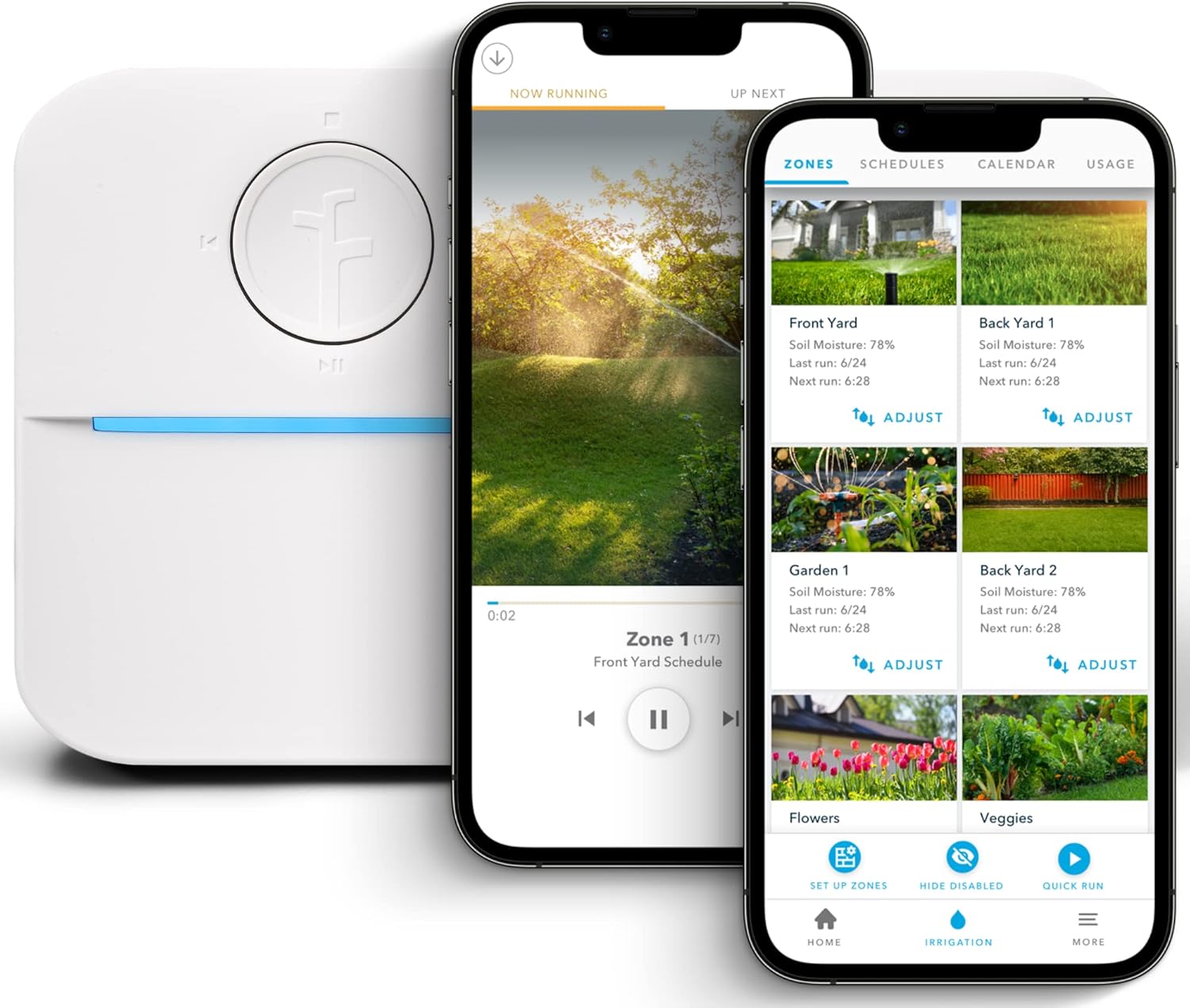
You’re looking at the Rachio WiFi Smart Sprinkler Controller (8-Zone Irrigation Remote Control) – App-Based Scheduling, Local Weather Intelligence, Rain Skips, Easy DIY Install. This controller replaces your old dial or basic timer and gives you app control, weather-aware scheduling, and tools to help save water while keeping your yard healthy.
Core purpose and what it replaces
You’ll replace an outdated mechanical dial or a basic electronic timer that doesn’t react to weather. The Rachio unit turns a static schedule into an adaptive system that adjusts watering based on current and forecasted conditions.
Who should consider this
If you care about conserving water, maintaining a healthy landscape, or simply want remote control and scheduling flexibility, this controller is designed for you. It’s a good fit whether you have a small lawn or a mid-sized property with up to 8 zones.

Rachio WiFi Smart Sprinkler Controller (8-Zone Irrigation Remote Control) – App-Based Scheduling, Local Weather Intelligence, Rain Skips, Easy DIY Install
$191.1 In Stock
Key Specifications
You should know the important specs at a glance so you can confirm compatibility and expectations. Below is a concise breakdown of the main technical details and parameters that matter when buying.
| Specification | Detail |
|---|---|
| Model | Rachio WiFi Smart Sprinkler Controller (8-Zone) |
| Zone capacity | Up to 8 zones (valves) |
| App control | iOS and Android (free Rachio app) |
| Weather features | Patented Weather Intelligence: rain, wind, freeze skips, and more |
| Scheduling options | Adaptive schedules, custom schedules, grow-in options |
| Installation time | Fast DIY install: about 30 minutes (typical) |
| Compatibility | Compatible with ~99% of sprinkler systems |
| Connectivity | WiFi (2.4 GHz typical; check exact device spec) |
| Integrations | Smart home integrations (Alexa, Google Assistant, Apple HomeKit—confirm current compatibility in app) |
| Physical | Wall-mounted controller, wiring to existing valves |
| Extras | Estimated usage tracking in app; optional flow meters or sensors may be supported |
Why these specs matter
You’ll want to confirm zone capacity against your system so you don’t outgrow the device. WiFi and app compatibility determine how easily you’ll control the controller remotely and integrate it with other smart home gear.
Main Features and How You’ll Use Them
You’ll find that the Rachio emphasizes automation, water savings, and flexibility. Each feature is built to make watering more precise and use less water without extra effort on your part.
DITCH THE DIAL — App-Based Scheduling
You can toss your old dial and set up schedules from the Rachio app. The app replaces manual dial programming and gives you a modern interface to create, edit, and monitor watering plans.
AUTOMATIC WEATHER SKIPS — Local Weather Intelligence
You’ll benefit from Weather Intelligence that automatically skips or adjusts watering when it detects rain, high wind, freeze risk, or other conditions. This reduces waste and prevents overwatering after natural precipitation events.
SAVE WATER YEAR-ROUND — Adaptive Schedules
You’ll get adaptive schedules that change with seasonal needs and local climate. Adaptive systems trim run times in cool, rainy periods and extend them in hot, dry spells so your yard gets what it needs without excess water use.
FLEXIBLE SCHEDULING — Custom and Grow-In Options
You can create your own schedule or let Weather Intelligence adjust it automatically; grow-in options help newly planted areas establish roots with shorter, more frequent watering. These options let you manage different parts of your property with the right strategy for each.
CONTROL FROM ANYWHERE — Remote Management in the App
You’ll manage watering, run zones on demand, view schedules, and track estimated water usage through the Rachio app from anywhere. Remote control is useful when you’re away and need to respond to unusual conditions or visits from landscapers.
FAST DIY INSTALL — Install in 30 Minutes
You’ll likely complete installation in under 30 minutes using existing wiring and valves. The unit is compatible with 99% of sprinkler controllers, which means fewer headaches during swap-out.
Hardware & Design
You’ll want a device that looks tidy and fits where your old controller used to be. The Rachio focuses on a compact design and easy wall mounting.
Build quality and fit
You’ll notice a neat, low-profile enclosure that’s intended for indoor mounting (confirm model for outdoor-rated options). The terminals are clearly labeled, which helps when you’re reconnecting wires.
Wiring terminals and labeling
You’ll find standard screw terminals for common, zone wires, and a clear layout that matches the app’s zone naming flow. This makes mapping physical wires to app-assigned zones straightforward.

App Experience and Interface
You’ll use the Rachio app frequently for scheduling, monitoring, and tweaks. The app is the control center for the system.
App setup and onboarding
You’ll be guided through WiFi setup, zone mapping, and initial schedule creation with step-by-step prompts. The app typically asks about your yard type, plant types, and soil to build appropriate schedules.
Daily and weekly views
You’ll see scheduled runs, upcoming skips due to weather, and manual runs in an easy calendar view. This transparency helps you understand how often and when your system waters.
Usage tracking and insights
You’ll be able to track estimated water usage and sometimes get tips for improving efficiency. Those estimates help you gauge potential savings and spot unusual consumption patterns.
Compatibility & Integrations
You’ll need to connect the controller to your network and the rest of your smart ecosystem if desired. Rachio generally offers broad compatibility with smart platforms.
Home automation support
You’ll find integrations with voice assistants and smart home hubs, so you can start or stop watering using voice commands or triggers. Verify platform compatibility and any needed skills or actions in the respective app stores.
Hardware compatibility
You’ll be compatible with most common valves and valve wiring configurations. If you have a master valve, pump start relay, or unusual system, check Rachio’s compatibility docs or customer support before buying.
Installation Walk-Through
You’ll probably be able to do this yourself if you’re comfortable with basic wiring. Below are the common steps you’ll follow to install the controller.
Pre-install checklist
Before you start, you’ll turn off power to the old controller (if powered), gather your screwdriver and phone, and ensure your WiFi covers the installation location. Confirm you have labels or take photos of existing wiring to avoid confusion.
Step-by-step install (high level)
You’ll remove the old controller, mount the Rachio, attach the common and zone wires to the matching terminals, connect the power transformer if needed, and configure WiFi in the app. After wiring, the app walks you through zone naming and a test run for each zone.
Typical time and troubleshooting during install
You’ll usually finish in under 30 minutes; the most common issues are weak WiFi at the controller location or misidentified wires. If WiFi is weak, consider using a WiFi extender or moving your router closer if feasible.
Performance & Reliability
You’ll expect consistent run schedules, accurate weather-based adjustments, and a stable connection.
Real-world watering behavior
You’ll see automatic skips for rain and reduced runtimes during cooler weather, and the system typically recovers quickly from temporary connection drops. The adaptive schedule means you’ll likely water less in favorable conditions while keeping plants healthy.
Connectivity and uptime
You’ll want reliable WiFi; the controller needs to reach Rachio’s cloud service for some features. Local control for basic functions may be limited; verify how your version handles offline scenarios if this matters to you.

Water Savings & Environmental Impact
You’ll likely reduce water use compared to a static timer by avoiding unnecessary cycles and tailoring runtimes to actual conditions.
How savings happen
You’ll save water when the controller skips watering due to rain, shortens cycles during cool weather, and avoids overwatering during high soil moisture periods. Adaptive schedules apply local weather and evapotranspiration data to tune runtimes.
Estimating savings
You’ll see estimates in the app that compare your current schedule against standard fixed-timer schedules. Results vary by climate, plant types, and how inefficient your previous system was, but many users report noticeable reductions in seasonal water usage.
Maintenance and Care
You’ll want to keep the controller dry and periodically check wiring and zone performance. Regular checks prevent surprises and keep the system operating efficiently.
Routine checks
You’ll inspect the controller for dust or moisture, verify WiFi and firmware updates, and test zones occasionally during high-use seasons. You’ll also monitor usage stats for any sudden jumps that might indicate leaks or broken heads.
Firmware and app updates
You’ll install firmware updates via the app when offered; these often include new features, performance fixes, and security patches. Keeping firmware current is good practice for reliability and security.
Troubleshooting Guide
You’ll encounter occasional issues like WiFi drops, stuck valves, or a zone not running. Below are common problems and how to address them.
WiFi and connectivity problems
You’ll check that your router is working, verify WiFi credentials in the app, and move the router or use an extender if the signal is weak. Rebooting the controller and your router can often fix transient issues.
Zones not running or misbehaving
You’ll confirm wiring is securely connected and test the zone directly at the valve if it doesn’t run. If a zone runs intermittently, check the valve, solenoid, and any inline filters for obstruction or wear.
Unexpected skips
You’ll look in the app to see why a skip occurred; Weather Intelligence shows the condition (rain, wind, freeze) that triggered the skip. If you feel the skip was incorrect, manual runs are available and you can adjust thresholds in schedule settings.
Security and Privacy
You’ll want to know who can access your controller and how your data is used. Rachio uses standard cloud services and account-based access protections.
Account and access controls
You’ll control who can access the controller through the Rachio account; you can typically add family members or landscapers with limited permissions. Two-factor authentication and strong passwords are recommended for your Rachio account.
Data handling
You’ll be sharing weather, schedule, and usage data with Rachio’s cloud services to benefit from the intelligence features. If data privacy is a high priority, review Rachio’s privacy policy and opt settings in the app.

Comparison with Alternatives
You’ll want to compare Rachio against other smart controllers to see if it’s the best fit for your needs. Below are typical alternatives and how Rachio stacks up to them.
Rachio vs. Orbit B-hyve
You’ll find Orbit is often priced lower and offers strong local control for budget-conscious buyers, while Rachio tends to provide more refined scheduling, usage insights, and a broader feature set. If you want deeper weather adaptation and analytics, Rachio often leads.
Rachio vs. RainMachine
You’ll see RainMachine focuses heavily on local weather models and can run locally depending on model and setup, which appeals to privacy-focused users. Rachio often wins on ease of use, integrations, and community support, while RainMachine can appeal for local-only operation.
Rachio vs. Hunter Hydrawise
You’ll notice Hydrawise is popular with professionals and offers robust commercial features; Rachio targets both homeowners and pros with a balance of consumer-friendliness and advanced scheduling. If you need pro-level reporting, Hydrawise may be attractive, but Rachio’s user experience is a big plus for many homeowners.
Pros and Cons
You’ll want a straightforward list of strengths and trade-offs so you can decide quickly.
Pros
- You’ll get automated weather-aware watering that reduces waste.
- You’ll control everything from a clean app interface with remote access.
- You’ll likely install the device yourself in a short time frame.
- You’ll maintain compatibility with most existing systems and accessories.
- You’ll gain scheduling flexibility including grow-in and seasonal adjustments.
Cons
- You’ll rely on WiFi and cloud services for full functionality; offline capability may be limited.
- You’ll need to confirm smart home integration availability for your platform and region.
- You’ll likely need an optional flow meter or additional accessories for advanced leak detection, which may be sold separately.
Cost Considerations and Value
You’ll weigh upfront cost, potential water savings, and time saved managing your system.
Upfront and ongoing costs
You’ll pay more upfront for a smart controller than for a basic timer, but you’ll avoid monthly subscription costs for the base functionality in many cases. Optional hardware (like flow meters) or professional installation adds to cost.
Return on investment
You’ll recoup some cost through water savings over time, particularly in climates where irrigation is heavy. The convenience and reduction in manual oversight add non-monetary value that’s immediate.
Who This Is Best For
You’ll get the most from this controller if you fit any of the profiles below.
Ideal users
You’ll be ideal if you own a home with multiple watering zones, want to reduce water use, and like managing tasks from your phone. It’s also well-suited to people who travel and need remote control or those who want integration into a smart home ecosystem.
Less ideal users
You’ll be less well-served if you have a very large commercial installation that requires professional-level telemetry and advanced flow monitoring out of the box. In that case, you may want pro-grade controllers or additional Rachio accessories and services.
Advanced Tips to Get the Most from Rachio
You’ll improve performance and savings with a few best practices. These practical tips help you leverage the controller’s capabilities effectively.
Zone-by-zone tuning
You’ll set up unique plant types, soil, and slope for each zone to get accurate runtimes. Splitting zones by plant water needs gives better results than a single uniform plan.
Use the grow-in feature wisely
You’ll use grow-in for new lawn seed or sod, which provides frequent short cycles to promote root establishment. Transition out of grow-in once roots are established to avoid overwatering.
Monitor usage and schedule adjustments
You’ll check estimated usage periodically and adjust watering durations or schedule frequency if you notice over- or underwatering. Seasonal tweaks can also help if local microclimates differ from general weather forecasts.
Accessories and Add-Ons
You’ll consider a few optional pieces of hardware that expand functionality. Some are sold separately but can significantly enhance detection and control.
Flow meters and sensors
You’ll add a flow meter to detect leaks or unusual consumption and to provide per-cycle flow metrics. Soil moisture sensors and rain sensors can also supplement the controller for specialized setups.
Enclosures and mounts
You’ll use weatherproof enclosures if your installation location is exposed to the elements. A tidy mount and protective cover prolongs hardware life and keeps wiring secure.
Warranty and Support
You’ll want clarity about support and warranty coverage. Rachio typically offers customer support resources and a product warranty.
Warranty details
You’ll check the included warranty—details may vary by model and retailer—so you know the period of hardware protection and what’s covered. Keep proof of purchase and register the device if registration is recommended.
Support resources
You’ll access help via the Rachio app, knowledge base articles, forums, and customer support channels for troubleshooting and advanced questions. Community forums can be helpful for installation tips and creative scheduling ideas.
Final Verdict and Recommendation
You’ll find the Rachio WiFi Smart Sprinkler Controller (8-Zone) a strong option if you want smarter watering, less manual work, and real potential for water savings. It’s user-friendly, flexible, and integrates well with modern smart homes while being straightforward enough for most DIYers to install.
You’ll get clear benefits in convenience, water efficiency, and plant health without needing professional installation in most cases. If you prioritize adaptive, weather-aware watering and app-based control for up to eight zones, this Rachio model is likely worth considering.
Quick Start Checklist Before You Buy
You’ll want to confirm a few things before adding this controller to your cart. This checklist helps you avoid compatibility surprises.
- You’ll confirm the number of zones you need and that 8 zones suffice.
- You’ll ensure your WiFi signal reaches the controller location or plan an extender.
- You’ll verify that your current valves and wiring are standard and compatible.
- You’ll plan whether you want optional flow monitoring or soil sensors.
- You’ll confirm smart home integrations you require (Alexa, Google, Apple) are supported in your region.
If you follow this checklist, you’ll minimize surprises during install and get the most from your smart irrigation upgrade.

Disclosure: As an Amazon Associate, I earn from qualifying purchases.