
Looking for an outdoor lighting upgrade that gives you full color control, smart-home compatibility, and weatherproof durability?

Buy Philips Hue Lily Outdoor Spot Light Base Kit On Amazon
Overview of the product
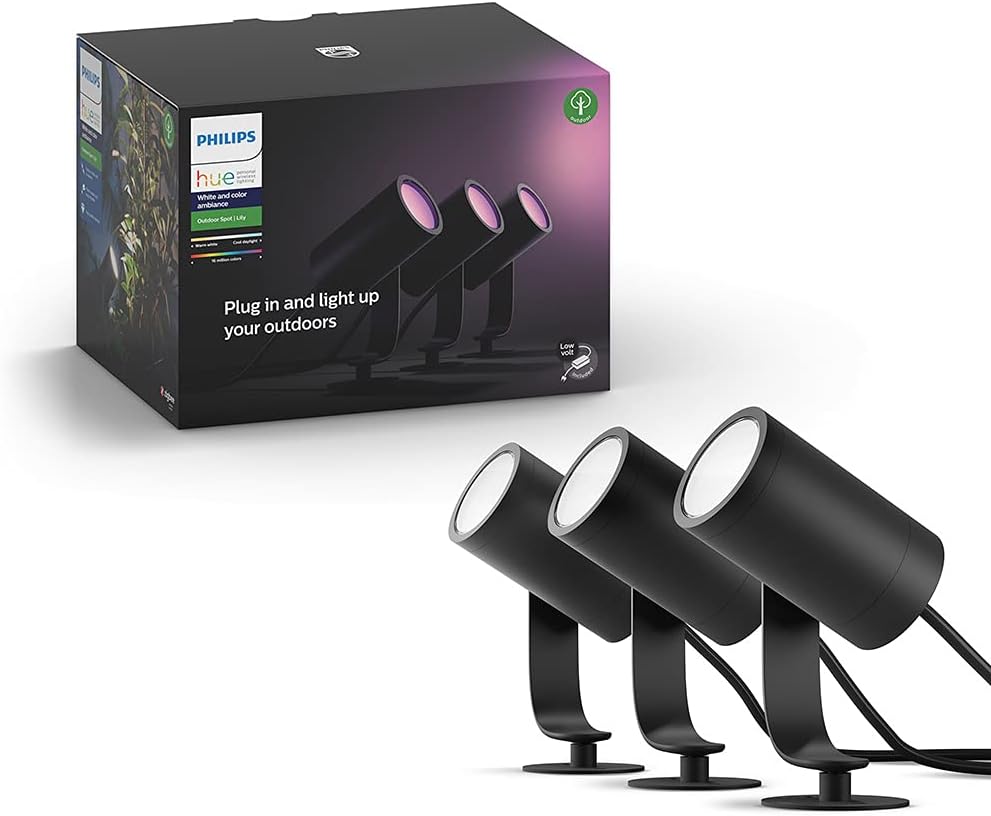
You’re considering the Philips Hue Lily White & Color Outdoor Spot Light Base kit (Hue Hub Required), 3 Spot Lights with Power Supply + Mount, Works with Alexa, HomeKit & Google Assistant. This kit gives you three adjustable spotlights, a power supply, and the flexibility to control rich colors or a wide range of whites through the Philips Hue ecosystem.
What this kit includes
You get three Lily outdoor spot lights, a dedicated power supply (Lily Power Supply), and a mount for installation. The lights are low-voltage and designed to be paired with the Philips Hue Hub (sold separately) so you can control them via app or voice assistants.
Philips Hue Lily White & Color Outdoor Spot Light Base kit (Hue Hub Required), 3 Spot Lights with Power Supply + Mount, Works with Alexa, HomeKit & Google Assistant
Key specifications at a glance
You’ll want a quick snapshot before getting into the details, so here’s a compact summary of the most important specs. This helps you confirm compatibility with your existing smart-home gear and the physical requirements for installation.
| Specification | Details |
|---|---|
| Product Name | Philips Hue Lily White & Color Outdoor Spot Light Base kit (Hue Hub Required), 3 Spot Lights with Power Supply + Mount, Works with Alexa, HomeKit & Google Assistant |
| Number of Lights | 3 spot lights |
| Color Options | 16 million colors + full spectrum whites |
| Power | Includes Lily Power Supply (low-voltage) |
| Hub Requirement | Philips Hue Hub required (Model: 458471) |
| Smart Home Integration | Alexa, Apple HomeKit, Google Assistant, Nest, Samsung SmartThings |
| Weatherproof Rating | IP65 (dust tight, protection from jetting water) |
| Lifespan | Up to 25,000 hours |
| Warranty | 2 years |
| Range Recommendations | First outdoor light should be within ~30 ft of Hue hub or closest indoor Hue light; can extend to ~60 ft between outdoor lights |
| Materials | High-quality weather-resistant metal and plastics |
Design and build quality
You’ll notice that the Lily spots combine functional design with a sturdy exterior meant to be outdoors all year round. The build uses weatherproof materials and a finish that fits well in both modern and traditional landscapes.
Physical appearance and finishing
Each spotlight has a compact, cylindrical head on an adjustable mount that lets you angle the beam precisely where you want it. The overall aesthetic is unobtrusive, and the matte finish helps the fixtures blend with garden beds, walkways, or architectural facades.
Durability and weather resistance
The IP65 rating means you can expect protection from dust and low-pressure jets of water, making the lights suitable for most outdoor installations. While robust, you’ll still want to avoid extreme physical impacts and take care when mounting on metal surfaces that can interfere with wireless connectivity.
Shop Philips Hue Lily Outdoor Spot Light Base Kit — Amazon
Lighting performance
You’ll appreciate the combination of color depth and white light options, which let you use the same fixtures for ambiance, accenting, or practical path lighting. The Philips Hue system’s color rendering and brightness control provide a lot of flexibility.
Brightness and color quality
The Lily spot lights deliver clear, saturated colors across 16 million shades and a broad range of whites from warm to cool. You can tune color temperature and intensity to create mood lighting, highlight garden features, or provide enough light for safe walking paths.
Beam control and coverage
Each light has a focused beam that’s great for spotlighting trees, statues, or entryways. Because the kit includes three adjustable heads, you can create layered lighting or wide-area coverage depending on spacing and angle. For broader wash lighting, consider additional lights or different mounting positions.
Installation and setup
You’ll find the physical installation DIY-friendly because this kit is low-voltage and intended for direct placement in landscape settings. The smart-setup requires a Hue Hub for full functionality, so plan for that if you don’t already own one.
Physical installation steps
Mount each light where you want it, connect wiring to the provided power supply, and secure the power supply in a dry location or weatherproof box as appropriate. You’ll typically stake the lights into soil or attach them to hardscapes using the included mounts; the kit is designed for straightforward positioning without specialized electrical work.
Pairing with the Hue Hub
After physical installation, plug in the power supply and pair the lights in the Philips Hue app using the Hue Hub. The hub (Model: 458471) acts as the bridge between your local Wi-Fi network, the Hue app, and voice assistants like Alexa, HomeKit, or Google Assistant. Pairing is simple: the hub scans for new lights, and once found, you assign them to rooms and create scenes.
Hub requirement and connectivity
You must use the Philips Hue Hub for these lights to achieve the full smart capabilities, including voice control and advanced automations. The hub centralizes control and improves stability compared to direct cloud-only solutions.
Why the Hue Hub is required
The Lily lights use the Zigbee protocol that the Hue Hub supports natively, enabling local control, faster response times, and reliable mesh networking between Hue devices. Without the hub, you’ll lose voice control through Apple HomeKit and the ability to create complex automations in the Hue app.
Range, placement, and signal tips
For best results, place the first Hue outdoor light within roughly 30 feet of the Hue Hub or the nearest indoor Hue light. If you need to cover greater distances outside, you can link outdoor lights to each other to extend the mesh up to about 60 feet between lights. Keep in mind that metal, concrete, and other dense materials can weaken the Zigbee signal, so plan placement accordingly.

Power and wiring details
You’re working with low-voltage wiring which is safer and simpler than mains installation, but you still want to adhere to sensible safety and installation practices. The included power supply reduces complexity but requires proper placement and protection from the elements.
Low-voltage advantages and considerations
Low-voltage wiring means the electrical risk is lower and you can often install without a licensed electrician, depending on local codes. However, you must ensure connectors and the power supply remain dry, secure, and ventilated to maintain longevity.
Power supply and load management
The kit includes a Lily Power Supply sized for the three spot lights, but if you expand your system you’ll need to check the power supply’s wattage capacity and possibly add a compatible PSU. Overloading a power supply can cause flicker or reduced lifespan, so calculate total wattage when adding extra Hue outdoor fixtures.
App control and smart integrations
Once paired, you’ll use the Philips Hue app as your primary control center, with additional integration into voice assistants and third-party automation platforms. You can create scenes, schedules, and geofencing triggers to make lighting truly smart.
Hue app features relevant to outdoor lights
You can create and save scenes, adjust colors and brightness, set schedules, and create routines that sync with sunrise and sunset. The app also supports grouping lights into zones, so you can control all your outdoor Hue devices together or individually for more precise setups.
Voice control and compatibility
The Lily kit works with Amazon Alexa, Apple HomeKit, and Google Assistant, giving you flexible voice control options. You can also pair the Hue hub with Nest or Samsung SmartThings for broader home automation sequences.
Use cases and practical applications
This kit suits many outdoor lighting tasks, from making pathways safer to creating dramatic nighttime gardens. You’ll find it especially useful if you want customizable scene-based lighting that responds to seasons, events, or mood.
Pathway and garden accent lighting
Position a single Lily to illuminate a tree trunk or a grouping of three to light a path or garden bed. The focused beam helps you avoid light pollution while highlighting key features without overwhelming the space.
Security and event lighting
You can set scenes that provide bright, cool white light for security or warmer, colorful lighting for outdoor gatherings. Motion-triggered automations can pair with other sensors to increase safety while still providing mood lighting when desired.

Pros and cons
You’ll want to weigh the benefits against a few caveats so you can decide whether this kit matches your priorities and budget. The pros emphasize smart features and build quality, while the cons focus mostly on cost and hub dependency.
Main advantages
- Extensive color range and accurate whites for versatile lighting options.
- Reliable ecosystem integration with Alexa, HomeKit, and Google Assistant.
- Durable, outdoor-rated hardware with up to 25,000 hours of life and a 2-year warranty.
Considerations and potential drawbacks
- Requires the Philips Hue Hub for full functionality, which is an additional purchase if you don’t already own one.
- Price point is higher than basic outdoor spotlights, so it’s more of an investment in smart lighting rather than a simple bulb upgrade.
- Signal interference from metals and other dense materials can affect Zigbee connectivity, requiring thoughtful placement.
Installation tips and best practices
You’ll get the best results by planning placement, weatherproofing connections, and testing coverage before finalizing positions. These steps reduce the need to reposition fixtures later and help maintain a reliable Zigbee mesh.
Site planning and layout tips
Mark lighting positions and test angles using a temporary setup or flashlight to simulate the Lily beams. Aim to place the first outdoor light within 30 feet of the Hue Hub or the nearest indoor Hue light for robust connectivity.
Securing and protecting the power supply
Place the power supply in a protected, ventilated location and consider a weatherproof enclosure if it will be exposed to direct rain. Use proper cable management to avoid trampling or accidental damage.
Troubleshooting common issues
If you run into pairing or signal issues, a few standard checks usually do the trick. You’ll find that most problems stem from placement, power, or hub configuration.
Pairing problems and fixes
If the lights don’t appear in the app, ensure the power supply is connected and that the hub is on the same network. Try resetting the light by cycling power if instructed, and move the hub closer during initial pairing.
Connectivity and response delays
If lights respond slowly or intermittently, check for sources of interference and confirm mesh strength by adding or repositioning indoor Hue lights as repeaters. Metal planters, walls, and other structures can block signals, so small adjustments often improve reliability.
Comparisons and alternatives
You might compare these Hue Lily spots to other outdoor smart lights in price, ecosystem, and features. If you already use Philips Hue inside your home, sticking to the same ecosystem simplifies control and automations.
How Lily compares to single-bulb smart outdoor lights
Lily offers a focused, spike-mounted spotlight with richer color control and weatherproofing compared to screw-in smart bulbs meant for enclosed fixtures. While bulbs are often cheaper, they can’t match the low-voltage, landscape-specific design of the Lily series.
Alternatives in the Philips palette
If you need more flood-like coverage, consider Hue outdoor floodlights or wall-mounted options designed for broader illumination. For the same ecosystem benefits, mixing Lily for accents and floods for area coverage gives a balanced setup.
Expanding your system
You’ll likely want to expand over time, adding more Lily spots or mixing in other Hue outdoor and indoor products. The Hue ecosystem is designed for incremental growth without starting from scratch.
Adding more lights and power considerations
Before expanding, check the total wattage load and the power supply capacity. You might need to add a second Lion power supply or move to one with higher capacity depending on the number of fixtures and their power draw.
Integrations and automation ideas
Pair your outdoor lights with motion sensors, smart switches, or other Hue-compatible devices to automate lighting behavior based on presence, time of day, or scenes. You can program seasonal lighting schemes, party modes, or security-focused routines using the Hue app or connected platforms.
Safety and maintenance
Routine checks and simple maintenance will keep your lights looking good and functioning reliably. Following a few safety steps ensures longevity and protects the investment you’ve made in smart outdoor lighting.
Routine maintenance tips
Occasional cleaning of the fixtures with a damp cloth and checking seals and connectors helps maintain performance. Inspect cables for wear and ensure the mounting hardware hasn’t loosened after weather events or lawn care activity.
Safety precautions
Always switch off power at the PSU before handling wiring, and use a ground fault circuit interrupter (GFCI) outlet or protected circuit where required by local code. Even though the system is low voltage, safe handling and proper enclosures are still important.
Pricing and value
You’ll find that Philips Hue prices reflect both hardware quality and the broader smart-home integration benefits. Consider value in terms of longevity, support, and the ability to expand into other Hue accessories.
Cost vs. feature trade-offs
The kit’s cost is higher than basic outdoor spotlights, but you’re paying for smart features, color options, and a trusted ecosystem that offers ongoing firmware updates and app improvements. If you value seamless voice and app control, the Hue investment often pays off in convenience and flexibility.
Warranty and lifespan considerations
With an expected lifetime up to 25,000 hours and a 2-year warranty, you should expect years of useful life with normal use. Keep receipts and register devices in the Hue app or with Philips if required for warranty claims.
Who should buy this
If you want smart, color-capable outdoor lighting that integrates with an existing Hue system or major voice assistants, this kit is a strong fit. It’s especially good if you value design flexibility and plan to expand your smart lighting ecosystem.
Ideal use profiles
- You already own or plan to buy a Philips Hue Hub and want to extend smart lighting outdoors.
- You host outdoor gatherings or frequently change ambiance and need flexible color and white light options.
- You want low-voltage fixtures specifically designed for landscaping rather than bulb-based solutions.
When you might look elsewhere
If you don’t want to buy a Hue Hub or want the cheapest possible outdoor light, a basic weatherproof LED spotlight might suit you better. Also consider other ecosystems if you already use a different brand’s hub or smart platform exclusively.
Final verdict and recommendation
You’ll get powerful, flexible outdoor lighting with the Philips Hue Lily White & Color Outdoor Spot Light Base kit (Hue Hub Required), 3 Spot Lights with Power Supply + Mount, Works with Alexa, HomeKit & Google Assistant, but be prepared for the additional hub cost if you don’t already own one. For those invested in smart-home control and who want long-term expandability and reliable app/voice integrations, this kit is an excellent option.
Quick recommendation summary
If you value color flexibility, voice control, and an expandable smart ecosystem, go for the Lily kit and plan for the Hue Hub if needed. If you prioritize the lowest initial price and don’t need smart features, consider simpler fixtures instead.
Frequently asked questions (FAQ)
You’re likely to have common questions about compatibility, setup, and troubleshooting; these quick answers help you act with confidence.
Do I need the Hue Hub?
Yes, the Philips Hue Hub is required for full functionality, including voice control and advanced automations. Without the hub, you won’t be able to use the full Hue app features or integrate with Apple HomeKit reliably.
Can I use these without Wi‑Fi?
You can use the lights without continuous Wi‑Fi because the hub manages local Zigbee communications, but initial setup and some remote features may require internet access. Local control with the hub is still reliable even if Wi‑Fi drops, provided the hub stays powered.
How many lights can one power supply handle?
The included Lily Power Supply is sized for the three lights in this kit; if you add more lights, verify the PSU’s wattage capacity. Exceeding the PSU rating causes instability and potential performance issues.
Are these safe around pools or sprinklers?
With an IP65 rating they resist jets of water and dust, but you should avoid direct water immersion or submersion. For installations very close to pools or heavy water exposure, confirm local codes and consider protective mounting positions.
Closing notes
You’ll be making a thoughtful choice if you pick this kit, particularly if smart-home integration and quality outdoor lighting are priorities. With careful planning around hub placement, cable management, and expansion needs, these Lily spotlights can transform your outdoor spaces into dynamic, well-lit areas you control easily from your phone or with your voice.
Get The Philips Hue Lily Outdoor Spot Light Base Kit Now
Disclosure: As an Amazon Associate, I earn from qualifying purchases.