
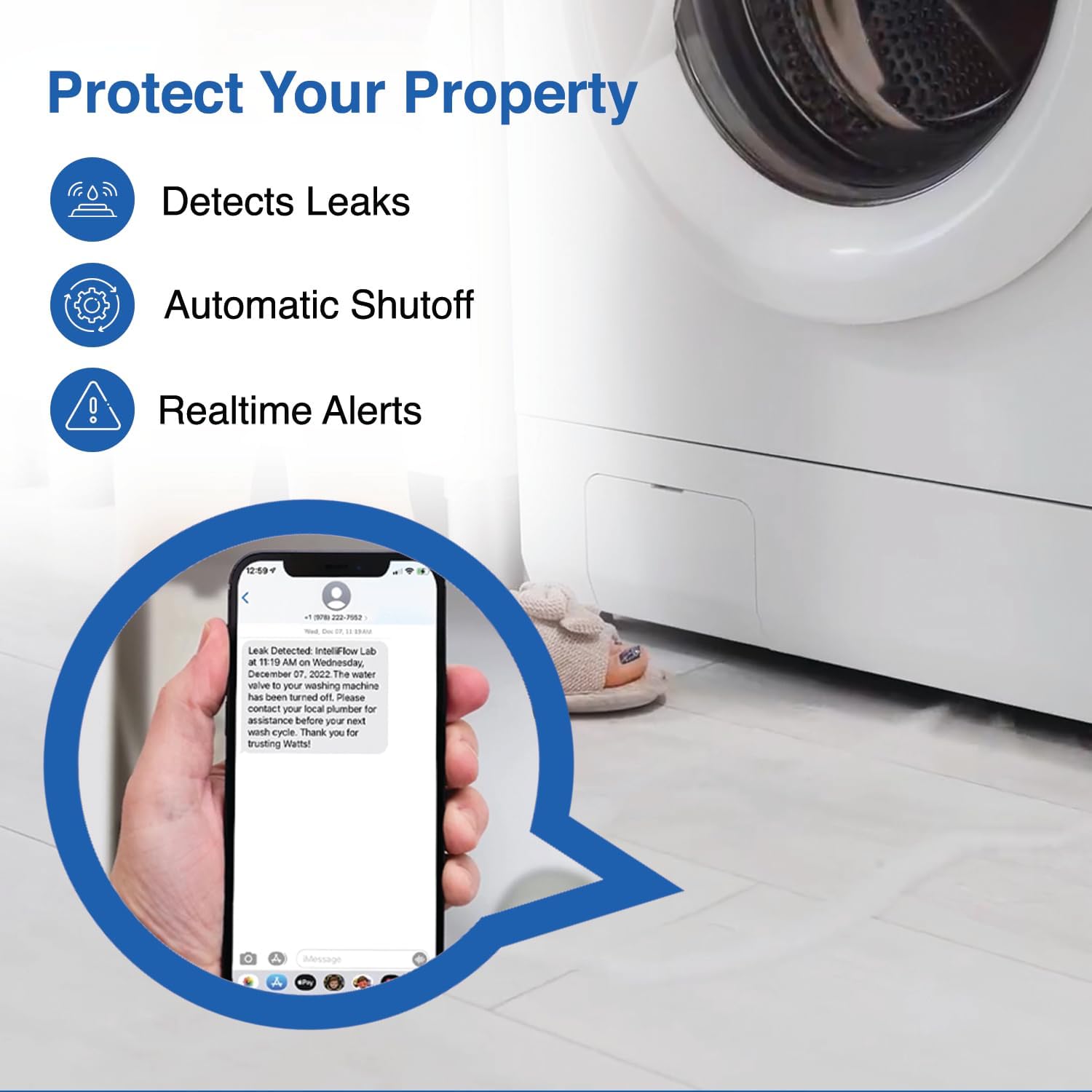
Worried your washing machine could flood your laundry room while you’re out running errands or asleep?

Product Overview
You’re looking at the Watts A2C-SC Series Intelliflow 1/2″ Washing Machine Smart Water Shutoff Valve with Leak Sensor, Inlet Adapters, Without Wall Box, Automated Flood Detection with Real-Time Text and E-Mail Alerts as a way to protect your home from catastrophic water damage. This product combines a motorized shutoff valve, a floor-mounted leak sensor, and cloud-connected alerts to stop major leaks quickly and notify you the moment something goes wrong.
The system is designed specifically for washing machine inlets and aims to be easy to install and configure, with a QR code-based registration and Wi‑Fi connectivity. If you want to reduce the risk of hundreds of gallons of water pouring into your laundry space in a short time, this is built for that scenario.
What’s included in the box
You’ll receive the Intelliflow valve body, a leak sensor, inlet adapters for the washing machine hoses, and a power cord. Note that the product is sold without a wall box, so you’ll need to account for that if your installation requires one.
Every included item is intended to make setup straightforward — the valve mounts on the water inlet, the adapters connect to your hoses, and the sensor sits on the floor behind the machine where a hose failure would first be noticed. You’ll still want basic plumbing tools and perhaps plumber’s tape to ensure a leak-free mechanical installation.

Key Features
This device focuses on three main capabilities: continuous water flow monitoring, automatic shutoff on leak detection, and real-time alerts via text and email. These features are meant to give you both immediate physical protection by stopping the water and timely information so you can respond.
Other notable features include the valve’s electronic control that senses when the washing machine is in use and only allows water flow while the machine draws current. That behavior reduces nuisance shutoffs while still responding immediately to actual leaks.
Continuous water monitoring
The IntelliFlow continuously measures water flow and watches for abnormal patterns that indicate a burst hose or continuous unintended flow. You’ll benefit from ongoing protection rather than periodic checks or reliance on you being present to notice a problem.
Because it’s actively monitoring, the unit can detect a sudden spike in flow or water presence behind the machine and react faster than manual shutoff or a passive sensor alone.
Automated flood detection and alerts
When the floor sensor detects water, the IntelliFlow will automatically close the inlet valve and send you real-time text and email alerts. This immediate notification is useful whether you’re at home or away, so you can call a plumber, shut power to the appliance, or stop a washing cycle remotely if your smart home allows it.
You register the device by scanning the QR code on the unit and connecting it to your local Wi‑Fi network, which enables cloud notifications and remote status updates.

Quick Specs (At-a-Glance Table)
Below is a concise table to help you quickly understand core specs and what they mean for you.
| Attribute | What it means for you | Notes |
|---|---|---|
| Valve size | Works with 1/2″ washing machine inlets | Standard size for most residential washer hookups |
| Includes | Leak sensor, inlet adapters, power cord | No wall box included |
| Alerts | Real-time text and email | Requires Wi‑Fi and device registration |
| Flow control | Opens only when washer draws current | Reduces accidental water supply when machine idle |
| Shutoff response | Immediate on sensor detection | Minimizes water discharged during hose failure |
| Connectivity | Local Wi‑Fi, cloud-based alerts | No dedicated hub required |
| Installation complexity | Moderate — basic plumbing and electrical outlet | You may want a plumber for tight or difficult access |
| Use case | Washing machine protection | Specifically optimized for laundry applications |
Installation Overview
You’ll find the installation process approachable if you’re comfortable with basic plumbing and using a smartphone for setup. The valve mounts inline on the hot and/or cold inlet (check your chosen configuration) and the floor sensor sits where water would pool behind your washer.
You’ll need to turn off water to the washing machine, remove existing inlet hoses, add the included adapters and valve, and reconnect hoses. Finally, plug in the valve’s power cord, register the device via QR code, and join your Wi‑Fi network.
What tools and prep you’ll need
Prepare an adjustable wrench, plumber’s tape (Teflon), a towel for drips, and a stable surface to place the floor sensor. You’ll also need your smartphone and your Wi‑Fi SSID and password to complete the online setup.
If the inlet connection area is cramped or the hose threads are corroded, you might need extra help from a plumber. The valve itself requires a grounded outlet within reach of the supplied power cord.
Step-by-step installation summary
- Turn off the water supply to your washer and unplug the appliance.
- Remove existing inlet hoses and apply plumber’s tape to threads.
- Install the inlet adapters and bolt the IntelliFlow valve into place.
- Reattach the hoses to the adapters, hand-tighten then wrench-turn to secure.
- Place the leak sensor on the floor behind the washer where a burst hose would leak.
- Plug in the IntelliFlow, scan the QR code, register online, and connect to Wi‑Fi.
- Run a test cycle and simulate a leak to confirm correct operation.
You’ll be done in most cases within an hour if the area is accessible and your Wi‑Fi is stable. If anything feels tight or complicated, pausing to call a professional will save you headaches later.

How the System Works
This device uses a combination of flow monitoring, a floor leak sensor, and electronic control logic to decide when to allow or stop water. It only lets water through when the washing machine is actively using current, which prevents flow when the appliance is idle.
If the leak sensor detects water or the flow monitoring notices abnormal continuous flow, the valve closes immediately. You then receive alerts so you can take next steps.
Flow monitoring logic
The valve monitors the water flow and correlates that with the washer’s state — essentially checking for electrical draw and expected flow patterns. If it detects continuous full flow that doesn’t match a normal wash cycle, it interprets this as a likely rupture or stuck valve.
This intelligent pattern recognition reduces unnecessary shutoffs during maintenance or atypical but safe usage, while protecting you against real failures.
Leak sensor behavior
The floor-mounted sensor is a simple but effective device that senses water contact and triggers the valve to shut. Because it sits directly where a hose failure would leak first, you’re getting fast mechanical intervention before water spreads across the room.
The sensor is low-profile to fit behind machines and is designed to be durable in a laundry environment where detergents and humidity are common.
Advanced electronic control
A standout detail is that the Intelliflow valve opens only when it detects electric current indicative of the washer running. This means if the washer isn’t powered, the valve defaults to closed, giving you a safer baseline.
This control logic prevents scenarios where the water would be left on to the machine when it’s disconnected or during shutdowns, cutting a common cause of unnoticed slow leaks.
Alerts, Connectivity, and Notifications
You’ll get alerts by text and email, which helps ensure you’re notified quickly whether you carry a smartphone, are at a work computer, or receive notifications on multiple devices. The cloud component is designed to route messages reliably and provide logs if you need to document an incident.
Registration through the QR code and connecting to your Wi‑Fi is straightforward; just make sure your router signal reaches the laundry area and you have the network password handy.
Registration and Wi‑Fi setup
Scan the QR code on your IntelliFlow, follow online registration steps, and input your Wi‑Fi credentials. The process is web-based, so you can complete it from any device with a browser.
If your laundry area has poor Wi‑Fi coverage, consider improving signal with a mesh node or range extender to make sure alerts are delivered without delay.
Real-time text and email alerts
Because alerts are pushed via cloud services, you get real-time text and email when the sensor triggers or if the valve closes due to anomaly detection. You can use these alerts to call a neighbor, shut off your main waterline remotely if you have that capability, or call a plumber immediately.
Alerts also create a record of the event, which helps with insurance claims or troubleshooting after the fact.

Performance and Reliability
You can expect quick mechanical closure and consistent detection in normal household conditions, with the valve engineered to minimize the amount of water that escapes once a problem begins. The combination of immediate shutoff and networked alerts is designed to reduce both physical damage and repair time.
The long-term reliability will depend on installation quality, ambient conditions, and whether you follow recommended maintenance steps like periodic testing and sensor placement checks.
Shutoff speed and accuracy
The valve’s response time is engineered to be near-instant when the sensor detects water, which is crucial in preventing hundreds of gallons from escaping. You’ll typically see a dramatic reduction in how much water reaches your floor compared to an unattended burst hose without protection.
The accuracy of the system combines the sensor and flow analytics, which helps ensure that legitimate leaks are acted on quickly and false trips are minimized.
Handling false positives
No electronic safety system is perfect, and you may encounter occasional false positives due to extreme variation in flow patterns or sensor contact with residual moisture. The good news is the system’s design aims to reduce these by requiring clear conditions for shutoff, such as confirmed water contact or anomalous continuous flow.
If false positives become frequent, you’ll want to check sensor placement, Wi‑Fi stability, and plumbing connections, and reach out to Watts support for firmware or configuration guidance.
Design and Build Quality
The valve and sensor have a rugged, utilitarian design intended for the harsh environment typical of laundry rooms: humidity, detergent residues, and temperature shifts. The parts that contact water are made of corrosion-resistant materials to extend life.
From a user perspective, the physical footprint is compact enough to fit most inlet spaces, but you’ll want to measure before purchase if your setup is unusually tight.
Materials and durability
Metals, plastics, and seals used in the valve appear to be chosen with longevity in mind, and the manufacturer has a long history in water control products. Sealing surfaces and adapter threads are standard sizes and materials to ease future maintenance.
Even so, regular inspection and occasional re-torqueing of hose fittings will keep everything functioning and minimize the risk of mechanical failures.
Leak sensor and inlet adapters
The sensor is low-profile and unobtrusive, so it won’t interfere with your washer’s placement or vibration. Inlet adapters are included to match your existing hoses, making the transition smoother.
If your hoses use a non-standard size or a specialized wall box setup, you may need additional fittings or a plumber’s help, since the product doesn’t include a wall box.
Use Cases and Suitability
This product is specifically targeted at washing machine protection, which is where a substantial portion of household water damage originates. If your main concern is laundry area flooding, this is purpose-built for that setting.
You’ll also find it useful in any setting where the washing machine is unattended for periods of time — overnight, while you’re at work, or when the home is empty during travel.
For homeowners
As a homeowner, this device gives you a higher level of control and early warning than a passive drip tray or standalone water sensor. You’ll likely reduce insurance claims and repair costs over time if you have frequent laundry use or older hoses.
You’ll want to pair it with annual hose inspections and possibly replace rubber hoses with braided stainless alternatives to further reduce risk.
For renters and landlords
Renters can benefit if the landlord allows the installation, and landlords can use it as a preventive measure to avoid disruptive and expensive repairs. It’s a cost-effective investment for multi-unit properties where a single washer failure could impact multiple tenants below.
Make sure you discuss any modifications to plumbing with your landlord before installing, since the unit is more intrusive than a plug-in sensor.
Pros and Cons
You’ll appreciate the immediate physical shutoff, reliable alerts, and the intelligence that opens the valve only during washer usage. At the same time, you should account for the need for a nearby outlet, dependable Wi‑Fi, and the fact it doesn’t include a wall box.
The pros tend to outweigh the cons for most households focused on proactive water damage prevention, but weigh your specific installation needs before buying.
Pros
- Automated mechanical shutoff reduces potential water loss significantly.
- Real-time text and email alerts keep you informed wherever you are.
- Intelligent opening only during washer operation reduces unnecessary water exposure.
- Includes leak sensor and inlet adapters for most standard installations.
These features combine to create a practical system that actively prevents and notifies you of serious leak events.
Cons
- No wall box included, which may require additional parts for certain installations.
- Requires stable Wi‑Fi coverage and a nearby electrical outlet for the valve.
- Installation may be moderately challenging if your inlet area or hoses are corroded or cramped.
- As with all electronic-protection systems, occasional maintenance and testing are required.
If you’re comfortable with these trade-offs, the device gives robust protection where it matters most.
Comparison with Alternatives
If you’re comparing the Watts Intelliflow to cheaper standalone sensors, you’ll get far better protection by adding immediate mechanical shutoff rather than relying on notifications alone. Standalone sensors detect water but can’t stop the flow.
Compared to integrated smart-home systems with multiple sensors and automation, this product is more focused and typically simpler and faster to install for a washing machine-specific application.
Smart valves under $200
Many budget smart valves provide basic shutoff but lack the sophisticated flow monitoring or the “open on current detection” behavior of the Intelliflow. If you want a valve that only opens while the washer uses current, the Intelliflow’s logic is an advantage.
You’ll find cheaper valves that are sometimes bulkier or require a hub; weigh your desire for advanced behavior against cost.
Integrated home automation systems
If you already have a full smart-home platform with a water protection ecosystem, an integrated solution might give you centralized control and automation across many devices. The Intelliflow, however, is easier to deploy as a targeted solution without a large setup.
Choose an integrated system if you want broad automation, but pick Intelliflow if your main goal is practical washing-machine leak prevention with minimal complexity.
Maintenance and Troubleshooting
You’ll want to test the system occasionally by simulating a small leak and confirming the valve closes and alerts are sent. Periodic visual inspection of hose connections and the sensor area will help prevent false triggers or missed detection.
Firmware or connectivity issues are rare but worth checking if alerts stop; a power-cycling of the device and reconnection to your Wi‑Fi often resolves transient issues.
Power and backup concerns
The Intelliflow requires AC power to operate its motorized valve and electronics, so it won’t work during a prolonged power outage unless you provide backup power. If you live in an area with frequent outages, consider adding a small UPS (uninterruptible power supply) to keep the valve functional during short outages.
Because the valve opens only when the washer draws current, if you lose power to the washer but the water is left on elsewhere, you’re still protected — the valve will remain closed by design.
Sensor placement and cleaning
Place the sensor flat on the floor where leaks would accumulate, and keep it free of lint and detergent buildup that could interfere with detection. A periodic wipe-down and a check to ensure it hasn’t been displaced by moving the washer will maintain reliable operation.
If the sensor is placed on a sloped or uneven surface, consider repositioning or adding a flat board so the sensor stays in full contact with the floor.
Frequently Asked Questions (FAQ)
You’ll have questions about compatibility, reliability, and whether this is the right product for your setup. Below are common concerns and practical answers to help you decide.
Will the valve shut off if the power goes out?
No — the valve requires power to operate, so during a power outage it won’t be able to cycle. However, the valve remains closed by default when the washer is not drawing current, and you can use a small UPS to maintain operation during short outages.
If you expect long power interruptions, pairing the Intelliflow with a manual water shutoff practice or an alternative failsafe is wise.
Can I install this myself, or do I need a plumber?
If you’re comfortable turning off the water, disconnecting hoses, and using basic tools like an adjustable wrench, you can probably install it yourself. If access is tight, the existing fittings are corroded, or you aren’t confident in making plumbing connections, hiring a plumber is the safer option.
A professional will also ensure proper sealing and mounting, which can prevent leaks unrelated to valve failure.
Does it work with all washing machines?
The IntelliFlow is designed for standard residential washing machines and 1/2″ inlet hoses. The valve’s logic that opens under electrical draw should be compatible with most modern washers that have a measurable current draw during cycles.
If you have an older or commercial machine with uncommon inlet fittings or control behavior, check compatibility or consult Watts support before purchase.
How reliable are the alerts?
Alerts are sent via cloud services to your text and email, and they are generally reliable as long as your Wi‑Fi and the cloud service are available. Occasional delays can occur with internet outages, so ensure strong local Wi‑Fi coverage in your laundry area.
For ultimate assurance, combine alerts with the mechanical shutoff action, which functions locally and does not depend on cloud service to physically stop water.
What if my sensor trips accidentally?
First, check the sensor location for any residue, spilled detergent, or steam condensation that could trigger it. Confirm that it’s placed where actual poolable water would reach it and that it’s not contacting the washer’s body or a damp surface.
If accidental trips continue, review the installation guide, adjust placement, and contact customer service for troubleshooting or replacement if the sensor appears defective.
Final Recommendation
If you want practical, targeted protection for the most common and damaging household water risk — your washing machine — the Watts A2C-SC Series Intelliflow 1/2″ Washing Machine Smart Water Shutoff Valve with Leak Sensor, Inlet Adapters, Without Wall Box, Automated Flood Detection with Real-Time Text and E-Mail Alerts is a strong choice. You’ll benefit from immediate mechanical shutoff, intelligent flow behavior that reduces nuisance openings, and real-time notifications that let you act quickly.
Install it carefully, confirm Wi‑Fi and power availability, and integrate it into your regular home-maintenance routines to keep your laundry room safe and give yourself real peace of mind.

Disclosure: As an Amazon Associate, I earn from qualifying purchases.