
Worried about the air you and your family breathe every day?


Quick verdict
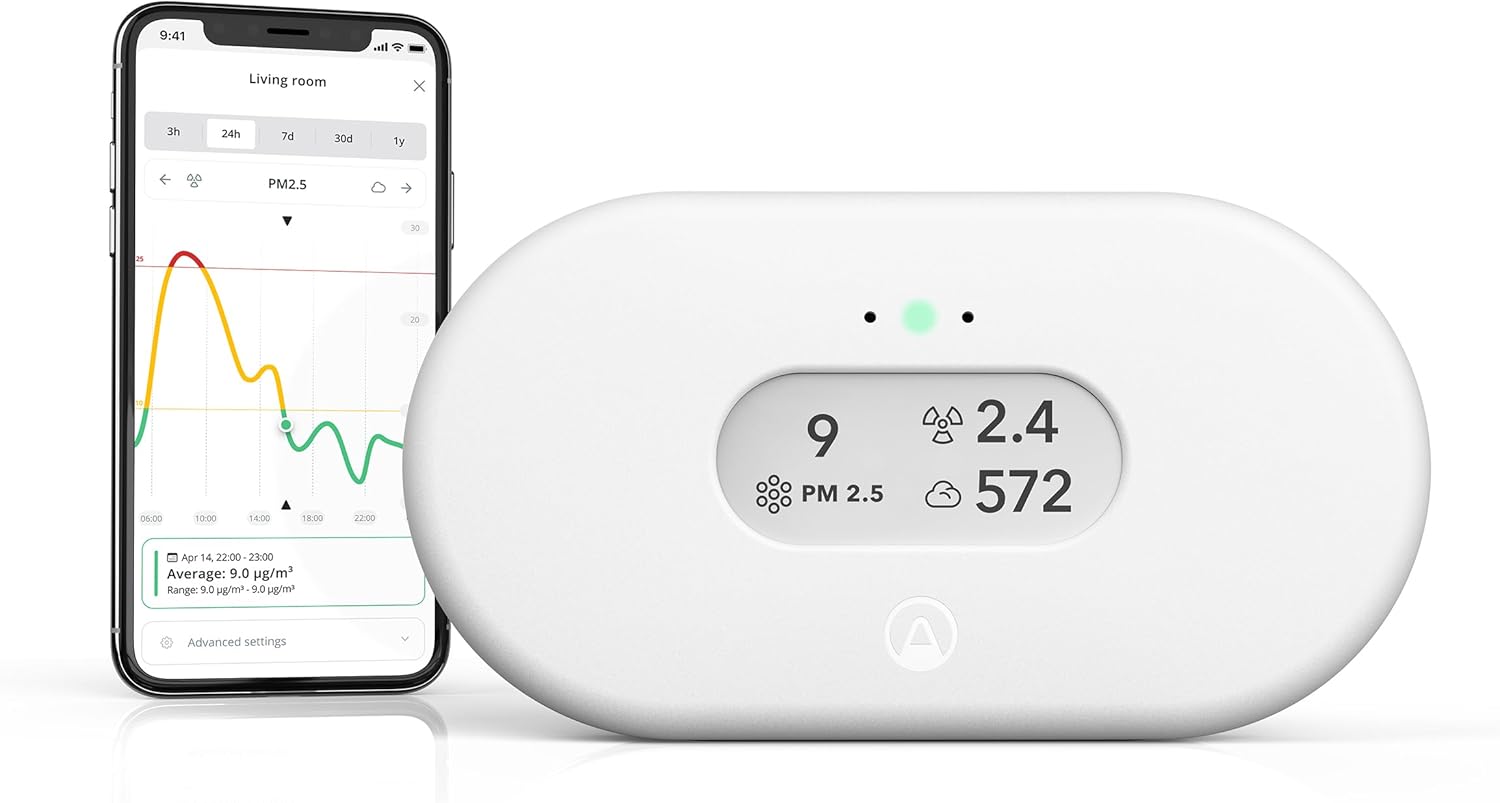
You get a comprehensive, always-on air quality monitor with the Airthings 2960 View Plus – Battery Powered Radon & Air Quality Monitor (PM, CO2, VOC, Humidity, Temp, Pressure). It blends radon detection with particulate, gas, and environmental sensors, and makes it easy to watch trends, get alerts, and act when something is off.
Airthings 2960 View Plus - Battery Powered Radon & Air Quality Monitor (PM, CO2, VOC, Humidity, Temp, Pressure)
$279.99 In Stock
What this product is best at
This device is ideal if you want continuous, multi-parameter monitoring without running cables around your home. You’ll appreciate accurate radon detection, live PM2.5 and CO2 readings, and a simple app experience that stores your data in the cloud for trend analysis. If you care about both long-term radon exposure and short-term indoor air issues (cooking fumes, elevated CO2, wildfire smoke), this model covers all those bases.
Specifications
Below is a concise breakdown of the key specs and capabilities so you can quickly see what the device measures and what it requires.
| Feature | Details |
|---|---|
| Product name | Airthings 2960 View Plus – Battery Powered Radon & Air Quality Monitor (PM, CO2, VOC, Humidity, Temp, Pressure) |
| Main sensors | Radon (electrochemical), PM2.5, CO2, VOC, Humidity, Temperature, Air Pressure |
| Connectivity | WiFi (internet required for cloud features and remote notifications) |
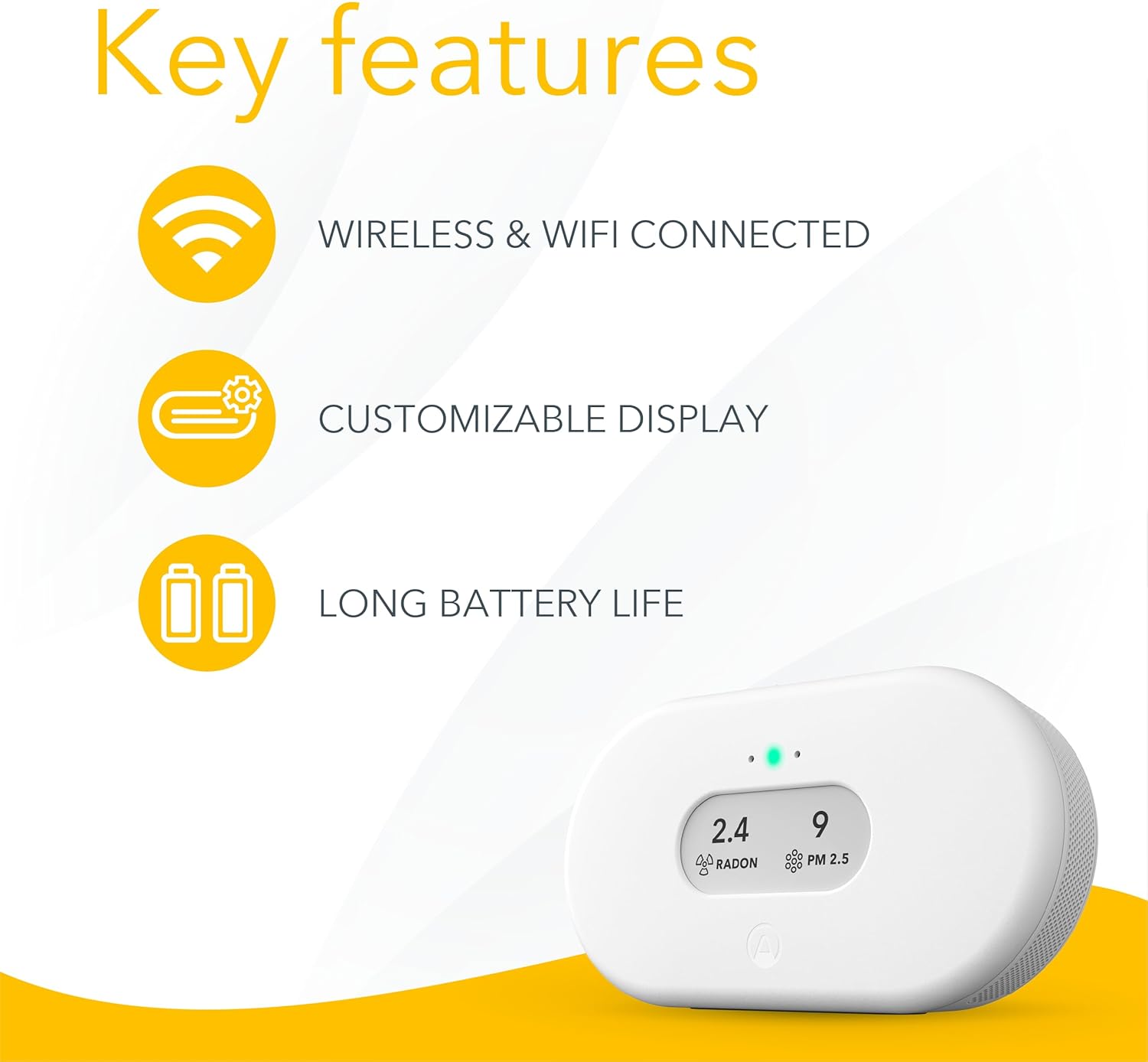
| Display | Customizable eInk screen |
| Power | Battery powered (cable-free placement) |
| App | Airthings app required; free to use (account needed: name and email) |
| Operating temperature | 4 to 40°C / 39 to 104°F |
| Continuous monitoring | Yes — live data and cloud storage for trends |
| Notifications | Real-time alerts via app; tips and recommendations included |
| Pollen data | Local pollen forecast available via BreezoMeter integration |
| Warranty | Standard warranty with optional free registration to extend to five years |
| Account & data | Account required; data saved securely in the cloud |
| Manufacturer track record | Over 15 years in radon & indoor air quality monitoring; >1,000,000 users |
Sensors and measurements
You’ll find a comprehensive sensor suite that covers both long-term health risks and short-term comfort or safety issues. Each sensor has its role, and together they give you a fuller picture of indoor air quality.
- Radon: The device uses an electrochemical sensor for radon detection, which is important because radon is the leading cause of lung cancer among non-smokers. Continuous radon monitoring lets you see daily and seasonal trends rather than relying on spot checks.
- PM2.5: This measures fine particulate matter, important during wildfire smoke events or when indoor sources like cooking and candles spike. PM2.5 readings help you understand acute air pollution risks.
- CO2: Elevated CO2 is an indicator of poor ventilation and can affect concentration and comfort. The CO2 sensor helps you decide when to ventilate a room, especially in offices and bedrooms.
- VOCs: Volatile organic compounds are common from cleaning products, paints, and some cooking. The VOC sensor alerts you to airborne chemicals but does not identify specific compounds — it gives you a level to act on.
- Humidity, Temperature, Pressure: These environmental metrics matter for comfort, mold risk, and interpreting sensor readings. Humidity in particular helps you decide on humidification or dehumidification.

Design, screen and placement
The Airthings 2960 View Plus is thoughtful about where it sits in your home. You get a minimalist, cable-free unit that uses batteries so you can place it where readings matter most.
The customizable eInk screen is understated and easy on the eyes, showing key values at a glance without bright LEDs. Because it’s battery powered, you aren’t limited by outlet location and can move it around between a basement, bedroom, or living area as needed. The physical design aims to be discreet while remaining functional.
Connectivity, app and cloud features
You’ll need the Airthings app to use the monitor — it’s the hub for trends, notifications, and settings. The device connects to your WiFi, and the app stores data in the cloud so you can check live readings from anywhere. That cloud storage lets you analyze day-to-day and long-term patterns, share reports, and receive timely alerts.
Account creation is straightforward and only requires your name and email. The app includes tips to improve indoor air and integrates local pollen forecasts via BreezoMeter, which can be helpful if seasonal allergies are a concern. Since the monitor depends on internet access for remote features and cloud storage, you should expect the full remote experience only when it’s online.
Setup and ease of use
Setting up the Airthings 2960 View Plus is intended to be quick, especially if you’re comfortable with smartphone apps. You’ll download the Airthings app, create an account, and follow step-by-step prompts to connect to your WiFi and place the device.
Because the unit is battery-powered and uses WiFi, you won’t deal with cables or complicated wiring. The app walks you through calibration and initial reading expectations, and the display gives immediate feedback so you know the device is working. If you prefer minimal fuss, you’ll appreciate how the process doesn’t require advanced technical knowledge.
Accuracy and reliability
You’ll get robust radon detection thanks to the electrochemical sensor, which is suitable for continuous monitoring and long-term trend analysis. Airthings has focused on radon for many years, and that expertise shows in how the device reports values that matter for health risk assessment.
For PM2.5 and CO2, the sensors provide practical, actionable readings — good enough for deciding when to ventilate, run an air purifier, or alter activities like cooking. Bear in mind that VOC sensors indicate the presence and level of volatile compounds without identifying each specific chemical. The device balances precision and convenience; it does a solid job for home and small office settings.
Notifications, alerts and actionable tips
You’ll receive timely notifications through the Airthings app when readings cross thresholds you should care about. Alerts cover radon spikes, elevated PM2.5 (which might happen during wildfire smoke), high CO2 (poor ventilation), and significant VOC or humidity events.
The app doesn’t just alert you; it also offers recommendations you can act on — such as increasing ventilation, using a purifier, or checking humidity-control devices. Those actionable tips help you close the loop between measurement and mitigation. Notifications are especially valuable when you’re away from home, since some issues (like radon increases or pollution from a nearby event) can be time-sensitive.
Real-world examples where this helps
You’ll find many practical scenarios where the View Plus proves useful:
- Basement radon: If you have an older foundation or live in a radon-prone area, continuous radon data helps you time mitigation and confirm effectiveness.
- Home office: High CO2 in a closed office can sap focus. The CO2 readings tell you when to crack a window or add ventilation.
- Cooking and VOC spikes: After heavy cooking or using strong cleaners, the VOC readings and PM2.5 can prompt you to ventilate and reduce exposure.
- Wildfire season: PM2.5 monitoring lets you judge outdoor smoke impact and whether to run purifiers or keep windows closed.
- Allergies: With BreezoMeter pollen data in the app, you can pair indoor trends with outdoor pollen forecasts to plan activities.
Comparison to single-purpose devices and competing multi-sensors
You’ll notice key advantages of the View Plus over single-sensor monitors. Where a dedicated radon detector only tells you radon levels, this model gives context — humidity, temperature, and particulate measurements that influence how you interpret radon readings and overall air quality.
Compared with other multi-sensor competitors, the strengths here are Airthings’ radon heritage and a polished app/cloud service. The trade-offs are that the device requires WiFi and an account for remote features, and VOC readings are generalized rather than chemically specific — a common limitation across consumer monitors. If you want professional-grade, laboratory-precise measurements for every pollutant, you’ll need specialized instruments; but for home monitoring, the View Plus is a strong all-around choice.
Pros and cons
You’ll want to weigh these strengths and limitations before deciding.
Pros:
- Monitors radon plus PM2.5, CO2, VOCs, humidity, temperature, and pressure in one unit.
- Always-on monitoring with cloud storage and trend analysis.
- Battery-powered and cable-free placement with a subtle eInk display.
- Free Airthings app with actionable notifications and BreezoMeter pollen integration.
- Established radon expertise and a large user base.
- Optional registration for a five-year warranty.
Cons:
- Requires the Airthings app and an account to access full features.
- Relies on WiFi and internet for remote monitoring and cloud storage.
- VOC sensor reports general levels rather than identifying specific chemicals.
- Battery replacement is a maintenance task you’ll need to plan for.
- Not a replacement for professional-grade testing for legal or regulatory purposes.
Installation tips and best placement
You’ll get the most useful data when you place the monitor thoughtfully. Ideally, keep it at breathing height in rooms you use regularly — living rooms, bedrooms, home offices, or basements if radon testing is a priority. Avoid placing it in direct sunlight, too close to vents, or right above cooking surfaces, as those locations can skew readings.
For radon specifically, basements or ground-level rooms tend to show the highest concentrations if they’re present in your home. If you’re tracking ventilation and CO2, put a unit where occupants spend long periods, like a home office or bedroom. If you move the device, give sensors a day or two to stabilize and produce representative readings.
Maintenance and expected lifespan
You’ll mainly need to monitor battery levels and replace batteries as needed — the product is intentionally cable-free so you have flexibility in placement. Registering the product adds an extended five-year warranty if you opt in, which gives you extra coverage beyond the standard warranty.
The internal sensors are designed for continuous monitoring; you shouldn’t need frequent recalibration in typical home use. If you notice anomalous readings that don’t respond to environmental changes, check the app for troubleshooting steps or consult Airthings support. Regular updates to the app and device firmware can improve performance, so keep software up to date.
Data privacy and account requirements
You’ll be required to create an Airthings account to use the device. The account creation process is intentionally minimal — Airthings asks for your name and email — and data is saved securely in the cloud. This cloud-based approach enables remote monitoring, historical trend analysis, and push notifications.
If you’re privacy-conscious, the key is that your readings are associated with an account; Airthings’ policy and security practices determine how that data is managed. For most users, cloud storage and notifications are valuable features that outweigh potential concerns, but if you prefer offline-only monitoring, this model may be less suitable because remote features depend on internet connectivity.
Warranty, customer support and company background
You’ll benefit from Airthings’ 15+ years of experience in radon and indoor air quality monitoring. The company has established trust among a large user base and provides support resources for setup and troubleshooting.
Registering your device allows you to extend the standard warranty to five years for free, which is a significant benefit if you plan to keep the monitor long-term. Airthings offers documentation, FAQs, and customer support channels to help with any issues that arise.
Who should buy the Airthings 2960 View Plus?
You’ll find this monitor a great fit if:
- You own or rent a home and want both long-term radon data and short-term air quality insights.
- You’re sensitive to smoke, pollen, VOCs, or indoor pollutants and want a single device that tracks multiple parameters.
- You need remote monitoring and push notifications while you’re away from home.
- You prefer a battery-powered, cable-free device with an understated eInk display.
- You want a product backed by a company with radon monitoring expertise and a solid track record.
If you only need one measurement (say, just CO2 or just radon) and want the absolute cheapest option, a single-purpose device may be more economical. But if you want a holistic view of indoor air health, this is a compelling device.
Price considerations and value
You’ll need to weigh upfront cost against long-term value. The View Plus positions itself as a higher-value monitor because it combines multiple sensors in one device and includes cloud access, app integration, and an optional five-year warranty. The cost can be justified if you value continuous radon monitoring and the convenience of a multi-sensor setup that covers both health risks and everyday comfort.
Because the Airthings app is free and the device doesn’t require subscriptions for core features, ongoing costs are limited mainly to occasional battery replacement. If you plan to monitor multiple rooms, consider whether one monitor moved strategically is enough or if multiple units provide better coverage.
Practical limitations and what to watch for
You’ll want to keep realistic expectations about consumer-grade monitors. The device is excellent for trend detection and practical guidance, but it is not a lab-grade instrument for legal or scientific certification. VOC readings are broad indicators and won’t spell out which chemical is present. Also, because the unit relies on WiFi for remote features and cloud storage, you’ll lose those features if your internet goes down.
Finally, while radon readings from an electrochemical sensor are reliable for household decision-making, formal radon mitigation projects may still reference long-term averages and professional testing to confirm exposure and mitigation success.
Frequently asked questions you might have
You’ll likely wonder about typical questions such as battery life, placement for radon, and calibration. Battery life varies with use and settings, so check the app for battery status updates rather than relying on a fixed lifespan expectation. For radon, measure in basement or lowest occupied level where you spend time. If you’re worried about accuracy, allow sensors to acclimate after moving the device and keep the app updated for firmware improvements.
If you need further specifics about calibration or lab-grade comparisons, reach out to Airthings support or consult a local radon professional for confirmatory testing.
Final verdict and recommendation
You’ll find the Airthings 2960 View Plus to be a capable, user-friendly, and comprehensive solution for indoor air monitoring. It’s especially valuable when you want both long-term radon insight and immediate alerts for particulate, CO2, and VOC issues. The battery-powered design, cloud-enabled app features, and the option to register for a five-year warranty add practical convenience and peace of mind.
If you care about the health of your household, want timely notifications, and prefer a discreet, portable monitor that tracks multiple pollutants, this device is worth a close look. It balances actionable monitoring with the convenience of modern connected devices, all backed by a company with a strong history in indoor air quality.

Disclosure: As an Amazon Associate, I earn from qualifying purchases.