
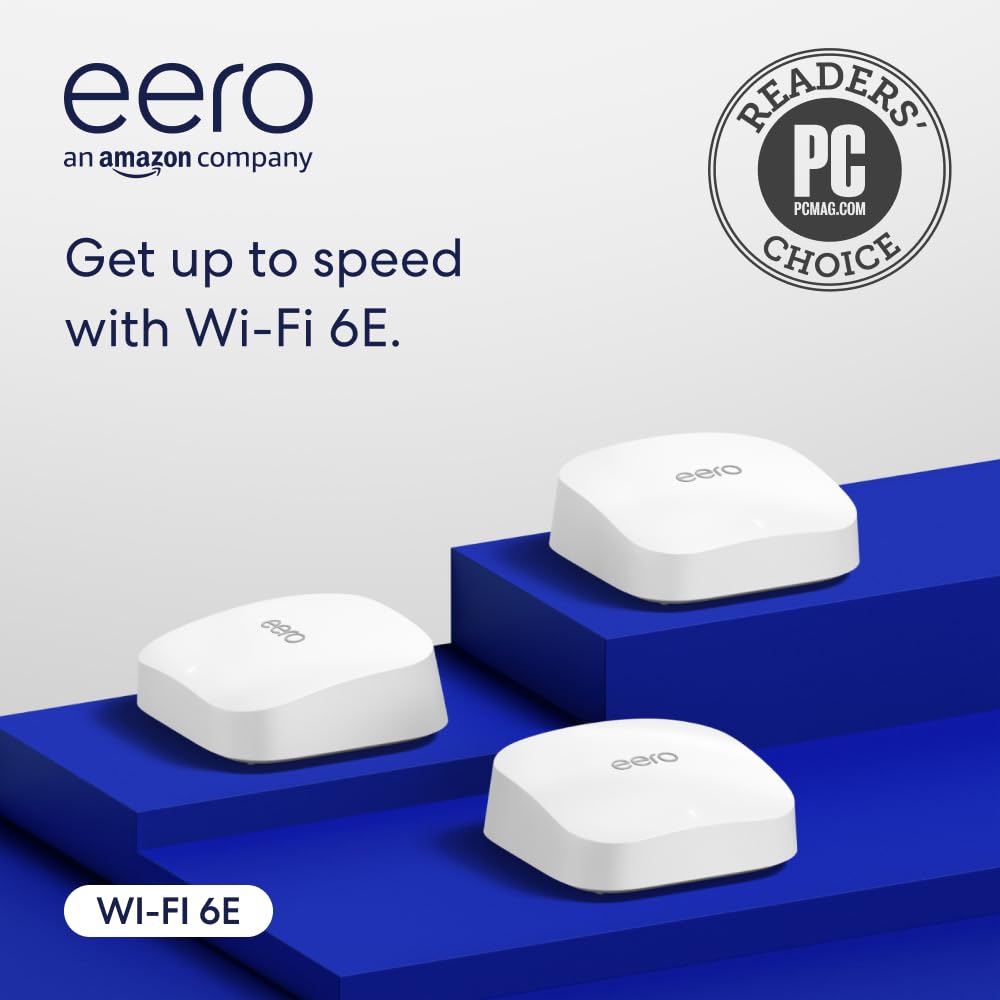
? Curious whether the Amazon eero Pro 6E mesh wifi system – Supports internet plans up to 2.5 Gbps, Coverage up to 6,000 sq. ft., Connect 100+ devices, 3-pack is the right upgrade for your home network?
Buy Eero Pro 6E Mesh WiFi System (3-pack) On Amazon
Overview
You’re looking at a mesh Wi‑Fi solution that promises high speeds, broad coverage, and modern features. The Amazon eero Pro 6E mesh wifi system is eero’s first Wi‑Fi 6E product designed to bring the 6 GHz band into homes with compatible devices, while remaining backward-compatible with older gear.
What this product is
This 3-pack mesh system is meant to replace a single router or older mesh setup to give you faster, more reliable coverage across up to 6,000 sq. ft. You get support for gigabit+ internet plans, the ability to connect 100+ devices, and eero’s TrueMesh routing technology to reduce dead spots.
Who it’s aimed at
It’s for people who stream 4K/8K video, game online, run smart homes with many devices, or who just want a robust network for remote work. If you plan to upgrade to or already have Wi‑Fi 6E devices, this unit will let you use the 6 GHz band for lower-latency connections.

Amazon eero Pro 6E mesh wifi system - Supports internet plans up to 2.5 Gbps, Coverage up to 6,000 sq. ft., Connect 100+ devices, 3-pack
Product specifications at a glance
You’ll find a compact overview helpful when deciding whether the hardware meets your needs. Below is a clear breakdown of the key specs so you can scan what matters most quickly.
| Feature | Detail |
|---|---|
| Model | Amazon eero Pro 6E (3-pack) |
| Wi‑Fi Standard | Wi‑Fi 6E (backward-compatible with Wi‑Fi 6/5/etc.) |
| Frequency Bands | 2.4 GHz, 5 GHz, 6 GHz |
| Max Wireless Speed | Up to 1.6 Gbps wireless (per eero) |
| Max Network Speed | Up to 2.3 Gbps total (supports wired gigabit and 2.5 Gb plans via port) |
| Wired Ports | 2.5 Gb Ethernet port (on one unit), gigabit Ethernet on others (varies) |
| Coverage | Up to 6,000 sq. ft. (3-pack) |
| Device Capacity | Supports 100+ connected devices |
| Technology | TrueMesh adaptive routing |
| App | eero app for setup, monitoring, and control |
| Updates | Automatic firmware updates; optional subscription for advanced security |
| Customer Support | Phone and email support (US +1-877-659-2347, support@eero.com) |
Purchase The Eero Pro 6E (3-pack) On Amazon
Key features explained
You’ll want to know which features will actually change your daily experience and which are mostly marketing. Below, each major feature is explained in plain terms so you can weigh the benefits.
Wi‑Fi 6E support
Wi‑Fi 6E adds the 6 GHz band to the existing 2.4 and 5 GHz bands, giving you more clean channels and less interference. This translates to lower latency and higher throughput for devices that support 6E, which is especially useful if you have multiple high-bandwidth devices or do latency-sensitive gaming and conferencing.
Backward compatibility
Even if most of your current devices aren’t Wi‑Fi 6E-capable, the system works with older Wi‑Fi 6, 5, and earlier devices. You won’t need to replace everything at once; the mesh will still improve coverage and routing for non‑6E devices while reserving 6 GHz for compatible gear.
Wired speeds without the wires
You’ll get wired-level performance for many tasks without running Ethernet everywhere because the system supports high wireless speeds and a 2.5 Gb Ethernet port for your modem or a wired device. If your ISP plan is above gigabit, the 2.5 Gb port lets you utilize gigabit+ plans on compatible setups.
TrueMesh routing technology
TrueMesh is eero’s adaptive routing algorithm that intelligently moves traffic across nodes to cut down on drop-offs and dead zones. That means the system will automatically route connections in the most efficient way as you move around your home or as conditions change.
Coverage and device capacity
A 3-pack covers up to 6,000 sq. ft. and supports over 100 connected devices, so you can run lots of smart lights, cameras, phones, tablets, and laptops without immediate congestion. The real-world capacity depends on what those devices are doing, but the hardware is built to handle a busy smart home.
Automatic updates and subscription options
Automatic updates keep your mesh secure over time, and eero offers optional subscription services for advanced security and network management. You get basic protection automatically, with premium features behind a subscription if you want parental controls, ad blocking, or enhanced threat defense.
Performance in real-world scenarios
You’ll want to know how this mesh performs in the situations you care about most: streaming, gaming, remote work, and smart home management. Below are practical expectations based on the hardware and eero’s implementation.
Streaming and media
If you stream multiple 4K or 8K tracks concurrently, the increased bandwidth and better channel selection from the 6 GHz band will reduce buffering. You’ll still want wired connections for the main streaming devices when possible, but for most TVs and set-top boxes, the eero Pro 6E will offer a worry-free wireless experience.
Online gaming
Gamers will appreciate lower latency on compatible devices thanks to the 6 GHz band and smarter traffic routing. While professional competitive gamers often prefer wired connections, you can expect solid wireless performance for casual and many competitive matches, especially when the nearest eero is the 6E band and interference is low.
Remote work and video calls
You’ll see smoother video calls with fewer dropouts and more consistent upload speeds for cloud-based work. The mesh’s quality-of-service handling helps prioritize real-time traffic, so you won’t have to mute and rejoin meetings frequently when you’re on a stable eero network.
Smart home and IoT devices
The capacity to support 100+ devices makes this system a strong match for smart homes with cameras, sensors, speakers, bulbs, and thermostats. Many IoT devices use 2.4 GHz, which remains supported, while newer smart devices that are Wi‑Fi 6/6E-ready can use the faster bands.

Setup and daily management
You’ll likely appreciate a system that’s easy to set up and convenient to manage. eero’s app-centric approach is designed for beginners but has enough control for more experienced users.
Initial setup steps
The eero app walks you through plugging in the primary unit to your modem, powering the remaining units, and placing them throughout the house. The app checks signal strength and advises optimal placement, so you don’t need advanced networking skills to get a good layout.
Ongoing management
From the app, you can monitor device connections, run speed tests, create guest networks, and perform basic troubleshooting. You can also pause internet access for specific devices, which is helpful for kids’ screen time or prioritizing bandwidth for work hours.
Firmware updates and maintenance
Updates are automatic, reducing the chance you’ll miss critical security or performance patches. If you prefer manual control, you can still monitor update status and schedule reboots through the app as needed.
Hardware design and placement
You’ll notice eero’s small, minimal hardware is designed to blend into living spaces rather than dominate them. The compact units are easy to hide on a shelf, but placement still matters for coverage.
Physical design
Each eero unit is cylindrical and unobtrusive, with LED indicators that are easy to interpret. The lack of external antennas gives a cleaner aesthetic and makes the nodes easy to position on desks, shelves, or counters.
Optimal placement tips
Place one unit near your modem, another near the center of a busy living area, and the third near a high-usage upstairs or basement zone if you have multiple floors. Keep units clear of large metal objects and away from devices that produce interference like microwaves or cordless phones.
Power and Ethernet considerations
You’ll need power nearby for each unit and should use Ethernet backhaul if you have wired runs available to maximize inter-node performance. If wired backhaul isn’t practical, eero’s mesh routing is efficient, but you’ll see the best consistency when at least some nodes are wired.

Ports, wired speeds, and ISP compatibility
You’ll want to align your purchase with your internet plan and the equipment you already have. The eero Pro 6E provides options to keep wired connectivity robust.
2.5 Gb Ethernet and gigabit ports
The system supports 2.3 Gbps on the network, with a 2.5 Gb Ethernet port that enables gigabit+ plans when plugged into compatible modems or switches. This gives you the ability to take advantage of faster ISP plans without buying separate networking gear.
Using the ports effectively
If you have a powerful NAS, gaming PC, or a wired switch, using the 2.5 Gb port will keep those wired devices at top speeds. You’ll also want to consider a dedicated switch for many wired devices to avoid consuming node ports.
ISP compatibility
Most ISPs and modem-router combinations will work, but if your modem is also a router, you may get better results by switching the modem to bridge mode and letting eero handle routing. This avoids double NAT problems, which can complicate gaming and port forwarding.
Security and privacy
You’ll want assurances your network is protected and that eero manages your data responsibly. The product mixes built-in protections with optional paid services for advanced users.
Built-in protections
Automatic security updates and basic protections are included, reducing exposure to known vulnerabilities. These automatic updates will push patches and improvements that keep the mesh resilient without you having to manage firmware manually.
Optional eero Secure subscription
eero offers a premium subscription that adds features like ad blocking, malware protection, and more granular parental controls. If you run a household with kids or want extra peace of mind, this subscription gives you more fine-grained controls and reporting.
Data and privacy considerations
eero collects diagnostic and connection data for troubleshooting and improvement; check the privacy policy if you want specifics. You can manage some telemetry in the app, but advanced privacy-conscious users might want to review the terms before subscribing to additional features.
Comparison to other mesh systems
You’ll decide faster if you compare eero Pro 6E to other popular mesh systems. Below are key differences that tend to matter when choosing hardware.
eero Pro 6E vs. older eero models
Compared to older eero units, the Pro 6E brings the 6 GHz band and higher throughput. If you already have a functioning eero mesh and don’t need 6E, an upgrade is optional, but if you’re planning future-proofing, the 6E model is a forward-looking choice.
eero Pro 6E vs. other brand flagships
Against competing high-end mesh systems, the Pro 6E is strong on ease of use, automatic updates, and 6E support, though some competitors may offer more advanced tweaks for power users. If you want a simple setup and robust app, eero tends to shine; if you want detailed QoS or enterprise-level controls, other systems may provide deeper customization.
Pros and cons
It helps to see the strengths and weaknesses side-by-side so you can match them to your needs. The table below gives a quick contrast.
| Pros | Cons |
|---|---|
| Wi‑Fi 6E support for 6 GHz band and lower latency | Full benefits require 6E-capable client devices |
| Clean, unobtrusive hardware design | Some advanced router features are limited compared to high-end prosumer gear |
| Easy setup and management via app | Best performance requires good placement or wired backhaul |
| Supports gigabit+ plans with 2.5 Gb port | 2.5 Gb port availability may be on a single unit only |
| TrueMesh routing reduces dead spots | Optional advanced security features require subscription |
| Covers up to 6,000 sq. ft. and 100+ devices | Real-world throughput depends on device mix and interference |
Troubleshooting and practical tips
You’ll want quick solutions if things don’t initially work perfectly. Below are practical tips to keep your mesh network stable and fast.
If your speeds are slower than expected
Check placement first: move nodes closer to each other and away from interference sources. If speeds are still poor, verify your modem is in bridge mode, update firmware, and consider wired backhaul or connecting high-demand devices to Ethernet.
If devices won’t connect to 6 GHz
Make sure your device supports Wi‑Fi 6E; many devices do not yet. If your device supports 6E but still won’t connect, check firmware and driver updates for that device, and ensure the eero app shows the 6 GHz band enabled.
Dealing with dead spots
Relocate nodes or add a wired backhaul to the node nearest the dead spot to boost throughput. If possible, add another eero unit in the gap or run Ethernet to provide a stronger anchor for the mesh.
When parental controls or ad-blocking don’t work as expected
Confirm the features are enabled in the eero app and that the devices in question are not using VPNs that bypass local filters. If issues persist, reboot the network and ensure subscription features (like eero Secure) are active.
Who should buy this
You’ll be happiest with this purchase if you have or plan to get Wi‑Fi 6E devices, need broad coverage for a larger home, or want a simple, reliable mesh for many connected devices. It’s an excellent option for families, home offices, and tech-forward households that want future-ready networking.
Where it’s a perfect fit
Large homes with multiple floors, households with many streaming devices, and users with gigabit+ ISP plans will see the most benefit. If you want minimal fuss and strong vendor support, eero’s combination of app management and automatic updates is compelling.
Where it might not be appropriate
If you’re running an enterprise environment or need advanced router-level customizations like complex VLANs and deep packet inspection, a prosumer router with more granular controls could be a better fit. Also, if you don’t plan to use Wi‑Fi 6E and have a small apartment, a lower-cost mesh may suffice.
Setup checklist before you buy
You’ll want to confirm a few things so the eero Pro 6E meets expectations right away. The checklist below helps you prepare.
- Check whether your ISP plan exceeds 1 Gbps and if you’ll use the 2.5 Gb port.
- Verify any devices that must use the 6 GHz band are Wi‑Fi 6E compatible.
- Confirm you have accessible power outlets for three nodes in strategic locations.
- Decide whether you’ll use Ethernet backhaul for maximum performance.
- Consider subscribing to eero Secure if you want advanced security and parental controls.
Final thoughts and recommendation
You’ll find the Amazon eero Pro 6E mesh wifi system to be a strong, user-friendly choice for modern homes that need robust wireless performance and broad coverage. It’s particularly well-suited for households moving toward Wi‑Fi 6E devices or those with heavy streaming, gaming, and smart home demands. The system balances ease of use with powerful features like TrueMesh and a 2.5 Gb port, while offering optional subscriptions for additional security and management.
If you want a future-ready mesh that minimizes setup hassle and scales to many devices, this 3-pack is a very good option. If you need highly granular network controls or all devices are legacy non‑6E clients and your home is small, there may be less expensive options that still do the job. Overall, if you value reliability, broad coverage, and straightforward management, you’ll likely be satisfied with the Amazon eero Pro 6E mesh wifi system – Supports internet plans up to 2.5 Gbps, Coverage up to 6,000 sq. ft., Connect 100+ devices, 3-pack.
Get The Amazon Eero Pro 6E 3-pack
Disclosure: As an Amazon Associate, I earn from qualifying purchases.