
?Looking for a reliable, corrosion-resistant water meter that works well for both home and garden use?

Buy The Assured Automation WM-NLC Brass Water Meter On Amazon
Product Overview
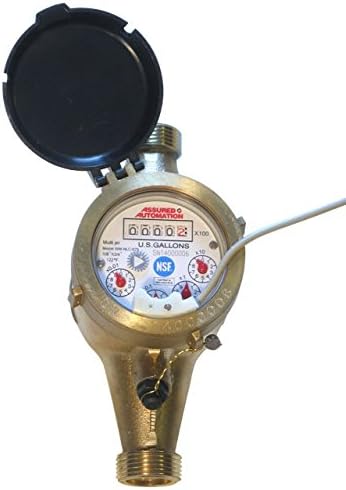
You’ll find the Assured Automation Brass Water Meter for Home and Garden Use, WM-NLC Series – NSF Certified Water Flow Meter – Lead Free (1” Pulse Output) is built for straightforward, long-term service. It’s a multi-jet dry-type totalizing meter designed to measure household water consumption while resisting the wear that often shortens meter life.
What this product is intended for
You can use this meter to measure potable water usage in residential and light commercial settings, or to monitor irrigation and garden systems. It’s intended to fit standard 1″ connections and can be integrated with building monitoring systems if you choose the pulse output option.
Assured Automation Brass Water Meter for Home and Garden Use, WM-NLC Series – NSF Certified Water Flow Meter – Lead Free (1” Pulse Output)
Key Features
You’ll appreciate that the WM-NLC Series combines durability, measurement stability, and the option for electronic output. Below are the main features that will affect installation, maintenance, and long-term performance.
Corrosion Resistant Construction
All parts that contact water are made from corrosion-resistant materials, which protects internal geometry and accuracy over time. That means fewer surprises when you open the meter for a check or if the water quality isn’t ideal.
Lead-Free Meter Body
The meter body and coupling use a low-lead brass alloy (C87850), so you’re getting a product that meets potable water safety standards. If you’re installing in a domestic environment or anywhere local codes demand low-lead components, this meter addresses that requirement.
Dry Top Multi-Jet Design
The dry-top multi-jet register keeps the counting mechanism isolated from the water, which improves reliability and readability. The multi-jet impeller design tolerates a wider flow range and can cope with water that has particulate content better than single-jet meters.
Minimal Moving Parts
Only the impeller contacts flowing water, which reduces wear and extends service life. Fewer wet moving parts typically translates to more stable long-term accuracy and less frequent replacements.
Removable Inlet Filter
There’s a removable filter at the inlet that you can clean without opening the entire meter, so routine maintenance is less invasive. That filter protects the impeller and internal passages from debris that could impair accuracy.
Optional Pulse Output
If you need remote monitoring, the meter offers an optional pulse output: a plastic housing with a 2-wire reed switch (red and black) and cable. You can connect it to a building automation system, data logger, or a simple pulse counter depending on your monitoring needs.
Technical Specifications
You’ll want to check dimensions, flow ranges, and material specs before buying or installing. The table below breaks down the core technical details to help you verify compatibility with your plumbing and monitoring plans.
| Specification | Detail |
|---|---|
| Product Name | Assured Automation Brass Water Meter for Home and Garden Use, WM-NLC Series – NSF Certified Water Flow Meter – Lead Free (1” Pulse Output) |
| Meter Type | Multi-jet, dry-top, totalizing water meter |
| Meter Size | 1 inch (1”) |
| Material (meter body & coupling) | Low-lead brass alloy C87850 |
| Certification | NSF certified (potable water standards) |
| Moving Parts in Contact with Water | Impeller only |
| Filter | Removable inlet filter for cleaning |
| Pulse Output | Optional; plastic housing with 2-wire reed switch (red & black cable) |
| Resistance to Corrosion | Corrosion-resistant materials in wetted parts |
| Display/Protection | Hinged lens cover protects register and display |
| Typical Applications | Residential, irrigation, light commercial metering |
| Lead Status | Low-lead (meets potable water standards) |
Installation Guide
You’ll want to prepare your installation site and tools before you start. Proper positioning, correct orientation, and a few simple checks during plumbing work will save you time and prevent leaks or inaccurate readings.
Pre-installation checklist
Make sure you have the correct 1″ pipe fittings, PTFE tape or thread sealant rated for potable water, and a way to isolate the water line. You should also confirm the direction of flow and ensure there’s space for reading the register and accessing the hinged lens cover.
Orientation and piping considerations
Install the meter in a horizontal run unless the manufacturer allows otherwise; meters often expect horizontal mounting with the register facing upward. Avoid long vertical runs directly upstream or downstream of the meter and install short sections of straight pipe before and after the meter to stabilize flow when possible.
Connecting the Pulse Output
If you use the optional pulse output, route the reed switch cable to your data collection point and maintain a neat, secure run free from sharp bends and mechanical stress. Keep in mind the reed switch is typically low-voltage and should be connected to compatible pulse counters or data loggers per their wiring diagrams.
Water pressure and temperature checks
You should check the local supply pressure and temperature to ensure they fall within the meter’s allowable range. Excessive pressure transients or temperatures outside specification can damage the meter or cause measurement errors.

Purchase WM-NLC Brass Water Meter — Amazon
Performance & Accuracy
You’ll be interested in how accurate and stable this meter is over time. The WM-NLC Series aims to balance cost and performance for household and garden applications.
Measurement stability
The dry-top register design helps preserve accurate readings because the register doesn’t sit in the water stream. You’ll find the meter performs consistently across its rated flow range, giving you dependable billing or consumption data.
Flow range and reliability
Multi-jet meters generally handle low-to-moderate flow rates well and hold accuracy across a wide range, which is beneficial for intermittent household use and irrigation cycles. If you have frequent high-flow events, it’s worth comparing the meter’s maximum flow rating to your peak demands.
Factors that affect accuracy
You should be aware that entrained air, significant debris, or pulsating flow from pumps can influence readings. Keeping the inlet filter clean and ensuring proper straight-run piping will help maintain accuracy.
Durability & Materials
You’ll benefit from components chosen for longevity and resistance to common water-related deterioration. The materials and design minimize points of failure and resist degradation in typical residential water environments.
Low-lead brass alloy benefits
The C87850 alloy offers a balance of machinability, corrosion resistance, and compliance with potable water standards. Because it’s low-lead, you won’t run afoul of many modern plumbing codes that aim to reduce lead exposure.
Corrosion resistance in wetted parts
Having all wetted parts made from corrosion-resistant materials prevents pitting and material breakdown over the meter’s service life. This reduces the chance that roughened surfaces or leaks will develop in a few years due to water chemistry.
Register protection
The hinged lens cover is a small but valuable feature: it keeps dirt and sunlight off the register and makes reading easier when the meter sits outdoors. A protected display is less likely to be fogged, scratched, or damaged by debris.
Maintenance & Cleaning
You’ll want to know how much time and effort you’ll need to keep the meter working well. Routine inspections and the removable filter make maintenance straightforward.
Routine inspection steps
Check the register and housing for cracks or clouding, inspect the inlet filter for debris, and verify fittings for leaks. Also, periodically read the meter and compare consumption to expected usage to catch anomalies early.
How to clean the removable filter
Turn off the supply, remove the meter or access the filter assembly per instructions, and rinse or brush the filter under running water. Return the filter and check the meter for normal operation; you should see improved flow if the filter was clogged.
When to call a professional
If you detect persistent inaccuracies, physical damage to the meter body, or electrical issues with the pulse output, you should contact a licensed plumber or the meter vendor. Don’t attempt to repair the meter’s internal mechanisms unless you’re trained and authorized, since improper handling can void warranties or certifications.
Pulse Output & Electronics
If you plan to monitor water remotely or log usage, the optional pulse output can be very useful. You’ll want to know how it behaves and how to connect it to your system.
Pulse output characteristics
The pulse option uses a reed switch in a plastic housing with a red and black two-wire cable. Each pulse corresponds to a set volume of water; confirm the pulse-per-volume specification with the vendor so your logger or building management system can interpret counts correctly.
Wiring and signal handling
You should connect the red and black wires to a meter counter or data acquisition device that accepts dry contact inputs or a low-voltage reed output. Ensure the receiving device is configured for contact closure counting and that you protect the cable run from moisture and mechanical damage.
Use cases for the pulse output
You can integrate the pulse output with a home automation system, irrigation controller, or remote telemetry for leak detection and usage trends. Remote counting is particularly handy if the meter is hard to access or located outdoors.

Use Cases: Home and Garden
You’ll find several practical ways to use this meter around a property. Its robust construction and optional electronics broaden its applicability.
Residential water measurement
Use it to track household water consumption for billing accuracy, conservation efforts, or leak detection. The meter’s totalizing register gives you a clear cumulative reading so you can compare periods and spot sudden increases.
Irrigation and garden systems
Monitoring irrigation flow helps you manage water use more efficiently and pinpoint system issues like broken heads or leaks. The removable filter protects against soil and debris that commonly appear in outdoor systems.
Light commercial or multi-unit use
For small businesses or multi-unit dwellings where 1″ metering is appropriate, the WM-NLC Series can serve as a local usage meter or submeter. You’ll still want to confirm that the meter capacity matches peak flows for these settings.
Pros and Cons
You’ll want a balanced view of what the meter does well and where it might be limited. This section helps you weigh the most relevant trade-offs.
Pros
- Corrosion-resistant, low-lead brass alloy reduces long-term degradation.
- Dry-top multi-jet design improves accuracy and reliability across a broad flow range.
- Removable inlet filter simplifies maintenance without opening the meter.
- Optional pulse output allows easy integration with monitoring systems.
- Hinged lens cover keeps the register readable and protected outdoors.
You’ll get a robust product for typical home and garden metering needs that also supports remote monitoring if you choose that option.
Cons
- If your application has unusually high peak flows, you may need a larger meter or a different meter type.
- The pulse output is optional; if you require electronic monitoring, confirm that your meter includes this option at purchase.
- Reed switch pulse outputs must be handled carefully to avoid wiring mistakes or signal interference.
You’ll want to match the meter’s capacity and options to your specific plumbing and monitoring requirements before buying.
Comparison with Similar Meters
You’ll want to know how the WM-NLC stacks up against other common residential meters. Comparisons help you pick a model that meets both budget and performance needs.
Versus single-jet meters
Multi-jet meters like the WM-NLC are generally better at handling particulates and provide a wider accurate flow range than single-jet models. You’ll typically see improved longevity and less sensitivity to minor debris in a multi-jet design.
Versus ultrasonic or smart meters
Ultrasonic meters provide non-mechanical measurement and very low maintenance but are usually more expensive. If you need advanced analytics, remote connectivity, or super-high resolution, consider ultrasonic smart meters, but if you want proven mechanical simplicity and durability at a lower cost, the WM-NLC is a solid choice.
Versus other brass multi-jet meters
Many brass multi-jet meters share similar construction and features; the WM-NLC’s low-lead alloy and NSF certification give you confidence in potable water use. You’ll still want to verify flow ranges, pulse output specifications, and vendor support when comparing models.
Buying Considerations
Before committing to purchase, you should verify a few things to ensure this meter is the right fit for your system and legal/municipal requirements.
Confirm sizing and compatibility
Check the 1″ size against your pipe diameter and any fittings that may be required. If your piping is a different material or dimension, you may need reducers or adapters that maintain the meter’s proper orientation and straight-run requirements.
Verify certifications and code compliance
You’ll want to confirm the NSF certification is the specific standard you need for local potable water code compliance. Bring your local code reference or consult a plumber if you’re unsure which certifications are required in your area.
Ask about pulse scaling and documentation
If you plan to use the pulse output, make sure the vendor provides the pulses-per-volume spec and wiring diagram. Proper scaling ensures your downstream counters and software display accurate consumption data.
Warranty and service support
Confirm the meter’s warranty, expected service life, and availability of replacement parts or certified service centers. You’ll appreciate quick access to support if a problem arises after installation.
Troubleshooting Common Issues
You’ll likely encounter a few common problems with any water meter; knowing how to approach them will help you solve issues quickly.
Low or no flow reading
First, check isolation valves and upstream filters; a closed valve or clogged inlet filter often explains low readings. If valves and filters are clear, inspect for air locks or pump-induced cavitation that might disrupt impeller rotation.
Erratic or fluctuating readout
Pulsating flow from pumps or air in the line can lead to unstable readings. Make sure you have adequate straight pipe runs and a stable supply or use a dampening device upstream where necessary.
Pulse output not counting
Confirm wiring polarity where required and ensure your counting device is configured for dry-contact or reed-switch inputs. Also inspect the cable and housing for water intrusion or damage.
Environmental and Safety Notes
You’ll want to be mindful of operating conditions and safe handling practices during installation and maintenance.
Temperature and pressure limits
Operate the meter within the manufacturer-specified water temperature and pressure ranges to avoid damage. Exceeding those limits can cause permanent harm to the internal mechanisms and invalidate certifications or warranty.
Safe handling of brass components
While the meter is low-lead, standard safe-handling and installation practices should be followed to prevent contamination or mechanical damage. Use appropriate thread sealants and avoid over-tightening couplings, which might crack the register housing or distort threads.
Frequently Asked Questions
You’ll likely have specific practical questions about this meter; here are answers to the most common ones.
Is the WM-NLC Series suitable for outdoor use?
Yes, the hinged lens cover and corrosion-resistant materials make it suitable for outdoor meter pits or protected outdoor installations, but you should ensure freeze protection where applicable. If installed outdoors in cold climates, protect the meter from freezing temperatures.
How often should I clean the removable filter?
You should inspect the inlet filter periodically, especially after events that could introduce sediment (e.g., plumbing repairs or hydrant flushing). For normal residential use, checking it annually or semi-annually is reasonable; adjust frequency based on local water quality.
Can I retrofit the pulse output later?
Depending on the specific meter variant and vendor policy, you may be able to order the optional pulse output as an add-on. Confirm compatibility and installation requirements with the vendor before ordering.
What does NSF certification mean for me?
NSF certification indicates the meter materials and design meet certain standards for safe use with potable water. This helps ensure compliance with municipal and health requirements for residential water fixtures.
Final Verdict
You’ll find the Assured Automation Brass Water Meter WM-NLC Series to be a well-balanced choice for residential and garden metering needs when you want durability, potable-water compliance, and optional remote monitoring. Its low-lead brass construction, dry-top multi-jet design, removable filter, and optional pulse output make it a practical meter for many homes and small properties.
Who should buy this meter
Choose this meter if you need a reliable, mid-priced mechanical meter for potable water metering with occasional monitoring needs. If you want low maintenance and compatibility with monitoring systems, and your flow demands match the 1″ size, this is a strong candidate.
When you might consider alternatives
If you require ultra-high accuracy across a very wide flow range, advanced smart features like two-way connectivity, or you routinely experience extreme pressure/temperature conditions, consider higher-end ultrasonic smart meters or flow meters designed for heavy commercial usage.
If you’d like, you can tell me where you plan to install the meter (indoor, outdoor, irrigation line, etc.) and I’ll help you confirm sizing, straight-run requirements, and whether the optional pulse output will meet your monitoring needs.
Get The Assured Automation Brass Water Meter
Disclosure: As an Amazon Associate, I earn from qualifying purchases.