
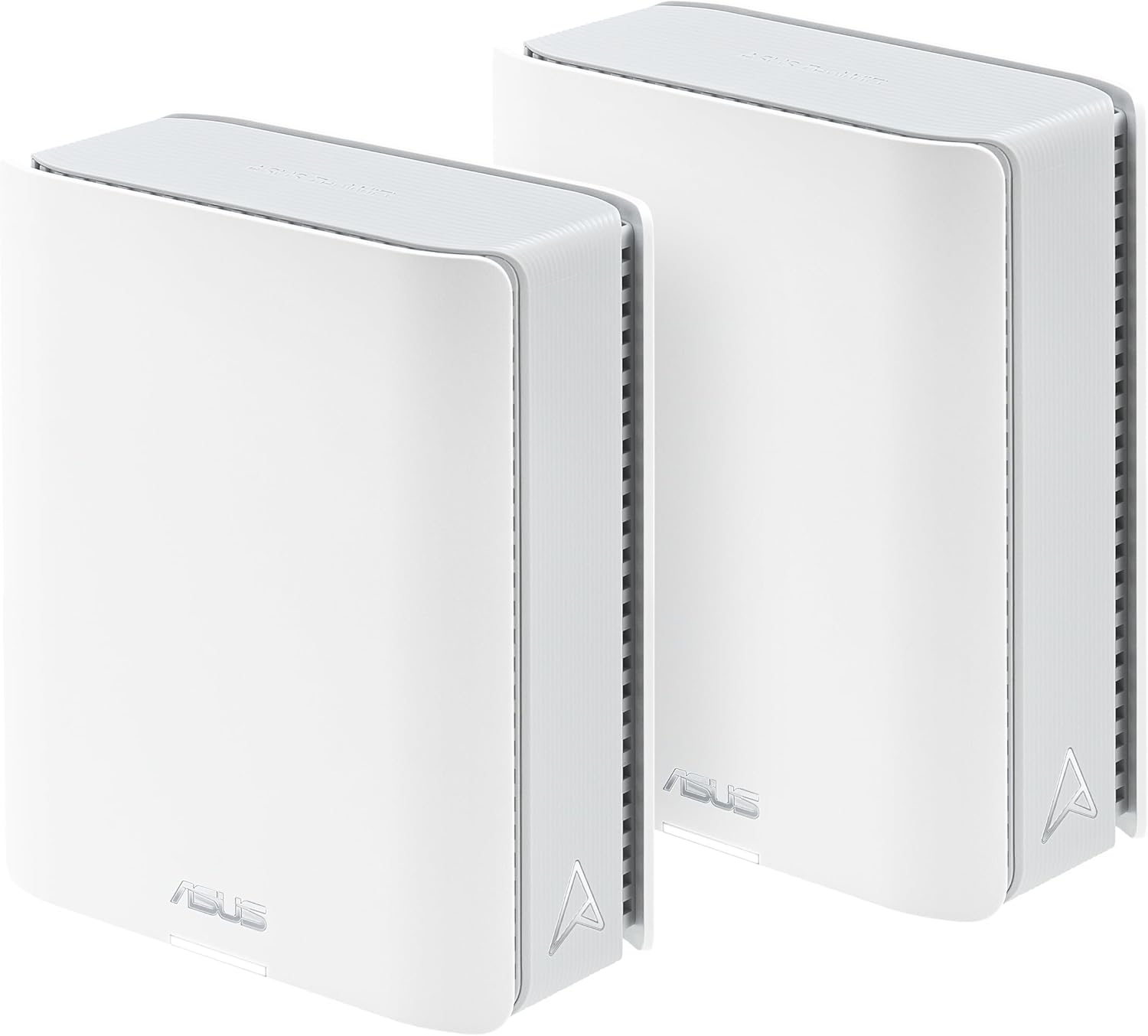
Want to know whether the ASUS ZenWiFi BT10 Tri-Band WiFi 7 Mesh is the right upgrade for your home network?
Buy ASUS ZenWiFi BT10 On Amazon
Quick impression of the ASUS ZenWiFi BT10 Tri-Band WiFi 7 Mesh, 18 Gbps, 6000 sq.ft (2pk)
You’ll get a sense of performance first: this mesh system promises WiFi 7 speeds up to 18 Gbps and coverage up to 6,000 sq.ft. in a two-pack configuration. It aims to balance raw throughput with smart home features like segmented SSIDs, parental controls, and 4G/5G mobile tethering support.
Who this is for
If you want futureproof speeds, multiple SSIDs for IoT segmentation, and high-capacity wired ports, this system is built to meet those needs. You’ll benefit most if you have many high-bandwidth devices, demanding applications like 4K/8K streaming or cloud gaming, or a complex smart home with devices that need isolation.

ASUS ZenWiFi BT10 Tri-Band WiFi 7 Mesh, 18 Gbps, 6000 sq.ft (2pk), Dual 10G Ports, Security and Parental Controls Included, Smart Home Master SSIDs, 4G & 5G Mobile Tethering
$524 Only 7 left in stock - order soon.
Key specifications at a glance
You’ll find a concise breakdown of core specs here so you can quickly see what this kit delivers. This helps you match the hardware against your home layout and device count.
| Feature | Details |
|---|---|
| WiFi Standard | WiFi 7 (Next-generation) |
| Total Theoretical Speed | Up to 18 Gbps (aggregate tri-band) |
| Coverage (2-pack) | Up to 6,000 sq.ft. |
| Antennas / Modules | 8 internal antennas, 10 high-power front-end modules |
| Ports | Dual 10G ports (configurable as WAN/LAN), Multi-WAN support |
| Mobile Tethering | 4G LTE & 5G tethering via USB |
| Mesh Tech | AiMesh with AI-enhanced backhaul |
| Smart Home Features | Smart Home Master SSIDs (up to 3), instant VPN, parental controls |
| Security | ASUS security suite (regular updates, threat protection) |
| Form Factor | Compact nodes with designed heat dissipation |
Performance and real-world speed
You’ll see huge advertised numbers, but real-world performance will depend on your environment and devices. In optimal conditions, tri-band WiFi 7 can deliver dramatic improvements in throughput compared with WiFi 6 systems, particularly when multiple devices are active.
Tri-band advantages in daily use
The third band gives you additional backhaul or device capacity so congestion drops when many clients are active. You’ll notice smoother 4K/8K streams, fewer stutters in cloud gaming, and faster large file transfers when the mesh is properly placed.
AI-powered AiMesh and backhaul stability
You’ll benefit from AiMesh’s AI-assisted link management which aims to keep the backhaul robust and seamless as nodes and clients shift. The system uses dynamic decisions to route traffic, which reduces dropouts and improves handoff between nodes.
Shop ASUS ZenWiFi BT10 Tri-Band WiFi 7 Mesh On Amazon
Coverage and placement tips
You’ll need to place nodes strategically to get the claimed 6,000 sq.ft. coverage; layout, wall materials, and interference affect real coverage. Think of the 2-pack as ideal for medium to large homes where you can put one node on each side of the house or one per floor.
Optimal node positions
Place primary node near your modem and secondary node within line-of-sight through a hallway or open space for strong backhaul. You’ll avoid dead zones by keeping nodes away from large metal objects, HVAC, or dense brick walls that reduce signal.
How many nodes for your space
You’ll typically use the 2-pack for many homes, but large or complex floorplans may need more nodes from the extendable ASUS ecosystem. Additional nodes can scale your mesh easily if you already plan for expansion.
Hardware design and build quality
You’ll notice a compact design with an emphasis on internal antennas and heat dissipation to sustain heavy traffic. ASUS has included components that aim to keep the system stable under continuous load rather than just peak bursts.
Antennas and RF modules
The eight internal antennas and ten high-power front-end modules are tuned to reduce dead zones and push signal further in multiple directions. You’ll likely see better uniformity across a space rather than just hotspot coverage near the nodes.
Heat dissipation and reliability
The chassis and layout support stronger heat dissipation which helps maintain consistent throughput during sustained heavy use. You’ll get fewer thermal-throttling events compared with cheaper mesh nodes that aren’t engineered for high sustained loads.
Ports, wired throughput, and tethering
You’ll get dual ultrahigh-speed 10 Gigabit Ethernet ports which can act as WAN and LAN, offering substantial wired backbone flexibility. The Multi-WAN support and USB tethering for 4G/5G give you resilient failover or alternative WAN options for environments with flaky broadband.
Dual 10G LAN/WAN utility
With two configurable 10G ports you’ll be set for high-speed wired devices like NAS, workstations, or a dedicated 10G uplink to your ISP-modem/router. You’ll appreciate this if you frequently move terabyte-sized backups or run a media server.
4G/5G mobile tethering through USB
You’ll be able to use a mobile modem or phone as a backup WAN via USB tethering, supporting 4G LTE and 5G devices. In practice this can keep your home network online during primary broadband outages or provide a secondary uplink for load balancing.

Smart Home Master SSIDs and IoT segmentation
You’ll find the Smart Home Master feature useful for separating IoT devices from your main network, reducing attack surface and noise from many low-power devices. Configuring up to three SSIDs simplifies onboarding smart bulbs, thermostats, and cameras.
Managing IoT devices
You’ll allocate specific SSIDs for devices that don’t need access to your core LAN, making traffic management and security policies easier. You’ll reduce the risk of indirect compromise because segmented IoT devices won’t have free access to your personal devices.
Convenience of multiple SSIDs
You’ll enjoy simplified setup for devices that struggle with frequent password changes or captive portals because you can keep a persistent IoT SSID. You’ll also be able to prioritize traffic and policies per SSID for different device groups.
Security features and parental controls
You’ll get ASUS’ security suite, which tends to include intrusion prevention, malware protection, and automatic firmware updates. Parental controls give you scheduling, access filters, and usage monitoring to manage kids’ screen time and content access.
Practical parental control features
You’ll be able to restrict internet access to certain hours, block categories of content, and set device-level rules for children or guests. You’ll also be able to monitor usage so adjustments can be made as your family’s needs change.
Ongoing security and updates
You’ll want automatic firmware updates enabled so the router receives the latest protections and performance optimizations. ASUS’s ecosystem frequently pushes improvements, but you should check release notes when critical vulnerabilities are fixed.
Setup experience and management interface
You’ll find the setup straightforward if you’re familiar with ASUS routers and the ASUS Router mobile app or web interface. The system walks you through connecting nodes and configuring SSIDs, but advanced features might require a short learning curve.
Using the ASUS Router app
You’ll set up through the mobile app for quick on-the-go configuration, monitoring client devices and running quick diagnostics. The mobile app simplifies primary tasks but you’ll use the web UI for deep configuration and advanced settings.
Web UI and advanced settings
You’ll access granular options like VLANs, advanced QoS, VPN, and port configurations from the web UI. You’ll like this if you run custom port forwarding, multiple VLANs, or need enterprise-like controls on a consumer device.

Network management and QoS
You’ll be able to prioritize traffic by device or application to prevent latency during gaming or streaming. QoS and traffic shaping features help ensure low ping for interactive apps while background transfers continue.
Adaptive routing and AI enhancements
You’ll see AiMesh’s AI functionality optimize path selection to reduce latency and packet loss during load or interference. You’ll benefit from smarter decisions about which node and which band to use for each client.
Band steering and client handling
You’ll notice the system nudges dual-band devices toward optimal bands and manages clients so older hardware doesn’t drag performance for the whole network. You’ll likely need to tune a few settings if you have legacy hardware that behaves unpredictably.
Practical benchmarks and expected throughput
You’ll not always get the full 18 Gbps in everyday usage, but the system’s tri-band layout and 10G wired ports will give you exceptional headroom for concurrent users. Real-world throughput across different conditions depends on node placement, client capabilities, and interference.
Typical home use scenarios
You’ll see multi-Gbps performance between wired 10G devices and strong single-digit Gbps to top-end WiFi 7 clients under close-proximity conditions. You’ll notice the biggest improvements when many devices are active simultaneously, rather than a single-device peak.
Large-file and media streaming
You’ll be able to stream multiple 4K/8K streams and move large media libraries without saturating the network easily when you have both wired and wireless high-speed links. You’ll still want to use wired 10G connections for backup servers or heavy NAS usage to minimize wireless variability.
Comparison with alternatives
You’ll want to compare this system against flagship WiFi 6E and other WiFi 7 solutions from competitors to see what trade-offs you get for price and features. The ZenWiFi BT10 emphasizes a balanced mix of cutting-edge wireless, wired 10G ports, and home-focused features.
Where it stands versus WiFi 6E kits
You’ll gain from higher theoretical throughput and better multi-device performance with WiFi 7, while older WiFi 6E systems may still be adequate for many households. You’ll consider WiFi 7 if you plan to keep the system for many years and want future-proofed hardware.
How it compares to other WiFi 7 contenders
You’ll find similar core features in competing WiFi 7 mesh systems, but ASUS stands out for integrated AiMesh, parental/security features, and dual 10G port flexibility. You’ll decide based on firmware maturity, ecosystem compatibility, and price at purchase time.
Use cases and who should upgrade
You’ll consider this upgrade if you regularly run bandwidth-heavy applications, maintain many smart-home devices, or need robust wired connectivity. You’ll also pick it if you want a system that can scale with extra nodes and serve both home and small office needs.
Ideal for home media and gaming
You’ll have the bandwidth and low-latency paths required for competitive gaming while family members stream high-resolution media. You’ll be able to allocate QoS and prioritize critical devices so gameplay remains responsive.
Good for small offices or power users
You’ll benefit from the dual 10G and Multi-WAN options if you run a small office with NAS servers and a need for redundancy. You’ll get more consistent performance during remote work, large file transfers, and video conferencing.
Setup checklist and quick tips
You’ll be able to get the system running smoothly with a few easy steps and some placement best practices. Follow this checklist for a faster setup and better long-term performance.
- Place the primary node near the modem and elevated off the floor for better coverage.
- Keep the secondary node within good line-of-sight or an unobstructed hallway for stronger backhaul.
- Enable automatic firmware updates and set a strong admin password.
- Create separate SSIDs for IoT devices and personal devices using Smart Home Master.
- Use the web UI for VLANs, advanced QoS, and port configuration if needed.
Troubleshooting basics
You’ll fix most problems by rebooting nodes, checking cable connections, and verifying firmware is current. You’ll also run a wireless scan to detect nearby interference and adjust channels or node placement accordingly.
Common issues and fixes
You’ll encounter a few common issues like firmware bugs, placement related weak links, or client compatibility quirks that are typical for new wireless standards. Most issues can be mitigated through firmware updates and careful setup.
When nodes don’t mesh properly
You’ll resolve mesh connectivity problems by resetting the secondary node, ensuring both nodes run the same firmware, and placing them closer for initial setup. You’ll reintroduce nodes via the app or web interface step-by-step if automatic joining fails.
Client compatibility and legacy devices
You’ll sometimes see older devices struggle to maintain stable connections as newer standards prioritize advanced features. You’ll keep a legacy band or SSID enabled to ensure continued support for older hardware if needed.
Long-term maintenance and firmware
You’ll want to check for firmware updates periodically even with auto-update on, since critical changes or new features can be highlighted in release notes. ASUS frequently improves AiMesh behavior and security, so keeping current will help maintain performance and safety.
Backup and restore settings
You’ll export settings before major firmware upgrades or complex reconfigurations to save time if you need to restore. You’ll also maintain a record of VLANs, QoS rules, and port mappings to ease migration if you expand your setup.
Price versus value and final recommendation
You’ll weigh cost against features: this system positions itself as a high-end, future-proof mesh with robust wired options and smart home conveniences. If you want top-tier throughput, flexible wired options, and serious home-network features, you’ll find substantial value here.
When you should buy
You’ll buy this if you need the fastest available consumer wireless, multi-gig wired options, and advanced segmentation for IoT. You’ll also choose it if you plan to expand the network in the future or need reliable failover options.
When to wait or choose something else
You’ll consider other options or wait if your devices don’t support WiFi 7 yet, you have minimal bandwidth needs, or you prefer a lower-cost WiFi 6E solution. You’ll also weigh alternatives if you prioritize ultra-compact nodes or minimal configuration above wired performance.
Final verdict
You’ll get a very capable mesh system that balances futureproof WiFi 7 performance with practical smart home and wired features. You’ll be well-positioned for the next generation of devices while having tools to segment and protect your home network.
Summary points to remember
You’ll get up to 18 Gbps theoretical speed, coverage up to 6,000 sq.ft. for a two-pack, AiMesh with AI-enhanced backhaul, Smart Home Master SSIDs, dual 10G ports, and 4G/5G tethering support. You’ll enjoy the mix of performance, manageability, and resilience that makes this a strong choice for demanding home and small office environments.
Frequently asked questions
You’ll find answers to common concerns so you can decide with confidence. These cover compatibility, expansion, and maintenance.
Can my existing devices use WiFi 7 speeds?
You’ll need WiFi 7-capable client devices to reach the top advertised speeds; older devices will still connect and often benefit from improved mesh management. You’ll get better multi-device performance even without WiFi 7 clients due to tri-band capacity and AI routing.
Can I add more ASUS nodes later?
You’ll easily expand coverage by adding compatible ASUS AiMesh nodes, and the system is designed to scale without replacing the whole kit. You’ll configure new nodes via the app or web UI to extend coverage and capacity.
Is it safe to use mobile tethering as primary WAN?
You’ll use mobile tethering for primary WAN in a pinch, but long-term costs and data caps may make it impractical for heavy use. You’ll instead use it for redundancy or short-term failover unless you have an unlimited mobile data plan.
If you want, I can help you compare this unit against a specific competitor or design an optimal node placement plan for your floorplan.
Get The ASUS ZenWiFi BT10 Mesh System Now
Disclosure: As an Amazon Associate, I earn from qualifying purchases.