
?Is the CRAFTSMAN 1/2 HP Smart Garage Door Opener the right upgrade for your garage and lifestyle?


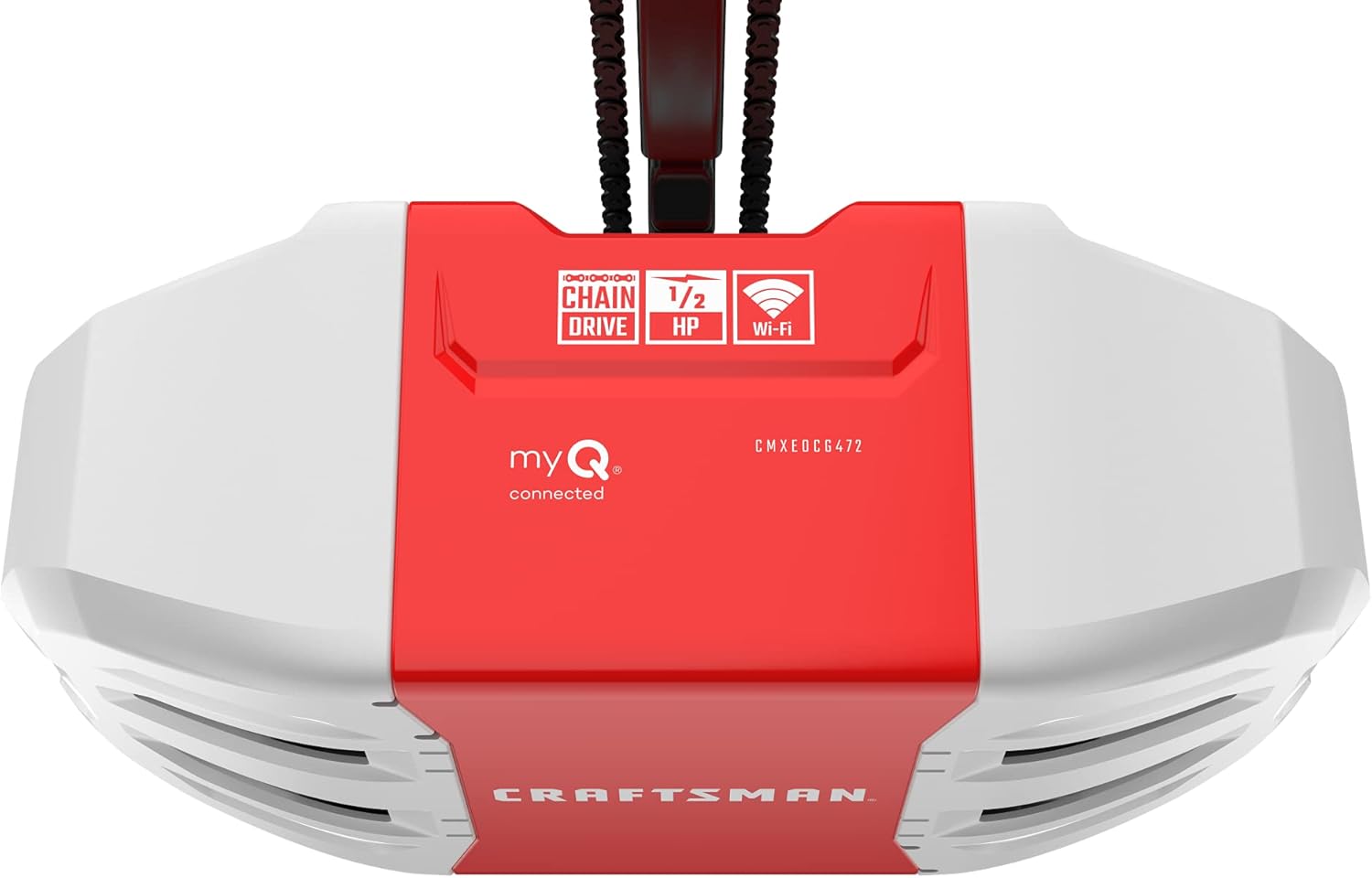
Product Overview: CRAFTSMAN 1/2 HP Smart Garage Door Opener – myQ Smartphone Controlled – Chain Drive, Wireless Keypad Included, Model CMXEOCG472, Red
You’re looking at a workhorse designed for simple control and dependable performance. The CRAFTSMAN 1/2 HP Smart Garage Door Opener (Model CMXEOCG472) combines a traditional chain drive system with modern myQ smartphone control so you can operate and monitor your garage door from anywhere.
This unit emphasizes strength and affordability: the 1/2 HP motor handles standard single-car and many double-car doors, while the chain drive gives you rugged, long-lasting actuation. The package also includes two 3-button remotes and a wireless keypad, making it convenient for multiple users and entry methods.
What’s included in the box
You’ll get the opener head, a steel chain rail and trolley assembly, two 3-button remotes, a wireless keypad, mounting hardware, safety sensors, and the power cord. The package also includes a basic instruction manual and wiring diagrams that walk you through setup, though you might prefer online guides or videos for extra clarity.
Everything you need for a straight-forward installation of a typical residential door is included, but if you have extra-wide doors, high-lift tracks, or an older door with springs and hardware needing replacement, you’ll want to account for those items separately.
Key specifications
This section breaks down the main numbers and technical points so you can quickly see if the unit matches your needs. The table below summarizes the most important specs at a glance for easier comparison when you’re shopping or planning installation.
| Feature | Specification |
|---|---|
| Model | CRAFTSMAN CMXEOCG472 (Red) |
| Motor power | 1/2 HP |
| Drive type | Chain drive (steel chain) |
| Door compatibility | Standard sectional doors up to 7 ft (typical); check spring balance for heavier doors |
| myQ built-in Wi‑Fi | Yes (monitor and control via app) |
| Remote controls included | Two 3-button remotes (range up to 1,500 ft) |
| Wireless keypad | Included |
| Security | Security Plus 2.0 rolling code technology |
| Safety sensors | Photoelectric sensors included |
| Warranty | Manufacturer warranty (check packaging for duration) |
| Accessories | Wall control, basic mounting hardware, installation manual |
CRAFTSMAN 1/2 HP Smart Garage Door Opener - myQ Smartphone Controlled - Chain Drive, Wireless Keypad Included, Model CMXEOCG472, Red
myQ Smartphone Control and Connectivity
You’ll appreciate the convenience of built-in myQ Wi‑Fi if you want remote access and status monitoring. With the CRAFTSMAN myQ App, you can open and close the door from your phone, receive activity alerts, and set schedules — all from wherever you are.
Connectivity is a big selling point because it lets you avoid key exchanges or spare keys. It also gives you a layer of visibility: you can check whether the door is open before you get home, or open it for a delivery without giving out permanent access.
myQ App features
The myQ App offers live status, remote open/close commands, push notifications, and scheduling options so you can automate when doors open or close. You’ll also be able to share temporary access with guests or service people, which reduces the need for physical keys.
If you’re using the app for the first time, you’ll find options for naming and grouping devices, creating customized notifications, and reviewing recent activity logs that show who used the door and when.
Wi‑Fi setup and reliability
Setting up the built-in Wi‑Fi is straightforward: you’ll use the myQ app to find the opener and connect it to your home network using standard credentials. For the most reliable performance, you’ll want a strong 2.4 GHz signal at the garage opener location since many garage setups don’t support 5 GHz well.
If your garage is detached or your router signal is weak, consider a Wi‑Fi extender or a mesh system to ensure consistent connectivity. Intermittent Wi‑Fi can cause delayed app commands or missed notifications, so planning for coverage is crucial.

Performance and Power
You’ll find the 1/2 HP motor hits a practical balance between power and affordability. For most single-car garages and many double-car setups with standard insulated doors, this unit provides sufficient pulling force and steady operation.
The chain drive gives you robust lifting power and long-term reliability, particularly for heavier doors or frequent daily cycles. Expect solid performance for everyday residential use, with the caveat that chain drives are typically louder than belt drives.
1/2 HP lift power and door compatibility
A 1/2 HP opener like this one is rated to reliably lift a typical 7-foot tall sectional door when springs are properly balanced. You should check the door’s weight and spring condition before installing to be sure the opener isn’t overloaded.
If you have an extra-heavy insulated door, a very tall door (e.g., carriage-house or custom), or if you plan to run the door many times per day in a commercial-like setting, you might consider a higher-horsepower unit for extra longevity and smoother operation.
Chain drive mechanics and noise
You’ll notice the chain drive transmits force directly through a steel chain around a sprocket to the trolley, which is effective and low-maintenance for delivering consistent torque. That mechanical simplicity is one reason chain drives remain popular for homeowners who value durability.
Because the chain drive involves steel-on-steel movement, you will hear more operational noise than with belt-drive openers. If your garage is attached to living space and noise is a significant concern, consider installing a vibration isolation kit or choosing a belt-drive alternative. Otherwise, the noise is often acceptable for detached garages.
Remotes, Keypad, and Security
You’ll get two 3-button remotes with the unit, letting you control up to three different garage doors or functions and give access to two frequent users immediately. The remotes boast a range up to 1,500 feet, which is generous — you can activate the door while you’re still a long way away from the garage.
A wireless keypad provides an additional secure entry method for family members or service personnel. It lets you program temporary or permanent PINs, which is handy when you don’t want to hand out a physical remote.
3-button remote details and range
Each remote can be programmed to operate this opener and potentially two others, giving you flexibility if you have more than one opener. The long range is useful in larger properties or when you need to open the door from a vehicle before you reach the driveway.
Keep in mind that range can vary depending on obstructions, interference, and battery condition. If range drops, replacing batteries or repositioning the opener antenna (if applicable) often helps.
Security Plus 2.0
Security Plus 2.0 rolling code technology refreshes the access code with each use, selecting from billions of possible combinations so signals can’t be easily intercepted and replayed. You’ll get a modern level of radio security that’s much safer than fixed-code remotes.
This system ensures each button press generates a new encrypted code, which is especially important if you frequently use remote controls or share temporary access with others.

Installation and Setup
You’ll find the physical installation is approachable if you’re comfortable with basic electrical tools and follow the step-by-step instructions. The manual walks you through mounting the opener, aligning safety sensors, connecting the wall control, and programming remotes and keypad.
If you have a standard door and basic tools, most DIY-minded homeowners can install this opener in a few hours. If you’re unsure about door spring adjustments, high-lift hardware, or ceiling obstructions, it’s safer to hire a professional to handle the more technical parts.
What you’ll need and estimated time
You’ll typically need tools like a ladder, wrench set, drill, screwdrivers, tape measure, and possibly a helper to hold the opener during rail assembly. Budget about 2–4 hours for a standard single-door installation if you’re doing it alone and have all parts handy.
Complex setups — such as replacing torsion springs, installing on high or vaulted ceilings, or fitting a heavy custom door — can take longer and may require specialized tools or assistance.
Tips to simplify the installation
You’ll save time by reading the manual fully before you start and laying out all parts to ensure nothing is missing. Taking time to properly balance the door and align the safety sensors reduces troubleshooting later and increases the lifespan of the opener.
If the opener is going into a garage attached to your home, plan the route for the power cord and consider installing a dedicated outlet near the opener to avoid long extension cords. Also, poling the chain with proper lubrication can reduce noise over time.
Daily Use and User Experience
Once installed, you’ll find daily operation is straightforward: the myQ app lets you check status quickly, the remotes provide reliable access, and the wall control keeps a manual option handy. The system integrates several convenience features that reduce friction in everyday life.
You’ll also appreciate the ability to receive notifications and check activity logs, especially if you often forget whether you closed the door or if you need to open it remotely for deliveries or guests.
Speed and reliability in everyday operation
The opener delivers a consistent open/close cycle speed suitable for standard use; it won’t be the fastest on the market but it’s steady and reliable for residential needs. You should notice minimal hesitation and smooth travel when the door springs are in good condition.
Reliability hinges on correct installation and regular maintenance — if the door is out of balance or the chain tension is off, you could see inconsistent motion or extra wear on components.
Troubleshooting common issues
If the opener doesn’t respond to remotes or the app, check batteries, Wi‑Fi connection, and the unit’s power supply first. For mechanical problems like grinding noises or jerky motion, inspect chain tension, rail alignment, and sensor alignment.
If safety sensors are misaligned, the door may reverse on closing; realign the sensors, clean the lenses, and make sure nothing blocks the beam. For persistent or unsafe issues, contact a certified technician rather than forcing adjustments you’re not trained to make.
Maintenance and Longevity
You’ll extend the opener’s life with periodic checks and simple maintenance tasks. Keep the chain properly lubricated, verify sensor alignment, tighten loose fasteners, and check the safety reversal system every month or two.
Preventive care reduces the chances of sudden failures and keeps the opener operating smoothly for years. Consistent attention to small items often saves money on replacements and repairs down the road.
Regular maintenance checklist
You should inspect the chain tension and lubricate the chain with a light garage-door lubricant every 6–12 months, depending on use and climate. Also check the safety sensors for dirt or misalignment, test the auto-reverse function monthly, and replace remote batteries as needed.
Additionally, examine mounting hardware and fasteners quarterly since vibration can loosen bolts over time; address any fraying on cables or unusual wear immediately to avoid a breakdown.
When to call a pro or replace parts
Call a professional if you detect frayed cables, broken springs, severe imbalance, or if the door won’t stay in the open position. Those problems involve stored energy and can be dangerous without the right tools and training.
If motors become noisy, cycles slow, or the opener struggles with a properly balanced door, it may be time to replace the motor or the entire unit. Components like worn sprockets or a failing circuit board are worth professional diagnosis.
Smart Home Integration and Compatibility
You’ll find myQ integrates with many modern smart-home systems and offers APIs and partnerships that make automation possible. It’s commonly compatible with voice assistants and home security platforms, although compatibility can change with firmware and third-party updates.
Before you rely on a specific smart-home workflow, verify current myQ compatibility with services like Google Assistant, Amazon Alexa, or smart-home hubs you use. Some voice or home assistant features require additional hardware or subscriptions.
Works with other smart systems?
The myQ service often links with popular smart-home ecosystems to allow voice commands, automation rules, and integration with security systems. You can typically include the garage door in scenes or automation routines that control lighting, locks, or thermostats.
Note that certain integrations may require cloud-to-cloud connections, third-party accounts, or optional accessories, so check app requirements and privacy settings before enabling broad automations.
Voice control options and limits
If you use voice assistants, you can usually open and close your garage door using a linked voice service, though many platforms require you to confirm certain actions for safety reasons. Voice control is convenient but should be combined with access controls and secure app practices.
For safety, some voice integrations limit remote open commands or require a security pin to reduce accidental openings or unauthorized access via voice.
Pros and Cons
You’ll appreciate the balance of modern smart features and robust chain-drive durability in this opener, but you’ll also want to weigh noise and potential power limitations against your needs. Below you’ll find a quick summary to help you decide if this model fits your priorities.
Decision-making is about matching features to your home: if you favor low cost and power for heavier doors, this unit is attractive; if ultra-quiet operation near living spaces is critical, consider other drives or upgrades.
Pros
This section lists strong points of the product and what you can expect to enjoy in everyday use. The design gives you remote access, strong lift capability, and reliable rolling-code security to protect your garage.
- Built-in myQ Wi‑Fi for remote control and monitoring
- Rugged chain drive for lifting power and durability
- Two remotes and wireless keypad included for convenience
- Security Plus 2.0 rolling code for enhanced radio security
- Good value for homeowners who need resilience over quiet operation
Cons
You should be aware of the downsides so you can decide whether they’re deal-breakers for your situation. The main tradeoffs are operational noise and potentially needing a higher horsepower unit for very heavy doors.
- Chain drive is noisier than belt-drive alternatives, which can be an issue if the garage is attached to living spaces
- 1/2 HP may be borderline for very heavy or oversized doors
- Some smart integrations may require additional steps or services to fully enable voice or third-party automation
How it compares to other garage door openers
You’ll see this opener positioned as a mid-range, high-value option: stronger than many budget openers and more connected than basic models, but not focused on whisper-quiet operation like higher-end belt drives. It’s a practical choice for users who want smart features and robust mechanics.
If you prioritize silent operation or have special door requirements, other models may be better tailored to those needs. However, in terms of cost-per-feature, this CRAFTSMAN model is compelling for many homeowners.
Chain drive vs Belt drive vs Screw drive
Chain drives, like this model, are typically the most durable and cost-effective for heavier doors and frequent cycles, though they produce more noise. Belt drives use rubber belts for quieter operation, which is ideal when the garage is directly under living spaces.
Screw drives have fewer moving parts and are fairly reliable, with moderate noise levels, but they can require more maintenance in extreme temperatures. Your choice should be based on door weight, desired noise level, and budget.
Value for money compared to competitors
For the feature set — myQ integration, included remotes, wireless keypad, and solid build — you’ll likely find strong value here versus similarly priced units. The CRAFTSMAN brand emphasizes reliability and parts availability, which improves long-term ownership costs.
If you compare strictly on noise or premium quiet operation, you might pay more for a belt-drive unit; if you compare on raw power, you may need to upgrade to a 3/4 HP unit for the heaviest doors, which costs more but offers better performance.
Buying Advice — Who should buy this?
You should buy this opener if you want a tough, smartphone-enabled garage door opener with good lifting power for a standard residential door. It’s a particularly good fit if your garage is detached or noise is a lower priority than reliability and cost.
This unit also suits households that need multiple remotes and keypad access, and those who want the flexibility of myQ remote monitoring and scheduling without a big premium.
Best-fit households
If you live in a suburban or rural house with a standard sectional door and you value rugged reliability over absolute silence, this opener is a smart buy. Families that want app-based control and alerting will benefit from myQ’s convenience.
It’s also a good choice if you have several vehicles or users, thanks to the included remotes and wireless keypad that make shared access simple.
When to consider alternatives
If your garage is directly beneath a bedroom or living area and you want the quietest possible operation, choose a belt-drive model instead. Also consider a higher-horsepower opener if you have a very heavy, insulated, or oversized door.
If you’re building a full smart-home ecosystem and require seamless integration across multiple services, verify that myQ supports your desired platforms or consider open-protocol systems that integrate more broadly.
FAQ
You’ll find quick answers to common questions here so you can make decisions fast and troubleshoot small problems yourself. Each Q&A offers concise guidance based on typical user scenarios and manufacturer behavior.
Can this opener handle an insulated door?
Yes, it can handle many insulated doors, but the decisive factor is the door’s weight and the balance provided by the springs. Make sure the door is properly balanced and that the opener isn’t working against unadjusted springs; otherwise the opener will wear faster or struggle.
If the door is particularly heavy, oversized, or commercial-grade, upgrade to a higher-horsepower unit to avoid strain and premature motor wear.
How loud is a chain drive really?
Chain drives are noticeably louder than belt drives; you’ll hear metal-on-metal moving parts and vibration through the ceiling. For detached garages this noise is usually acceptable; for attached garages above living spaces it can be disruptive at night or early morning.
You can reduce noise with regular lubrication, tighter mounting, and vibration-damping hardware, but the inherent mechanical noise won’t be as quiet as a belt drive.
What happens if my Wi‑Fi goes down?
If Wi‑Fi goes down, remotes, keypad, and wall controls still operate normally because they communicate directly via radio or wired connections. The myQ app features (remote access, alerts, scheduling) will be unavailable until connectivity resumes.
To reduce disruption, you can set up a local Wi‑Fi extender or backup network to ensure consistent cloud connectivity for the myQ service.
Is professional installation required?
Professional installation isn’t required for a standard door if you’re comfortable with tools and follow instructions carefully. However, professionals can ensure safe handling of torsion springs, optimal alignment, and correct electrical connections.
If you’re uncertain about spring adjustments, roof obstructions, or securing the opener to uneven rafters, hiring a pro is a safe and time-saving choice.
Are there subscription fees for myQ?
Basic myQ features like remote open/close and alerts are typically available without a subscription, but some advanced features or integrations (like video monitoring or third-party security integrations) may require additional services or subscriptions. Check the latest app documentation for current pricing and feature sets.
You should review the myQ terms and optional services before relying on any advanced automation or cloud-based features.
Final Verdict
You’ll find the CRAFTSMAN 1/2 HP Smart Garage Door Opener (Model CMXEOCG472) a solid choice if you want dependable lifting power, modern myQ smartphone control, and the durability of a chain drive. It’s especially appealing for homeowners who value rugged performance and smart features without paying a premium for whisper-quiet operation.
If noise is a primary concern or you have a very heavy door, consider a belt-drive model or higher-horsepower unit. Otherwise, this CRAFTSMAN opener strikes a strong balance of functionality, security, and cost-efficiency that will serve most residential needs well.
If you want, I can help you compare this model side-by-side with a belt-drive alternative or walk through step-by-step installation tips tailored to your garage dimensions and door weight.

Disclosure: As an Amazon Associate, I earn from qualifying purchases.