
Have you ever wished your thermostat could think a little smarter so you could relax more and worry less about energy bills?


First impressions
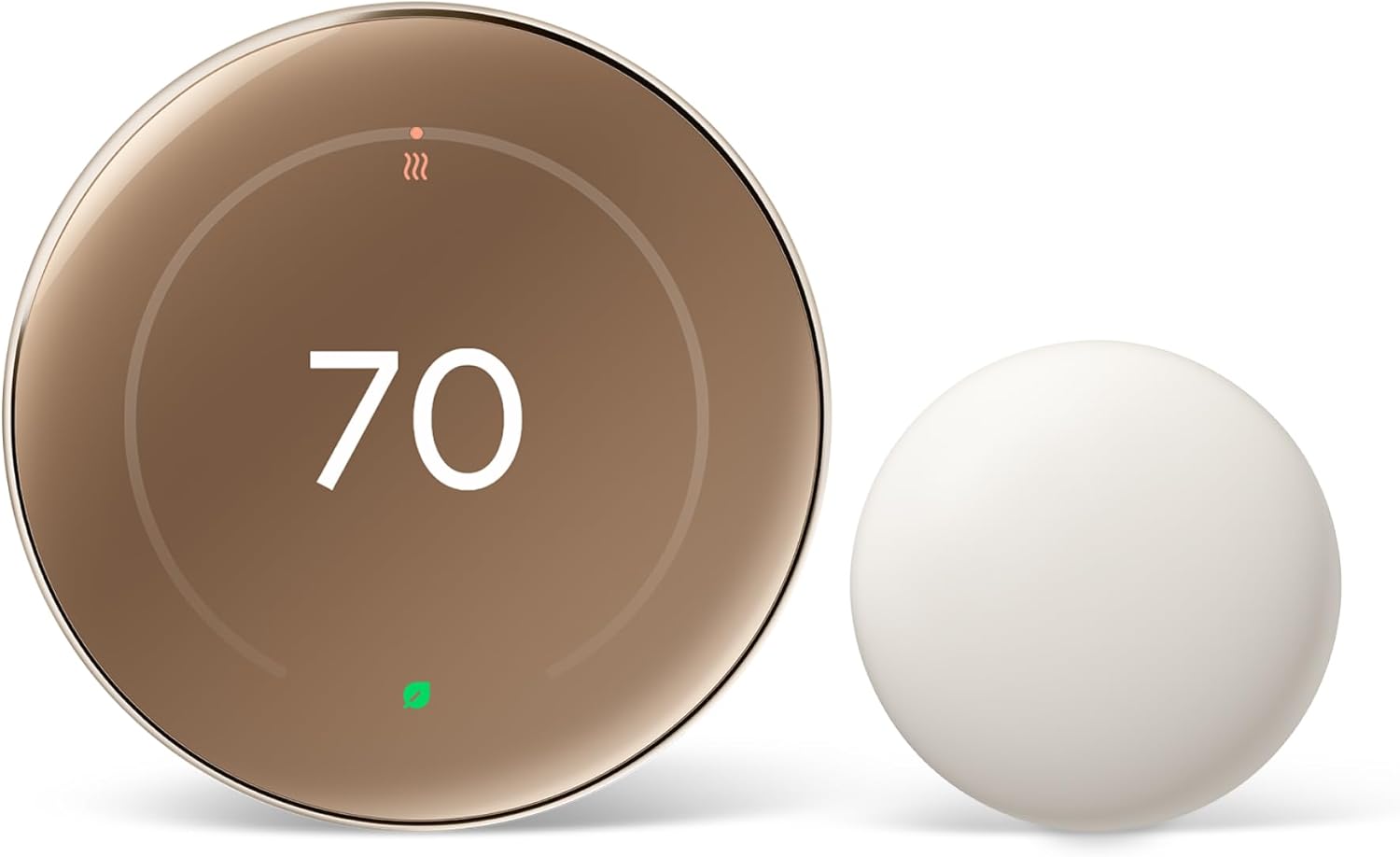
When you first see the Google Nest Learning Thermostat (4th Gen, 2024) in Polished Gold, you’ll notice it’s meant to look like an intentional piece of your home rather than a gadget shoved on the wall. The larger display and premium finish make it feel like an upgrade both cosmetically and functionally, and it gives you a sense that this thermostat was designed to be noticed and used.
Google Nest Learning Thermostat (4th Gen, 2024) with Nest Temperature Sensor - Energy Saving Smart Thermostat - Compatible with Alexa, Apple HomeKit and Google Home App - Polished Gold
$268.99 Only 11 left in stock - order soon.
What’s in the box
You get the Nest Learning Thermostat (4th Gen) and a Nest Temperature Sensor (2nd gen) included with this bundle, plus the usual screws, trim plate, and wiring labels. The package also includes quick-start guides and the compatibility sticker that helps you check wiring before installation, so you’re not left guessing what goes where.

Design and display
The 4th Gen Nest Learning Thermostat has a 60% larger display than earlier models, which makes the readout easy to see from across a room without being overpowering. The interface combines a clean circular aesthetic with vibrant, customizable display modes like clock, weather, or a simple temperature readout.
Build quality and finish
You’ll notice solid materials and a refined finish that feels weighty and premium when you handle it during installation. The Polished Gold finish gives a modern, upscale look that pairs well with a range of décor styles without screaming “tech gadget.”
The polished gold look
If you care about how smart home devices blend into your home, the Polished Gold option is a smart choice that reads as stylish and intentional. That finish tends to hide fingerprints better than darker finishes and looks particularly good against light-colored walls and wooden accents.
Installation and setup
Installation is designed to be user-friendly and the product aims at DIYers as well as professional installers, with step-by-step prompts in the Google Home app. You’ll be guided through wiring, mounting, and connecting to Wi‑Fi, and the thermostat will offer visual checks for common wiring issues before it finalizes setup.
Compatibility and wiring
This Nest works with most 24V systems including gas, electric, oil, forced air, heat pumps, and radiant heat, and in most homes it doesn’t require a C wire for installation. You should still check the Nest Compatibility Checker before buying if you have a less common system, and make sure you’re comfortable identifying the common wires during installation.
Matter and smart home integration
Because this Nest model is Matter compatible, it plays nicely with evolving smart home standards and makes integration simpler across platforms that adopt Matter. You’ll find it easier to add this thermostat into a broader system over time, even if you change other smart devices or voice assistants.

App and voice control
You’ll control the thermostat primarily through the Google Home app, which centralizes adjustments, notifications, and energy-use suggestions for your account. If you prefer voice commands, the thermostat supports Alexa, Siri (via HomeKit compatibility), and Google Assistant for hands-free temperature control.
Google Home app experience
In the Google Home app, you’ll be able to adjust the temperature from anywhere, receive suggestions for energy savings, and accept schedule changes with a tap. The app also surfaces notifications for things like extreme temperature alerts and maintenance reminders, and it keeps a history of temperature changes and energy estimates.
Voice assistants: Alexa and Siri support
You can use Alexa or Siri to change temps, start a schedule, or check the current temperature without touching the phone. The cross-platform voice support means you don’t have to commit to one ecosystem if you already use multiple voice systems across different rooms.
Key features
This 4th Gen thermostat brings several headline features—learning scheduling, a larger screen with Dynamic Farsight, the included Nest Temperature Sensor, Adaptive Eco, and new natural heating and cooling logic. These features combine to reduce effort and help save energy without forcing you into a rigid routine.
Learning capabilities and scheduling
The Nest Learning Thermostat watches your manual adjustments and home/away patterns and suggests schedule changes to optimize comfort and efficiency. Rather than imposing a schedule immediately, it asks for permission to adopt changes, so you retain control and can accept or decline suggested optimizations.
Dynamic Farsight and display options
With Dynamic Farsight, the thermostat lights up and displays important info when it senses movement across the room, making it easy for you to see the temperature or clock without standing in front of the unit. You can choose different display styles like a large temperature readout, clock, or weather info, and brightness auto-adjusts based on ambient light.
Nest Temperature Sensor
The included Nest Temperature Sensor (2nd gen) helps you manage hot and cold spots by letting you pick which room’s temperature determines the thermostat’s target. You can place the sensor in a bedroom or living area and schedule it so that the thermostat prioritizes that sensor at certain times of day, giving you better personalized comfort.
Adaptive Eco and natural heating/cooling
Adaptive Eco uses local outdoor temperature to find an energy-saving away temperature and returns comfort within an hour of your return, which helps avoid long ramp-up times. The thermostat also learns how external conditions like sunlight and outdoor temperature affect indoor comfort, and it can pause heating or cooling when it expects natural warming or cooling, saving energy without compromising comfort.

Energy savings and performance
You can expect the Nest Learning Thermostat to reduce heating and cooling costs by learning patterns and suggesting smarter schedules, with Google’s stated average savings of 12% on heating and 15% on cooling. Those figures are averages and actual savings will vary with your climate, your HVAC system, your home’s insulation, and how you use the thermostat—check official legal disclosures for details.
Real-world savings estimates
In practical terms, many users report noticeable reductions in monthly bills within the first heating or cooling season if they let the thermostat learn their routines and adopt its suggestions. It helps when you combine the thermostat’s scheduling and sensors with behavioral changes like modest setpoint adjustments and prudent thermostat programming.
Performance in heating and cooling
Heating and cooling response is precise thanks to accurate sensors and intelligent responses to both internal and external conditions, and the thermostat’s ability to manage short cycles helps reduce wear on your HVAC. You’ll notice fewer unnecessary cycles because the thermostat can factor in outdoor conditions and sensor data to avoid over-conditioning.
Compatibility with HVAC systems
This Nest supports most 24V heating and cooling systems, including conventional furnaces, many heat pumps, and radiant systems, so you’ll likely be covered unless you have an uncommon setup. If you’re unsure about compatibility, use Google’s Nest Compatibility Checker or consult an HVAC technician before purchase.
No C-wire necessary in most homes
Nest claims most homes won’t need a C wire for installation, thanks to its power management strategies, but if your system or wiring is older you might still prefer a C wire for maximum stability. If you run into power or stability issues, adding a C wire or a power adapter can eliminate intermittent connectivity or power problems.
Use with heat pumps and radiant systems
The thermostat supports heat pump systems and can be configured for multi-stage systems, but complex setups like dual-fuel or zoned systems might require professional setup to ensure optimal control. If you operate a zoned system with multiple thermostats, the Nest can still work as a controller for one zone while coordinating through your zone controller as needed.
Setup tips and best practices
To get the best out of your Nest, take a few minutes to plan placement and sensor locations before you install it; avoid direct sunlight, heat sources, or drafty spots. Also, let the thermostat learn your routines for at least a couple weeks before making big manual overrides, as premature switching can confuse the learning algorithm.
Placement of sensors and thermostat
Put the thermostat on an interior wall at eye level where it reflects average home temperature, not next to vents or in direct sunlight, and place the temperature sensor in the room you most want to prioritize. Sensors should be away from doors and windows and mounted where airflow is typical for that room, so readings reflect typical comfort.
Creating a comfort schedule
You can let the thermostat learn your schedule, or you can set preferred temps by time and sensor manually in the Google Home app; either approach is valid and you can blend them. If you schedule manually, prioritize slightly wider temperature bands to give the system room to optimize and save energy while still keeping you comfortable.
Troubleshooting common issues
If installation throws up issues, the Google Home app usually gives clear guidance and steps to resolve common wiring or connectivity problems, and the Nest’s on-screen prompts are helpful during setup. For stubborn problems you can consult the Nest support site, run the compatibility checker again, or contact Google support or a local HVAC technician.
Installation hiccups and wiring help
If you encounter wiring mismatches or an unfamiliar wire bundle, stop and consult the compatibility tool or a professional—forcing incorrect wiring can damage the thermostat or your heating system. The Nest app typically identifies incorrect wiring and offers suggestions, but complex systems (like older boilers, commercial systems, or multi-stage setups) may still best be handled by an HVAC pro.
Connectivity and app issues
If your thermostat loses Wi‑Fi or has intermittent app connectivity, try restarting your router, re-adding the device in the Google Home app, or checking for firmware updates. If connection problems persist, check the Nest’s placement relative to your router and consider a wired power solution (C wire) or mesh Wi‑Fi to improve stability.
Privacy and data considerations
Google’s thermostats collect data to provide features like learning schedules, energy reports, and usage suggestions, and that data is tied to your Google account. If you care about what’s collected, you should review Google’s privacy policy and the Nest product terms to see what is stored, how it’s used, and how long it’s retained.
What data is collected and how it’s used
The Nest gathers things like temperature settings, sensor input, occupancy/away patterns, and some device diagnostics to tune performance and present energy-saving suggestions. That data can also be used for product improvement and aggregate analytics, and Google gives you account controls to manage visibility and data sharing for certain features.
Control and permissions
You can control what the thermostat shares and limit access by adjusting account permissions and device sharing within the Google Home app. If multiple people in your household use the thermostat, you can set appropriate account access so guests or contractors don’t have full control without your knowledge.
Pros and cons
You’ll enjoy a refined design, larger display, good cross-platform voice support, and intelligent features that can save energy without micromanagement. On the downside, advanced HVAC setups may still require professional help, and some users who prefer fully manual control may find the learning features intrusive unless you adjust preferences.
Pros:
- Attractive Polished Gold finish and premium build.
- Larger display with Dynamic Farsight for easy readability.
- Included Nest Temperature Sensor to manage hot/cold spots.
- Matter compatibility and broad voice assistant support.
- Learning and Adaptive Eco features that can lower bills.
Cons:
- Complex HVAC systems may need professional setup.
- Some users may be concerned about data privacy and want more granular controls.
- Not all homes will see the same percentage energy savings.
Comparison table
You can use this table to quickly scan key specifications and decide if this thermostat matches your needs. It simplifies the details so you don’t have to hunt through dense product pages when comparing features and compatibility.
| Feature | Google Nest Learning Thermostat (4th Gen) |
|---|---|
| Display | 60% larger, Dynamic Farsight, Auto brightness |
| Included sensor | Nest Temperature Sensor (2nd gen) included |
| Compatibility | Most 24V systems: gas, electric, oil, forced air, heat pump, radiant |
| C wire | Not required in most homes (may be needed in some setups) |
| Smart home | Matter compatible; Google Home app; Alexa and Siri/HomeKit support |
| Voice control | Google Assistant, Alexa, Siri |
| Energy features | Learning schedule, Adaptive Eco, natural heating/cooling |
| Estimated savings | Avg. 12% heating, 15% cooling (varies by home and climate) |
| Finish options | Polished Gold and other finishes |
| Installation | DIY-friendly; app-guided or professional install |
| Sensors supported | Works with Nest Temperature Sensors (multiple) |
| Warranty/Support | Standard Google/Nest warranty (check product listing) |
Frequently asked questions
These are the common questions people ask when considering a smart thermostat, and succinct answers can help you decide whether this Nest fits your home. If you still have specific concerns, consult the official Nest support or an HVAC professional.
Can I install it myself?
Yes, many homeowners will be able to install the Nest themselves using the step-by-step instructions in the Google Home app, and the included guides help label and identify wires. If you’re uncomfortable with wiring or have a complex HVAC setup, you should hire a licensed technician to avoid potential damage.
Will it save energy in my climate?
It can save energy in most climates because it learns your schedule and uses outdoor temperature data to adapt, but your actual savings will depend on factors like insulation, system efficiency, and how frequently you manually override settings. If you live in an extreme climate or have a very inefficient HVAC system, savings may be more limited unless you make additional home efficiency improvements.
Does it work without Wi‑Fi?
The thermostat will still control heating and cooling locally without Wi‑Fi, but smart features like remote control, firmware updates, and energy reports require an internet connection. You can still operate it manually on the device, and basic scheduling will function if it has the necessary local data.
Can it control multiple zones?
It controls a single thermostat zone; for multi-zone systems, you’ll typically need a separate thermostat for each zone or a compatible zone controller that integrates with Nest. If your home uses a central zone controller, check compatibility and, if needed, consult an HVAC professional for proper multi-zone integration.
Final verdict and recommendation
If you want a thermostat that looks like a design piece, learns your habits, integrates with multiple smart home platforms, and includes a room sensor to tackle hot and cold spots, the Google Nest Learning Thermostat (4th Gen, 2024) with Nest Temperature Sensor is a strong choice. You’ll get a blend of style, automation, and energy-focused features that make controlling your home comfort easier and more efficient, and if saving energy is a priority, the Learning Thermostat’s suggestions and adaptive behavior can deliver measurable reductions in heating and cooling costs.
If you have a complex HVAC setup or are particularly protective of privacy, do your homework on compatibility and account settings before purchase, and consider professional installation. Otherwise, you’ll likely find this thermostat both a visual and functional upgrade to a standard wall thermostat—one that reduces friction around day-to-day control and helps you manage energy use more intelligently.

Disclosure: As an Amazon Associate, I earn from qualifying purchases.