
?Are you looking for a ceiling occupancy sensor that reliably covers large spaces while reducing false triggers and cutting energy waste?
Buy Hubbell OMNIDT2000 Occupancy Sensor On Amazon
First Impressions
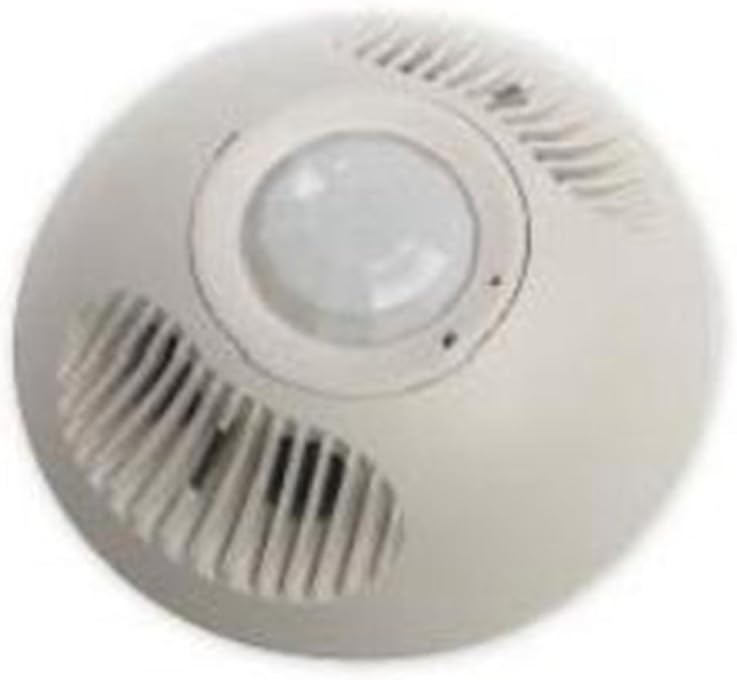
When you first handle the Hubbell Building Automation OMNIDT2000 Digital Passive Infrared and Ultrasonic Ceiling Occupancy Sensor, 2000-Square-foot Range, it feels deliberately engineered for commercial reliability. The unit’s compact footprint (4.2 x 1.8 x 2.1 inches) and clean aesthetic mean it won’t draw attention on modern ceilings, while the functional design gives you confidence it was built for heavy-duty use.

Hubbell Building Automation OMNIDT2000 Digital Passive Infrared and Ultrasonic Ceiling Occupancy Sensor, 2000-Square-foot Range
$186.03 Only 8 left in stock - order soon.
Product Overview
This sensor combines ultrasonic (US) and passive infrared (PIR) technologies so you can capture both motion and presence across a wider variety of behaviors than a single-technology sensor. You get optional relay control for building automation integration, a photo sensor for daylight harvesting, and IntellADAPT for maintenance-free operation — all packaged to cover up to 2,000 square feet.
Key Features
Below you’ll find the main capabilities called out so you can quickly understand what this sensor offers and why those features matter to you.
| Feature | What it does | Why it matters to you |
|---|---|---|
| Dual-technology sensing (PIR + Ultrasonic) | Detects infrared signatures and sound/motion changes simultaneously | Improves detection of both walking motion and subtle presence (sitting occupants) |
| 2000-square-foot range | Ceiling-mounted coverage for large open areas | Reduces the number of sensors you need for big rooms or open-plan spaces |
| IntellADAPT | Adaptive algorithms tune sensitivity and time-outs automatically | Cuts down on manual commissioning and reduces nuisance tripping |
| Optional relay control | Provides a local relay output for lights or devices | Lets you connect directly to loads or external BMS components without extra modules |
| Photo sensor / daylight harvesting | Measures ambient light and adjusts lighting control | Helps maximize energy savings in spaces with natural light |
| Compact form factor | 4.2 x 1.8 x 2.1 inches | Easy to mount flush to ceilings with minimal visual impact |
Performance and Detection Accuracy
You’ll notice the OMNIDT2000 performs well in mixed-use spaces where occupants may not always be moving actively. The combination of PIR and ultrasonic sensing gives you the sensitivity to catch someone sitting quietly and the resiliency to avoid missing people who move subtly or stand still.
The practical result is fewer false negatives (missed occupancy) and, in many installations, fewer false positives when compared with single-technology sensors. That translates to better comfort for occupants and more reliable automated control for your systems.
PIR vs Ultrasonic Performance
PIR is great at spotting large heat-movement changes such as walking, and it typically excels in direct line-of-sight scenarios. Ultrasonic sensing, by contrast, sends out inaudible high-frequency pulses and listens for changes in the reflected waves — which makes it suited for detecting small movements, even behind obstructions.
By combining the two, you get the benefits of both: PIR for obvious motion and ultrasonic for small, continuous presence detection. That synergy is especially useful in meeting rooms, classrooms, libraries, or offices where people may remain very still for stretches of time.
False Trip Immunity and IntellADAPT
False trips from HVAC drafts, HVAC registers, or HVAC-driven curtains can be a persistent nuisance in occupancy sensing. The OMNIDT2000’s false trip immunity is strengthened through sensor fusion and the IntellADAPT algorithm, which learns typical patterns and adjusts sensitivity and time-outs.
What this means for you is less time diagnosing or tuning the sensor after installation and fewer complaints from occupants about lights switching off unexpectedly or lights remaining on when rooms are empty.
Installation and Setup
Installing the sensor is straightforward if you’re familiar with ceiling-mounted devices, but it’s still approachable for contractors and skilled in-house teams. The compact dimensions and typical mounting hardware let you place the sensor close to utilities and infrastructure without interfering visually or spatially.
You’ll want to follow the manufacturer’s wiring diagrams and commissioning instructions for relay wiring and any communication connections. Confirm supply voltage and any control logic expectations for the relay or BMS interface before powering up.
Wiring and Relay Options
The optional relay control gives you flexibility: you can use it to switch lighting loads, send a control signal to a building automation system, or tie into an external controller as needed. Relay wiring typically involves a dedicated pair for output and separate power and communication lines, so plan conduit and cable pulls accordingly.
If you plan to integrate with a BMS, check whether the sensor will be used as a standalone relay point or as part of a larger control topology. You may also need to account for the control logic — whether the relay is normally open, normally closed, or configurable — and ensure your BAS can poll or respond to that state.
Mounting and Dimensions
Because the unit measures 4.2 x 1.8 x 2.1 inches, you can fit it into most standard ceiling tiles, junction boxes, or hard ceilings with a compatible mounting bracket. The ceiling-mount orientation is optimized for a broad hemispherical coverage pattern, which is why you can achieve up to 2,000 square feet of effective sensing area.
When mounting, ensure the sensor is centered over the area you want to monitor and keep it away from direct airflow from diffusers or other sources of turbulence that can trigger ultrasonic sensing incorrectly. A small offset from HVAC registers can substantially reduce nuisance activations.
Daylight Harvesting and Photo Sensor
The integrated photo sensor allows the OMNIDT2000 to measure ambient light levels, enabling automatic daylight harvesting strategies. That means you can program the connected lighting to dim or switch off when sufficient daylight is present, further reducing energy costs.
For best results, position the sensor to receive a representative sample of room illumination — not directly facing windows (which may overestimate daylight in the far reaches of the space) and not tucked into a shadowed corner that underreports available light.
Purchase The Hubbell OMNIDT2000 On Amazon
Coverage and Range
A headline feature is the 2,000-square-foot range, which is substantial for a ceiling-mounted sensor and makes the OMNIDT2000 suitable for large conference rooms, open-plan offices, and many commercial areas. You’ll typically be able to cover an entire medium-to-large meeting room with a single unit, but room geometry and ceiling height will factor into real-world performance.
Keep in mind that range ratings are often approximations based on optimal mounting height and unobstructed fields of view; reflections, partitions, shelving, and other obstructions can reduce effective coverage.
How to Position for Best Coverage
To maximize coverage, mount the sensor near the center of the area you want to control and consider the ceiling height the manufacturer recommends. If you have vaulted or unusually high ceilings, you might need to adjust placement or use multiple sensors to ensure consistent detection down to the floor level.
Also be mindful of furniture layout and fixed partitions — if desks or high shelving will block PIR line-of-sight, the ultrasonic element will help, but you shouldn’t rely on a single sensor for spaces with many obstructions.
Integration with Building Automation
Because the OMNIDT2000 includes optional relay control, it’s designed with integration in mind for building automation systems. You can wire the relay to local loads, use it as a contact closure to a controller, or feed occupancy state back into the BAS for lighting and HVAC control strategies.
When you integrate the sensor, make sure your BAS receives the occupancy state in a format it expects — either via relay closure, dry contact, or through digital communication if your system supports it. Confirm whether you’ll need additional translation hardware or programming within your automation platform.
Control and Compatibility
Compatibility is generally high for relay-based control — the relay behaves like a standard switching device that many building systems can accept. If your automation system prefers low-voltage occupancy signals or networked sensors, you’ll want to verify the specific interface and whether adapters or gateways are necessary.
Always consult the manufacturer documentation for compatible wiring types and for any recommended interface modules if you need networked status rather than a simple contact closure.
Energy Savings and Occupancy Strategies
By accurately sensing presence and responding with lighting and HVAC control, you can expect meaningful energy savings over manual control or time-based schedules alone. Daylight harvesting will reduce electric lighting usage near windows, while accurate occupancy detection will prevent lights and conditioned air being wasted in unoccupied rooms.
To maximize savings, pair the sensor with intelligent BAS scheduling, demand-control ventilation strategies, or per-zone lighting control that responds automatically to occupancy and ambient light.
Maintenance and Reliability
The OMNIDT2000 is built to be low-maintenance, especially with IntellADAPT adjusting settings for you. Still, a periodic inspection and cleaning of the sensor face can prevent dust or film from affecting the photo sensor and PIR performance over time.
Check the mounting hardware and wiring connections during routine building maintenance cycles and verify that firmware or configuration settings remain as intended after service events or power disruptions.
IntellADAPT Maintenance-Free Operation
IntellADAPT promises “install and forget” operation by auto-tuning sensitivity and timing parameters based on sensed occupancy patterns. For you, that means fewer callbacks and less time spent tweaking sensor settings after occupants report nuisance behavior.
However, while IntellADAPT reduces manual tuning requirements, you should still validate the sensor’s behavior after major space changes (furniture rearrangement, partitions installed, or HVAC changes) as these can affect detection patterns.
Troubleshooting Common Issues
If you see frequent false triggers, first look at airflow and HVAC diffuser placement — ultrasonic sensing is susceptible to strong air currents. If the sensor is missing occupancy, verify mounting height, clear line of sight for PIR where possible, and ensure the ultrasonic element is free from strong acoustic interference.
Other common fixes include cleaning the lens, checking relay wiring and voltage, and confirming that ambient light configuration doesn’t inadvertently keep lights off during appropriate use. If persistent problems continue, consult Hubbell’s technical documentation or support for firmware or calibration assistance.
Pros and Cons
You’ll appreciate the thoughtful combination of detection technologies and the strong coverage area, but every product has trade-offs you should weigh against your project requirements. The OMNIDT2000 tends to outperform single-technology sensors in mixed-activity environments but does require correct placement and an understanding of ultrasonic behavior.
Pros:
- Robust 2000-square-foot coverage reduces sensor counts.
- Dual-technology sensing increases detection reliability for diverse occupant behaviors.
- IntellADAPT reduces commissioning time and maintenance overhead.
- Photo sensor enables daylight harvesting for additional savings.
- Optional relay offers flexible integration with BAS or local loads.
Cons:
- Ultrasonic elements can be sensitive to air movement and some acoustic environments.
- Large coverage areas may mask localized vacancy; for highly partitioned spaces you may still need additional sensors.
- Integration details (relay logic, wiring, BAS compatibility) should be confirmed before procurement to avoid surprises.
Use Cases and Ideal Environments
This sensor fits well where you need broad ceiling coverage and dependable occupancy detection with minimal manual tuning. You’ll find it especially useful in rooms where people remain seated but active (present but still), or in large, open spaces that would otherwise require multiple small sensors.
Consider using the OMNIDT2000 in spaces where reliable occupancy detection can directly improve comfort and cost savings, such as meeting spaces, classrooms, and open-plan office areas.
Offices and Conference Rooms
For open-plan offices, the combination of PIR and ultrasonic helps you catch both pass-through motion and people who remain at desks. In conference rooms and training spaces, the sensor helps prevent the lights from turning off during presentations when movement and heat-signature changes may be limited.
That said, if you have smaller private offices with doors that isolate occupants, you may prefer smaller ceiling sensors or wall-mounted devices with a coverage pattern better matched to tight spaces.
Warehouses and Large Open Areas
The 2,000-square-foot range makes the OMNIDT2000 an attractive option for warehouses, retail floor areas, and manufacturing spaces where ceiling-mounted coverage can reduce the need for many point sensors. In high-bay or very tall environments, verify the specified ceiling height range and conduct field tests to ensure consistent detection to floor level.
If you’re dealing with extreme ceilings or substantial racking that blocks PIR line-of-sight, plan for supplemental sensors at strategic locations to ensure comprehensive coverage.
Restrooms and Corridors
Corridors and restrooms benefit from accurate occupancy detection to control lights and exhaust fans, and the OMNIDT2000 can work well if positioned correctly. For narrow corridors, you may need to pay attention to mounting height and placement to ensure you’re covering the walking path effectively.
Restrooms frequently have reflective tiles and vents that can affect ultrasonic sensing, so verify placement away from direct register flow and consider sensitivity adjustments if you encounter false activations.
Comparison with Similar Sensors
Compared to single-technology PIR or ultrasonic units, this dual-technology sensor offers a more balanced detection approach that reduces missed occupants and false activations. Against multi-function networked sensors with digital communication, the OMNIDT2000’s relay flexibility is practical but may lack the richer telemetry that full networked options provide.
If you need occupancy counts, analytics, or networked diagnostics, consider whether you want a sensor with native BACnet, LonWorks, or wired/networked interfaces; otherwise, the OMNIDT2000 provides strong local control and integration via relay.
When to Choose This Sensor Over Others
Choose this sensor when you want strong, reliable coverage with minimal on-site tuning and you value an integrated photo sensor for daylight harvesting. It’s a solid choice when relay-based integration is acceptable and you prefer a robust “set-and-forget” sensor behavior.
If you need occupant counting, room scheduling integration, or advanced sensor telemetry, you may prefer a networked/higher-tier product that provides those explicit data feeds.
Cost and Value
While unit price depends on vendor, the cost-per-square-foot coverage for a 2,000-square-foot sensor typically compares favorably to installing multiple smaller sensors. That potential hardware cost saving, paired with IntellADAPT’s reduced commissioning time, can improve your overall project economics.
Factor in the expected energy savings from daylight harvesting and occupancy-based control to model payback. In many commercial lighting retrofits or new construction projects, the sensor can contribute to a one- to three-year simple payback when combined with efficient lighting and optimized controls.
Final Verdict
If you need broad, reliable occupancy detection for commercial ceilings and want a sensor that reduces maintenance overhead, the Hubbell Building Automation OMNIDT2000 Digital Passive Infrared and Ultrasonic Ceiling Occupancy Sensor, 2000-Square-foot Range is a compelling choice. You’ll get strong detection fidelity, daylight harvesting capability, and flexible relay integration, but you should plan placement thoughtfully to avoid air-flow and acoustic pitfalls.
Overall, it’s a practical, well-rounded sensor for many commercial installations where coverage, reliability, and low-maintenance operation are priorities.
Detailed Commissioning Checklist
Use this checklist during commissioning to make sure your sensor performs as expected in your specific space. Following these steps will minimize callbacks and help you get the right energy and comfort outcomes.
- Verify model and firmware version on the unit to ensure you have the intended features and any recent fixes.
- Confirm mounting height and location match design assumptions (centered over the coverage area when possible).
- Inspect wiring: ensure power, relay lines, and any control conductors are correctly connected per the wiring diagram.
- Test relay functionality under both occupied and unoccupied states; verify normally open/closed behavior aligns with BAS logic.
- Observe sensor behavior in real use: simulate stationary occupants and standard movement patterns to confirm PIR + ultrasonic detection.
- Validate daylight harvesting behavior by measuring ambient lux levels and verifying lights dim/switch appropriately.
- Document final sensor settings and any exceptions from default IntellADAPT behavior for future maintenance.
- Schedule a follow-up check after one week and one month to confirm behavior under real occupant patterns.
Practical Tips for Long-Term Use
You’ll get the best lifetime performance by following a few simple operational tips that are easy to incorporate into building routines.
- Clean the sensor window annually or as part of regular cleaning cycles to prevent dust from reducing PIR or photo sensor sensitivity.
- Record and store any custom sensitivity or time-out settings you change from factory defaults for faster troubleshooting later.
- If you reconfigure a room (add partitions, change significant furniture layouts, or alter HVAC registers), revisit the sensor to confirm coverage and adjust if needed.
- Keep spare units or relay modules in stock if the sensor is central to critical lighting or safety circuits in your building so you can swap quickly if needed.
Frequently Asked Questions (FAQ)
Q: Will this sensor work in very high-ceiling spaces?
A: The OMNIDT2000 is optimized for standard commercial ceilings; for very high ceilings you’ll want to verify detection performance at the planned mounting height and consider additional sensors for coverage to floor level.
Q: Can the relay handle direct switching of LED drivers?
A: Relay capacity varies; check the product documentation for voltage and current ratings and ensure it matches your lighting load or use an appropriate contactor if needed.
Q: Does IntellADAPT require network access?
A: No — IntellADAPT is an onboard adaptive algorithm that adjusts sensor behavior locally and does not require BAS connectivity to function.
Q: How does the daylight sensor prevent lights from flickering with passing clouds?
A: Good daylight harvesting control includes minimum dwell times and threshold hysteresis; ensure your control logic settings prevent rapid toggling and allow gradual dimming if your system supports it.
Q: Is there an outdoor-rated version?
A: This sensor is designed for indoor ceiling applications. For outdoor or harsh environments, look for sensors with explicit environmental ratings and IP protection.
Additional Notes on Purchasing and Support
Before you buy, confirm you’re ordering the correct model with the relay and daylight sensor options you need, and check that the vendor can supply mounting kits and documentation for your installation crew. If you expect to integrate with a particular BAS, provide the vendor with your system details early so they can confirm compatibility or recommend the required interface hardware.
Hubbell’s technical support and product literature should be your primary resources for wiring diagrams, relay ratings, and firmware updates; retain those references in your project binder or BAS documentation for long-term maintenance.
Closing Thoughts
You’re investing in a sensor that’s purpose-built to reduce energy waste while making lighting and HVAC control more reliable for occupants. By combining PIR and ultrasonic detection, adding daylight harvesting, and offering IntellADAPT’s adaptive tuning, the Hubbell Building Automation OMNIDT2000 gives you a pragmatic balance of coverage, performance, and low maintenance. If your project calls for robust ceiling-mounted occupancy sensing with flexible integration options, this sensor is worth strong consideration.
Get The OMNIDT2000 Occupancy Sensor
Disclosure: As an Amazon Associate, I earn from qualifying purchases.