
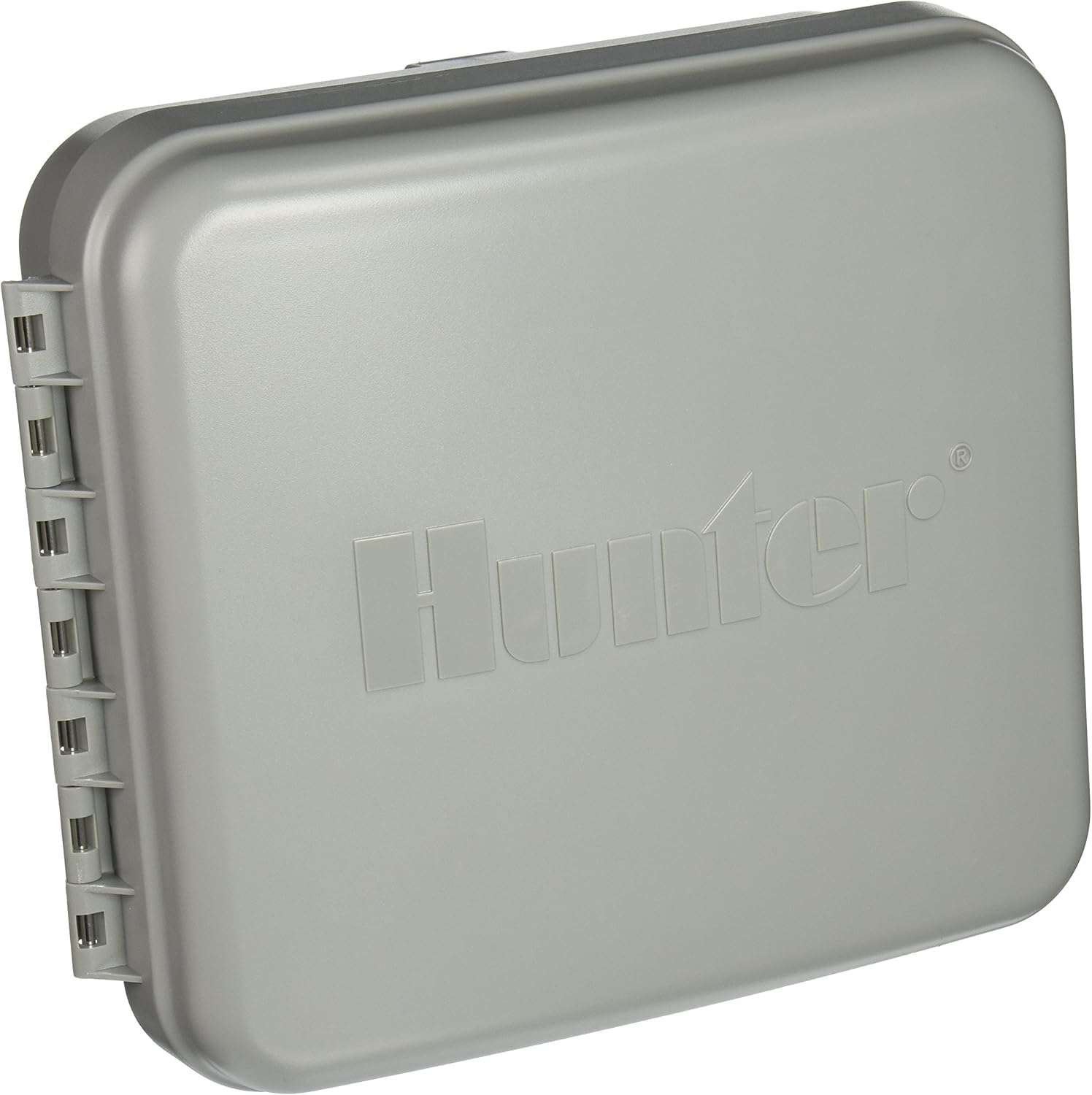
Are you trying to decide if the Hunter Sprinkler PCC600I PCC 6-Station Indoor Irrigation Controller is right for your watering setup?
Buy Hunter Sprinkler PCC600I PCC 6-Station Indoor Irrigation Controller On Amazon
Product overview
You’ll find the Hunter Sprinkler PCC600I PCC 6-Station Indoor Irrigation Controller positioned as a compact, reliable indoor controller for residential and light commercial irrigation. It’s designed to manage up to six stations and offers straightforward programming while being compatible with Hunter’s Solar Sync sensor to convert it into a weather-responsive “smart” controller.
What the PCC promises
The PCC aims to give you dependable scheduling with the option to adjust run times automatically through Solar Sync integration. You’ll get a familiar dial-and-button interface with enough flexibility for most landscaping needs without the complexity of larger commercial controllers.

Hunter Sprinkler PCC600I PCC 6-Station Indoor Irrigation Controller
Key features
You’ll appreciate the feature set that balances simplicity and useful automation. The big draw is the Solar Sync compatibility that lets the controller change run times based on local weather conditions.
6-station capacity
This controller supports up to six independent irrigation zones, which works well for smaller yards or segmented landscape areas. You’ll find that six stations often cover front yard, back yard, flower beds, small turf areas, and a few dedicated drip zones.
Indoor mounting
The PCC is intended for indoor installation, which keeps it safe from weather and direct moisture exposure. You’ll want to place it in a garage, utility room, or other protected area where it’s easy to access for programming and maintenance.
Solar Sync compatibility
When you add the Hunter Solar Sync sensor, the PCC converts to a “smart controller” that automatically adjusts run times based on measured evapotranspiration and local weather data. You’ll notice the controller cutting back or increasing run times to match current conditions, which helps reduce wasted water and prevents over- or under-watering.
Simple programming
The controller offers a user-friendly dial and buttons interface that most people can learn quickly. You’ll be able to set multiple start times, program individual station run times, and set watering days without navigating complex menus.
Specifications at a glance
You’ll want clear specs when deciding if this controller suits your site. The table below breaks down the main hardware and performance details so you can compare them quickly.
| Specification | Detail |
|---|---|
| Model | Hunter Sprinkler PCC600I PCC 6-Station Indoor Irrigation Controller |
| Station capacity | 6 stations (expandable via additional modules on some Hunter lines, but PCC is fixed) |
| Mounting | Indoor |
| Power | Standard indoor AC power (check product label for voltage) |
| Interface | Dial with push-button programming |
| Solar Sync compatibility | Yes — accepts Solar Sync sensor for weather-based adjustments |
| Start times | Multiple start times per day (exact number varies by programming options) |
| Programs | Multiple independent programs (usually A/B/C or similar) |
| Warranty | Typically Hunter’s limited warranty (check current policy) |
| Intended use | Residential and light commercial indoor installations |
| Weather response | Yes, when Solar Sync installed; adjusts run times based on local weather |
You’ll find that this concise table gives you a quick snapshot of what the controller can and can’t do. If you need precise electrical specs or warranty wording, check the product manual or Hunter’s website.
Purchase The Hunter PCC600I 6-Station Indoor Controller
Installation
You should be able to install the PCC in a short afternoon if you’re comfortable with basic wiring and mounting tasks. The indoor-only recommendation makes location choices easier, and the physical installation is straightforward.
Mounting considerations
Place the controller inside where it’s dry, protected from extreme temperatures, and easily reachable for programming. You’ll want to avoid locations prone to dripping water or very high humidity, as the unit is not rated for outdoor exposure.
Wiring basics
You’ll connect each station wire to the terminal strip marked for zones, plus common and master valve/lift station connections if needed. You’ll also connect the AC power supply following local electrical codes; if you’re not comfortable, you should hire a licensed electrician.
Time estimate and tools
Most homeowners can complete mounting and wiring in 1–2 hours with basic tools: screwdriver, wire stripper, and perhaps a drill. You’ll save time by labeling wires before you start and turning off power at the breaker while making electrical connections.
Setup and programming
You’ll find programming simple and logical. The dial-driven interface keeps things intuitive; you won’t spend long learning where to set start times or station runtimes.
Program structure
The controller typically supports multiple programs (A, B, C) and multiple start times per program, letting you create complex watering schedules if needed. You’ll be able to assign stations to a program and set run times and watering days for each program independently.
Setting run times and meters
You’ll set station run times in minutes, usually from one minute up to several hours depending on the application. The Solar Sync, when attached, will modify these run times automatically based on weather data, so initial setup focuses on baseline runtimes that the sensor will adjust from.
Seasonal adjustments
You can manually adjust seasonal settings for quick increases or decreases in total run time, and with Solar Sync the controller will automatically handle much of that for you. If you prefer manual control, you’ll still have straightforward override options for spot watering or system testing.
Solar Sync integration and smart control
You’ll see the most water-saving benefit when you pair the PCC with the Solar Sync sensor. That addition converts the controller into a weather-aware system.
How Solar Sync works with the PCC
Solar Sync measures local solar radiation and temperature to estimate plant water needs, then sends a signal to the PCC to modify station run times. You’ll notice run times scaled up or down based on daily and seasonal variations, helping you save water while keeping plants healthy.
Benefits you’ll notice
With Solar Sync, you’ll use less water during cool, cloudy, or rainy periods and increase watering during hot, sunny spells without reprogramming the controller. You’ll also appreciate that the system reduces the need for frequent manual adjustments and the guesswork of seasonal timers.
Installation and placement of the sensor
Place the Solar Sync sensor in an unobstructed location where it can accurately sense conditions representative of your irrigated areas. You’ll run a simple sensor cable back to the PCC; the sensor itself is usually mounted outdoors in a sunny spot.

Performance and reliability
You’ll want reliability from any irrigation controller and the PCC is built with Hunter’s reputation for dependable hardware. It’s a solid unit for consistent operation when installed correctly.
Daily operation
In typical residential use, the PCC runs program cycles reliably and executes start times and station durations with accuracy. You’ll rarely find skipped or missed cycles unless wiring or power issues exist.
Durability
Because it’s designed for indoor use and protected from weather, the electronics tend to have a long service life. You’ll avoid premature failures by keeping the controller dry, using a stable power supply, and preventing large voltage fluctuations.
Common failure modes
Most issues arise from wiring mistakes, tripped breakers, or sensor wiring faults if you add Solar Sync. You’ll find that simple troubleshooting frequently resolves issues without professional service.
Water-saving and environmental impact
You’ll appreciate that the Solar Sync option turns a basic controller into a water-conscious system. That capability is increasingly important in regions with water restrictions or where conservation is a priority.
How the controller reduces water use
By tempering run times based on local conditions, Solar Sync prevents over-watering during cool or rainy times and avoids under-watering in hot, dry conditions. You’ll benefit from a system that adapts rather than relying solely on preset clock-based programs.
Practical savings
You’ll see real reductions in water usage over manual-only systems, especially in regions with highly variable weather. Over a growing season, these savings can add up both in terms of utility bills and resource conservation.
User interface and daily usability
You’ll find the interface approachable for most users. The dial and buttons are a comfortable compromise between simplicity and control.
Readability and controls
The display shows essential information such as time, active program, and a simple status readout, while the dial guides you through program choices. You’ll be able to make quick adjustments without paging through nested menus.
Accessibility for non-technical users
If you’re not tech-inclined, you’ll still manage basic tasks like setting start times and run durations easily. For advanced adjustments or integration with additional accessories, you may need to consult the manual or online guides, but those steps are typically straightforward.

Compatibility and expandability
You’ll find the PCC compatible with core Hunter accessories, especially Solar Sync. It’s not a cloud-connected controller out of the box, but its compatibility list covers the essentials for weather-based control.
Third-party compatibility
The PCC is primarily designed to work with Hunter accessories. You’ll likely need Hunter’s Solar Sync to gain the full “smart” feature set; third-party sensor compatibility is limited.
Expansion limitations
This particular model is a six-station indoor controller without the modular expansion of some larger Hunter models. You’ll want to choose a different product if you anticipate needing more than six stations in the future.
Troubleshooting and common issues
You’ll encounter a few typical problems that are easy to diagnose and fix. Knowing quick checks can save you time and frustration.
No power or blank display
If the display is blank, you’ll first check the AC supply and circuit breaker. You should also confirm the internal power fuse (if present) and ensure the unit isn’t in a hard-shutdown state due to a wiring short.
Stations won’t run
If a station won’t activate, you’ll inspect wiring connections at the terminal strip and the solenoid wiring at the valve. Confirm that the master valve or pump start relay wiring is correct and that no other program or rain delay is blocking operation.
Sensor errors
If Solar Sync isn’t behaving as expected, you’ll verify sensor cable connections, mounting location, and orientation. You’ll also ensure that the sensor isn’t obstructed by nearby objects or shaded in a way that misrepresents your irrigation areas.
Maintenance and care
You’ll maintain the PCC with basic care and periodic checks to keep it in top working order. Indoor placement already reduces many environmental stressors.
Routine checks
Every few months you’ll look for loose wiring, verify backup battery function (if the unit has one), and review program settings for seasonal appropriateness. You should also test each station to confirm valves and solenoids operate correctly.
Long-term reliability tips
Keep the controller in a climate-stable location away from heavy dust, continuous vibration, or chemical exposures. You’ll get the best lifespan by avoiding power surges and using an appropriately grounded outlet.
Pros and cons
You’ll want a clear list of strengths and limitations to see how the PCC matches your needs. Below are the main pros and cons based on common user expectations.
Pros
- You’ll get simple, reliable programming for up to six zones.
- You’ll be able to convert it into a weather-responsive controller using Hunter Solar Sync.
- You’ll appreciate the indoor mounting protection for electronics and modest learning curve.
- You’ll likely find it cost-effective compared to larger, more feature-heavy controllers.
Cons
- You’ll need to add Solar Sync separately to get full weather-based automation.
- You’ll be limited to six stations with no easy expansion on this model.
- You’ll not have built-in Wi-Fi or remote cloud control as standard; it’s a local controller unless paired with other Hunter options that provide remote features.
Comparison to similar controllers
You’ll want to compare the PCC to other controllers in the market to see trade-offs between simplicity, expandability, and smart features.
Compared with basic timers
Against basic non-smart timers, you’ll gain more reliable scheduling and the option for weather-based adjustments with Solar Sync. You’ll still rely on localized hardware rather than mobile app control.
Compared with Wi-Fi smart controllers
Compared to cloud-connected controllers, the PCC is less flexible for remote programming but often more reliable for on-site automatic operation. If you prefer smartphone access and cloud alerts, a Wi-Fi model may be better, but you’ll trade complexity and potential subscription aspects.
Compared with larger Hunter controllers
Bigger Hunter models offer higher station counts and more expansion options. You’ll choose the PCC if you want an affordable, compact controller for up to six zones without excess features you won’t use.
Who should choose the PCC
You’ll benefit most from this controller if your irrigation needs match a small-to-medium-sized property and you value reliable, local control. It’s ideal if you want to add weather intelligence via Solar Sync without moving to a cloud-based system.
Ideal use cases
- You’ll have a private residence with up to six irrigation zones.
- You’ll prefer indoor mounting for protection and ease of access.
- You’ll want weather-adaptive watering using Hunter Solar Sync rather than cloud connectivity.
Who should look elsewhere
If you’ll need more than six stations, prefer remote app control, or want built-in Wi-Fi, you’ll likely be better served by larger or more advanced controllers that support remote access and higher station counts.
Frequently asked questions
You’ll likely have a few questions before buying and installing the PCC. These FAQs cover common points that new users frequently ask.
Do I need Solar Sync to use the PCC?
No, you do not need Solar Sync to use the PCC for basic scheduling. You’ll get full local scheduling capabilities out of the box, and Solar Sync is an optional add-on to enable weather-based adjustments.
Can I use the PCC outdoors?
No, the PCC is designed for indoor use only. You’ll want to mount it in a dry, protected area and avoid exposing it to direct weather or moisture.
Is the PCC expandable beyond six stations?
This model is fixed at six stations. You’ll need a different Hunter model if you anticipate needing more zones.
Does it support a master valve or pump start relay?
Yes, the PCC typically supports a master valve or pump start relay connection. You’ll wire these the same way as with other Hunter controllers; check the manual for the specific terminal layout.
What happens during a power outage?
If you experience a power outage, you’ll retain your programming but may lose the current time if the controller doesn’t have a backup battery. You should verify program integrity after power is restored and reset the clock if necessary.
Final verdict
You’ll find the Hunter Sprinkler PCC600I PCC 6-Station Indoor Irrigation Controller to be a strong choice if you need a reliable, easy-to-program indoor controller for up to six zones. It’s particularly appealing if you plan to add the Hunter Solar Sync sensor to gain weather-based automatic adjustments without moving to a cloud-dependent system.
You’ll be satisfied if your priorities are simplicity, durability, and effective water-saving capability through optional sensor integration. If you need remote control, higher station counts, or native cloud features, consider other Hunter models or Wi-Fi-enabled alternatives. Overall, this controller hits a sweet spot for many homeowners who want a dependable, cost-effective irrigation control solution.
Get The Hunter PCC 6-Station Indoor Irrigation Controller
Disclosure: As an Amazon Associate, I earn from qualifying purchases.