
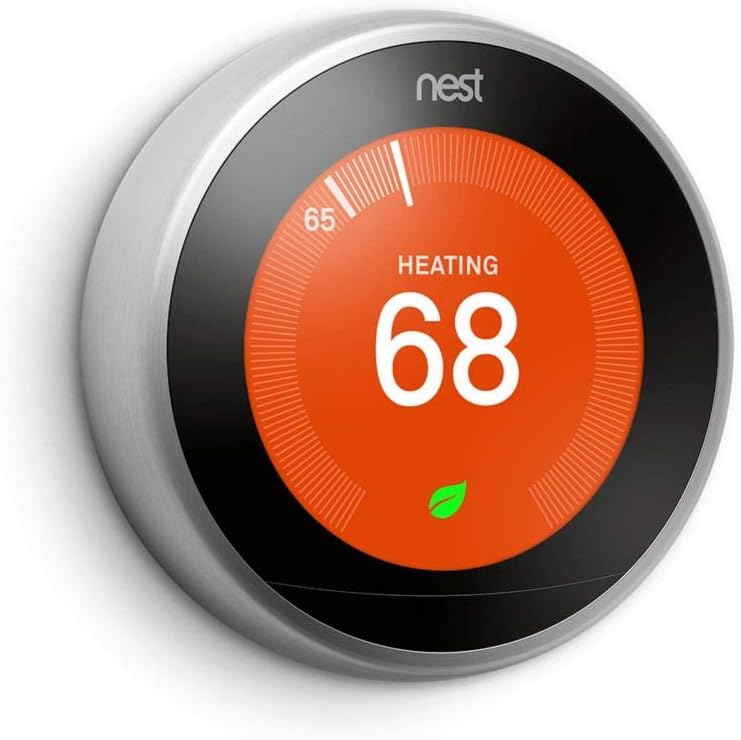
Have you been thinking about whether the Nest Learning Thermostat 3rd Generation (Professional Version -Model # T3008US) is the right choice for your next installation?

Buy Nest Learning Thermostat (3rd Gen) On Amazon
Product Overview
You’re looking at the Nest Learning Thermostat 3rd Generation (Professional Version -Model # T3008US), a pro-only variant designed for professional installers rather than direct consumer sales. This version is the same core thermostat that gained popularity for its learning algorithms and attractive design, but it’s packaged and sold for professionals to install and configure for customers. Keep in mind the product details: “This specific product is intended for Professional Installers only and not to be sold direct to consumers. Please see other consumer facing listing for more color options.”
What this model brings to the table
You’ll find that this model emphasizes professional setup flexibility and compatibility across a wide range of HVAC systems. It keeps the user-facing features homeowners love — learning schedules, Auto-Away, remote control via the Nest app, and energy history — while giving you the tools and packaging expected in pro channels. You’ll be delivering a polished product to clients that pairs smart features with a clean, professional installation.
Nest Learning Thermostat 3rd Generation (Professional Version -Model # T3008US)
Design and Build Quality
You’ll notice the Nest 3rd Generation’s circular, stainless-steel ring and high-resolution display right away. The build feels premium, with a metal exterior and a glass display that’s easy to read from several feet away.
Aesthetic and physical cues
You’ll appreciate the minimalist design that suits modern interiors without being intrusive. The ring acts as the main control — turning it adjusts temperature while pressing it confirms selections — and the display uses bright, clear graphics to show current and target temperatures plus contextual information like weather or system status.
Display and Interface
You’ll find the display larger and crisper than previous Nest models, which makes reading data from a distance simpler for homeowners. The interface combines manual ring control with app-based interaction to give you and your customers flexible options.
Farsight and on-device information
You’ll get Farsight-like behavior on some versions where the thermostat lights up to show temperature or time when it detects someone across the room. That immediate visibility makes it easier for homeowners to glance at status without walking over. When you set up the device, you can tune what the display shows and how prominent it appears.
Compatibility and System Requirements
You’ll want to assess the HVAC system before installation to ensure the thermostat will integrate smoothly. This Nest model is compatible with most 24V HVAC systems, including conventional heating and cooling, heat pumps, dual fuel systems, and even some millivolt or high-voltage setups with appropriate adapters.
Wiring and C-wire considerations
You’ll often be able to install the Nest without a dedicated C-wire, but having a common wire is recommended for more stable power, especially in systems with variable fan or complicated control boards. If a C-wire isn’t available, you can use the Nest Power Connector or recommend a professional add-on to the homeowner to prevent intermittent power issues.
Installation Experience (Professional Focus)
You’ll appreciate that this model is packaged for professionals with installation support and clear diagrams. The mounting plate and connectors are straightforward, and the thermostat was designed with installers in mind to streamline the wiring process and reduce return visits.
Step-by-step professional tips
You’ll want to verify compatibility using the Nest compatibility checker before heading to a job. During installation, turn off power at the breaker, confirm wiring labels, hook up the common wire if present, and use the device’s guided on-screen prompts when you first power it. If you’re replacing an older thermostat, take photos of wiring before disconnecting to ensure accurate reconnection.
Purchase Nest Learning Thermostat 3rd Gen — Amazon
Features and Smart Functions
You’ll find a robust set of smart features that homeowners value, which helps you justify the professional installation fee and ongoing support. The thermostat learns temperature preferences over time, creates schedules, and offers energy-saving suggestions based on actual usage.
Learning algorithm and Auto-Schedule
You’ll see that after about a week or two of manual adjustments, the Nest will start creating a schedule that reflects the homeowner’s patterns. You’ll want to advise clients that the learning process is gradual and becomes more accurate with consistent habits. Auto-Schedule reduces the need for manual programming and helps households save energy by default.
Auto-Away and sensors
You’ll rely on Auto-Away to reduce heating and cooling when the thermostat senses the home is empty, using built-in motion sensors and phone location information. You’ll want to explain to homeowners how Home/Away Assist uses both the thermostat’s sensors and the Nest app on phones to determine presence, and that they can fine-tune behaviors in the app.
App and Connectivity
You’ll use the Nest app to configure settings, and homeowners will appreciate the convenience of remote control. The thermostat uses Wi-Fi, and the app shows energy history, alerts, and quick controls for modes like Eco or Heat/Cool.
Remote management and alerts
You’ll be able to adjust schedules and temperature remotely for clients, which is useful if you manage properties or offer maintenance services. You’ll also get alerts about extreme temperatures, potential problems with the HVAC system, or low battery warnings — all of which help you act proactively.
Energy Savings and Reporting
You’ll often find that the Nest can reduce energy usage through learning behavior, Auto-Away, and smart scheduling. The app provides energy history and monthly reports that let homeowners see estimated savings and runtime breakdowns.
How savings are achieved
You’ll see savings when the thermostat avoids heating or cooling an empty home and maintains more efficient setpoints based on learned habits. You’ll explain to homeowners that results vary depending on their HVAC efficiency, insulation, and behavior, but many see measurable savings when the device is used consistently.
Performance and Reliability
You’ll want to evaluate how the Nest behaves under real-world conditions. In most installations it performs reliably, with accurate temperature sensing and solid Wi-Fi connectivity, though some older or unusually wired systems may require extra troubleshooting.
Common issues and troubleshooting
You’ll occasionally encounter issues like lack of a C-wire, incompatible multi-stage systems, or weak Wi-Fi signals. You’ll mitigate these by planning for a C-wire when necessary, using professional experience to identify wiring quirks, and recommending Wi-Fi extenders or mesh systems when clients have connectivity problems.
Professional Features and Packaging
You’ll notice differences in the professional version’s packaging and included documentation that are optimized for your workflow. The pro packaging may include installer guides and access to pro resources that aren’t in consumer retail boxes.
Why professional packaging matters
You’ll save time with clear wiring diagrams and quick-start guides targeted to your needs. You’ll also find that pro distribution channels often allow you to select products in bulk and access technical support tailored to installers.

Security and Privacy
You’ll want to communicate privacy and data practices to homeowners clearly. Nest implements encryption and secure cloud services, but you’ll also advise on account setup and login protection.
User accounts and data handling
You’ll recommend that homeowners create secure Google accounts (or link Nest accounts appropriately), use strong passwords, and enable two-factor authentication if available. You’ll remind them that remote features rely on cloud services, and that they should be cautious with shared accounts or broad access permissions.
Smart Home Integration
You’ll be glad to know that the 3rd Generation Nest integrates with major smart home ecosystems, including Google Assistant and Amazon Alexa. That makes it easy for homeowners to include thermostatic control in routines and voice commands.
Platforms and interoperability
You’ll find that the thermostat supports voice control through Google and Alexa, scheduling via assistants, and integration via API connections for more advanced setups. You’ll advise homeowners that full integration may require the latest app versions and that some features may vary by platform.
Voice Control and Automation
You’ll find voice control convenient for residents who prefer hands-free adjustments. The thermostat responds to voice commands through the connected assistant, enabling simple commands like setting a target temperature or switching modes.
Using voice alongside the app
You’ll explain that voice commands complement rather than replace manual or app controls; for more complex scheduling, the app or Nest’s on-device controls remain useful. You’ll also recommend that homeowners use voice control in conjunction with routines for efficient automation (e.g., “good night” routine that sets temperature and turns off lights).
Sensors and Additional Accessories
You’ll consider whether additional sensors or accessories are needed based on home layout. Nest’s additional sensors (sold separately in some ecosystems) can help balance temperature across rooms that differ from the thermostat’s location.
When to recommend extra sensors
You’ll suggest extra sensors if the thermostat is mounted in a hallway or a location that doesn’t represent actual living spaces, or in larger homes with uneven heating/cooling. You’ll explain that sensors can improve comfort and reduce complaints by giving a more accurate measure of occupied areas.
Maintenance and Support
You’ll want to provide homeowners with a maintenance plan that includes firmware updates, account health checks, and periodic inspections. Nest releases firmware updates that add features and security patches, and you’ll be the point person if connectivity or hardware issues arise.
Typical maintenance tasks
You’ll check Wi-Fi stability, firmware version, and battery/charging behavior during annual visits. You’ll also test integrations and verify that Auto-Away and scheduling work correctly after major firmware updates or when tenants change routines.
Pricing and Value for Money
You’ll weigh the upfront cost of the Nest and professional installation against long-term comfort and energy savings. The thermostat’s premium design and smart capabilities often justify the price for homeowners who value convenience and aesthetics.
Cost considerations for homeowners
You’ll explain that while the initial price may be higher than basic thermostats, the learning features and energy reports often produce a favorable return over months or years. You’ll also clarify your installation fees and any necessary accessories the homeowner should budget for, such as a C-wire installation or add-on sensors.
Table: Feature Breakdown and Quick Facts
You’ll find this table helpful to quickly compare key aspects of the Nest Learning Thermostat 3rd Generation (Professional Version -Model # T3008US). It’s designed for fast reference when you’re preparing an estimate or explaining features to a client.
| Category | Details |
|---|---|
| Model | Nest Learning Thermostat 3rd Generation (Professional Version -Model # T3008US) |
| Sales Channel | Professional installers only (not for direct consumer sale) |
| Compatibility | Most 24V HVAC systems, heat pumps, dual fuel systems; verify compatibility before install |
| Wiring | Supports operation without C-wire in many cases; C-wire recommended for stable power |
| Controls | Rotating metal ring, press-to-select, on-device UI, Nest app remote control |
| Connectivity | Built-in Wi-Fi for remote control, updates, and alerts |
| Smart Features | Learning schedules, Auto-Away, energy history, Home/Away Assist |
| Integrations | Google Assistant, Amazon Alexa, selected smart home platforms |
| Display | High-resolution circular display, visible from several feet away |
| Mounting | Standard wall mounting plate with screw terminals for wiring |
| Professional Notes | Pro packaging, installer-focused documentation, intended for pro channels |
| Warranty & Support | Manufacturer warranty and support via professional channels (check local terms) |
Pros and Cons
You’ll want a clear list that you can share with clients to set expectations before the installation.
Pros
- You’ll get a premium build and attractive design that appeals to homeowners.
- You’ll deliver advanced learning features that typically reduce energy use and simplify temperature control.
- You’ll have strong app-based control and integration with major voice assistants.
- You’ll benefit from professional packaging and documentation that streamline installations.
Cons
- You’ll need to ensure compatibility on more complex or older HVAC systems, which can add time and parts to a job.
- You’ll encounter occasional power issues without a C-wire, requiring additional work or accessories.
- You’ll have limited color/retail options in this pro-only SKU, so homeowners concerned with finish choices may need to purchase a consumer-facing model elsewhere.
- You’ll depend on the Nest/Google cloud for advanced features, which may concern privacy-focused clients.
Who is this product best for?
You’ll find the professional version ideal if you install thermostats for clients and want a recognized, reliable product to offer. It’s tailored for contractors, HVAC companies, and electricians who provide smart home upgrades and want to deliver a high-end user experience.
Client profiles that benefit most
You’ll recommend this thermostat for homeowners who value design, convenience, and energy savings and who are comfortable giving you management privileges during setup. You’ll also advise it to landlords or property managers who need remote control and system alerts for multi-unit monitoring.
Purchasing and Legal Note
You’ll need to follow the product’s sales restrictions: this specific product is intended for Professional Installers only and not to be sold direct to consumers. Please see other consumer facing listing for more color options. As the installer, you’ll ensure you’re compliant with distributor requirements and local sales guidelines.
How this affects procurement and resale
You’ll source this SKU through pro channels or authorized distributors and provide documentation to purchasers as needed. You’ll advise homeowners who want consumer-level packaging or more color choices to buy through retail channels instead.
Installation Checklist for Professionals
You’ll use this checklist to prepare for a smooth install and minimize callbacks.
- Turn off power to HVAC at the breaker.
- Photograph existing thermostat wiring and take notes.
- Verify system compatibility and identify whether a C-wire exists.
- Test voltage at the thermostat terminals if you suspect power issues.
- Mount the Nest securely and connect labeled wires to the device’s terminals.
- Power on, follow on-screen setup, and configure Wi-Fi and thermostat location.
- Walk through the Nest app with the homeowner, set initial preferences, and explain learning behavior.
- If necessary, schedule follow-up to add a C-wire or sensors.
You’ll follow these steps to ensure clean installations and better homeowner satisfaction.
Common Installation Scenarios and Solutions
You’ll encounter certain recurring scenarios when installing the Nest on different systems, and you’ll want ready solutions.
Replacing a mechanical thermostat
You’ll likely find straightforward wiring that maps easily to Nest terminals, but confirm that no high-voltage (120/240V) wiring is present. You’ll use an appropriate relay if dealing with line-voltage systems because the Nest is designed for low-voltage applications.
Systems without a C-wire
You’ll recommend the installer run a C-wire from the furnace control board or use a Nest Power Connector kit. You’ll explain to clients why a dedicated common is more reliable and how it prevents intermittent behavior or battery drain.
Heat pump and multi-stage systems
You’ll need to check your wiring diagram and sometimes use advanced configuration menus on the thermostat to set up stages and aux heat. You’ll test the system thoroughly after installation to ensure the compressor, reversing valve, and auxiliary heat respond correctly.
Field Notes from Installers
You’ll benefit from practical tips that save time and improve workmanship based on other installers’ experience.
Tips and tricks
You’ll save time by bringing a basic wiring kit and a C-wire adaptor to each job. You’ll use a small spirit level when mounting the thermostat to keep centering neat, and you’ll always test the HVAC controls after connecting to verify the system cycles correctly in heat and cool modes.
Troubleshooting Guide
You’ll encounter a few recurring issues in the field. Here are practical steps to resolve the most common ones.
Nest not powering on or intermittent reboots
You’ll check for a missing or weak C-wire and consider installing a Power Connector or running a proper common wire. You’ll also inspect the HVAC control board for blown fuses or power issues.
Wi-Fi connectivity problems
You’ll confirm SSID and password accuracy, check for interference, and recommend a Wi-Fi extender if the thermostat is far from the router. You’ll also ensure the router’s firmware is current and that no MAC filtering blocks the device.
Inaccurate temperature readings
You’ll verify placement — thermostats near direct sunlight, drafts, or appliances can be skewed. You’ll suggest relocating the unit if environment-driven readings persist or adding remote sensors where appropriate.
Alternatives and Comparisons
You’ll want to position the Nest against competing smart thermostats so clients can choose confidently. Popular alternatives include models from Ecobee, Honeywell, and newer Google Nest iterations.
How the Nest stacks up
You’ll find Nest emphasizes learning and minimal manual programming, while some competitors focus on multi-sensor packages and stronger out-of-the-box scheduling. You’ll recommend Nest when design, simplicity, and brand recognition carry weight; consider alternatives if remote sensors and multi-zone control are primary concerns.
Warranty, Support, and Replacement Parts
You’ll caution homeowners about warranty coverage and your role in warranty claims. The manufacturer provides warranty support, and you’ll likely assist with diagnostics and replacement through authorized channels.
How you handle warranty service
You’ll document installations and provide proof of purchase to the homeowner, which helps with manufacturer claims. You’ll also keep a small inventory of common parts or have supplier contacts to expedite replacements if failures occur.
Final Assessment and Recommendation
You’ll find the Nest Learning Thermostat 3rd Generation (Professional Version -Model # T3008US) is a strong choice when you need a reliable, attractive smart thermostat to offer homeowners. It balances aesthetic appeal and robust smart features with professional-focused packaging and support, making it a solid tool in your offering.
Who should install it and why
You’ll install this model for clients who want a premium smart thermostat that’s easy to manage and integrates well with other smart devices. You’ll recommend it especially when you can provide the right pre-install assessment, ensure wiring stability, and offer follow-through support.
Closing Notes for Professionals
You’ll succeed with this thermostat when you combine thorough pre-install checks, clear homeowner education, and follow-up support. It’s a product that often results in satisfied customers who appreciate a smart, elegant control solution for their HVAC.
Next steps
You’ll prepare by verifying inventory sources for the pro SKU, refreshing your install checklist, and training your team on common wiring scenarios. You’ll also create a short homeowner handout that explains learning behavior, C-wire importance, and how to use the Nest app to maximize satisfaction after installation.
Shop The Nest Learning Thermostat 3rd Gen (Professional) On Amazon
Disclosure: As an Amazon Associate, I earn from qualifying purchases.