
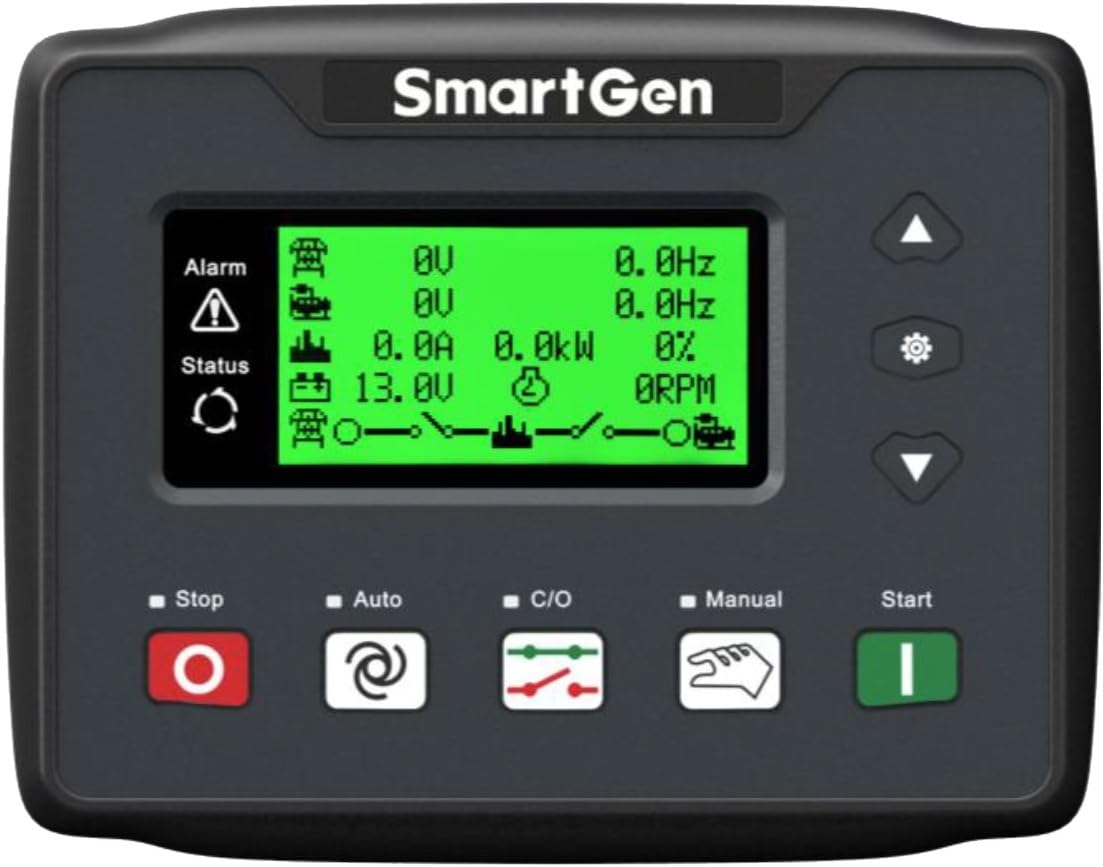
Are you trying to decide if the SMARTGEN HGM420N Automatic Start Generator Controller (AMF) is the right controller for your generator setup?
Buy SMARTGEN HGM420N Automatic Start Generator Controller On Amazon
Quick summary
You’ll find the SMARTGEN HGM420N Automatic Start Generator Controller (AMF) is positioned as a low-cost, practical AMF controller that automates start/stop behavior for a wide range of gensets. It packs basic but important protections and alarms into a compact front-panel unit so you can supervise and control a generator without complex additional equipment.

What the SMARTGEN HGM420N Automatic Start Generator Controller (AMF) is
This controller is an Automatic Mains Failure (AMF) device designed to automatically start and stop a generator when mains power fails or returns. It’s intended for 1–3 phase gasoline and diesel gensets and supports front-panel mounting so you can install it on generator control cabinets or distribution panels.
Design and build
The HGM420N features a straightforward build that focuses on functional reliability rather than premium bells and whistles. You’ll notice a simple front panel with a display, status LEDs, and a set of control buttons, all built to survive the rough conditions typical of generator rooms.
Supported generator types
You can use the HGM420N with single-phase and three-phase gensets, and it’s compatible with both gasoline and diesel engines. That flexibility means you can standardize on a single controller for a range of smaller commercial or industrial generators.
Key features
This controller covers the essentials you’ll expect from an AMF unit: automatic start/stop, mains monitoring, generator protection, alarms, and rugged behavior during engine cranking. It’s deliberately low cost, making it attractive if you want reliable automatic control without a large budget.
| Feature | What it means for you |
|---|---|
| Automatic start/stop (AMF) | Starts the generator automatically when mains utility fails and stops it when utility returns. |
| 1–3 phase support | Works with single-phase and three-phase gensets, giving you flexibility. |
| Gasoline and diesel compatibility | Supports common engine types used in portable and standby power systems. |
| Front panel mounting | Fits neatly into control panels for easy access and monitoring. |
| Survives cranking dropouts | Keeps functioning when battery voltage dips during cranking cycles, avoiding spurious faults. |
| Built-in alarms and warnings | Protects the genset and informs you of faults like over/under voltage, over/under frequency, low oil pressure, high coolant temp, and over-speed. |
| Low cost | Budget friendly for installers and owners who need essential AMF functionality. |
You’ll appreciate how the feature set is tailored for practical AMF operation rather than advanced engine management. That keeps the unit affordable while still giving you the protections and automation most projects require.
Technical specifications (practical summary)
The HGM420N’s technical specification sheet aims to cover voltage and frequency monitoring, digital inputs and outputs for start/stop and alarms, and a small local display for status and alarm messages. While exact electrical ratings and pinouts should be verified from the official manual, the typical specs align to common AMF controller expectations so you won’t be surprised during installation.
| Parameter | Typical detail |
|---|---|
| Supported phases | 1–3 phase mains monitoring |
| Engine types | Gasoline and diesel gensets |
| Mounting | Front panel cut-out mounting |
| Protection functions | Over/under voltage, over/under frequency, overcurrent (depending on CT wiring), low oil pressure, high coolant temp, overspeed |
| Display | LCD or character display with status text and menu |
| Inputs | Multiple digital inputs: start, stop, remote modes, sensors |
| Outputs | Relay outputs for start, fuel, preheat, alarm, and event signals |
| Cranking dropout handling | Designed to survive voltage dips during cranking |
If you need precise pin assignments, fuse ratings, or environmental ratings (temperature, IP class), check the official SMARTGEN manual before finalizing wiring or enclosure choices.
Purchase SMARTGEN HGM420N (AMF) On Amazon
Front panel and user interface
The front panel on the HGM420N gives you the key controls and status at a glance, making local operation and basic configuration straightforward. You’ll use the display, LEDs, and a few navigation buttons to read alarms, switch modes, and configure parameters.
Display and indicators
You’ll see a clear status display that reports engine speed, voltage, frequency, and alarm messages when present. LEDs provide instant visual cues for modes like AUTO, MANUAL, ALARM, and RUN so you don’t always need to read the screen.
Buttons and menu navigation
A compact button set allows you to navigate menus, acknowledge alarms, and command manual starts or stops. The menu is designed for practical use rather than advanced programming—you should be able to adjust essential parameters without a specialist.
Installation and mounting
You’ll mount the HGM420N in the front panel of the generator control box or electrical enclosure using the recommended cut-out dimensions. It’s intended for straightforward mechanical mounting and then wiring into the genset control circuits.
Front panel mounting steps
Cut the panel opening per the manual dimensions, insert the controller, and secure it with the supplied clips or screws; this gets the unit firmly fixed and ready for wiring. Make sure the panel area has adequate ventilation and that nothing will obstruct the display or buttons.
Wiring basics
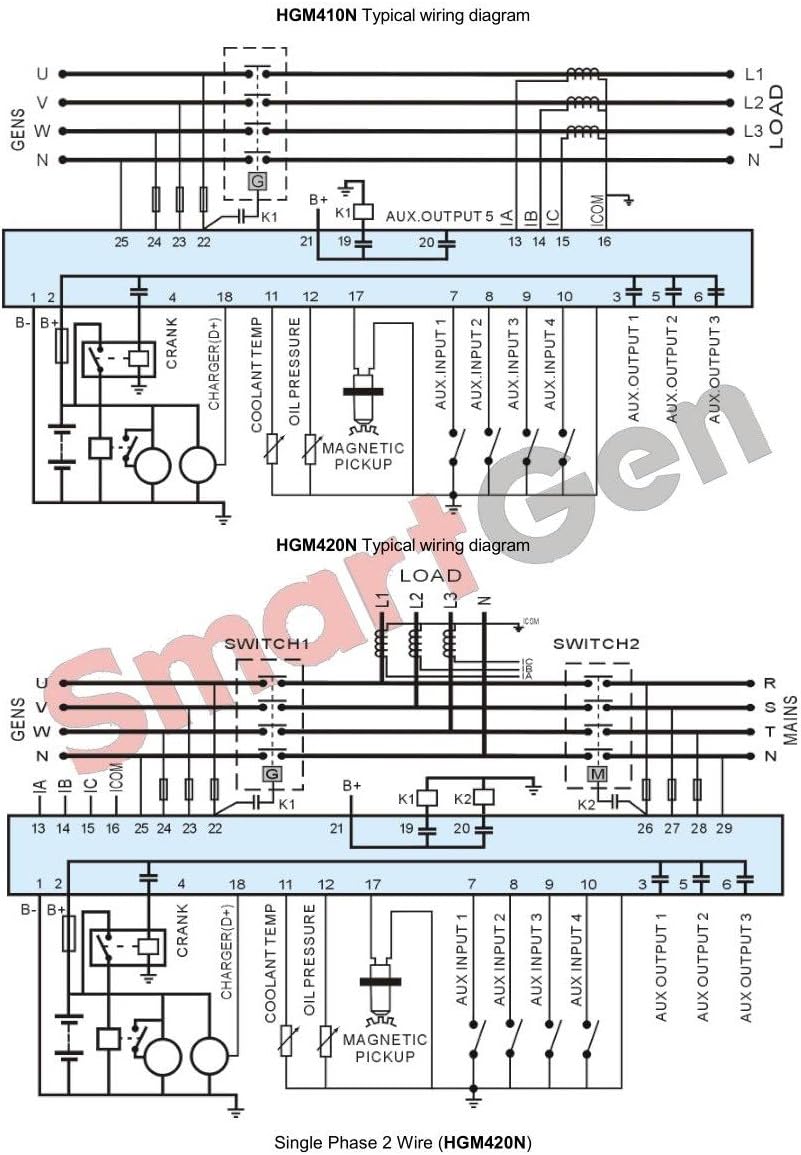
You’ll run mains sensing lines, engine start/stop wiring, alarm outputs, and necessary sensor inputs to the controller’s terminal block. Always isolate supply circuits before wiring and follow the manufacturer’s pinout and earthing recommendations to avoid incorrect connections and potential damage.
Operating modes and functions
The HGM420N typically supports AUTO, MANUAL, and TEST modes, letting you run the generator automatically, control it manually, or run diagnostics. You’ll choose the mode that matches your operating needs—AUTO for unattended standby power and MANUAL for maintenance or commissioning.
Automatic mode (AMF)
When you set the controller to AUTO, it monitors mains presence and starts the generator if mains fails, then transfers load and stops the genset once mains is stable again. You’ll be able to set time delays and conditions so the controller doesn’t respond to brief mains flickers or transient events unnecessarily.
Manual and test modes
In MANUAL mode, you can start and stop the generator on demand without the AMF logic intervening, which is useful for maintenance. TEST mode typically allows you to run the generator under controlled conditions to verify operation, exercise the set, and confirm alarm behavior.
Alarms, protections, and warnings
One of the HGM420N’s strengths is that it bundles common generator protections and alarm outputs so you can keep the engine and alternator safe. You’ll see alarms for conditions like low oil pressure, high coolant temperature, over/under voltage and frequency, and overspeed.
| Alarm/Protection | What it means | Typical action |
|---|---|---|
| Low oil pressure | Oil pressure dropped below safe threshold | Controller will alarm and usually shut down engine to protect it |
| High coolant temp | Engine coolant exceeded safe operating temperature | Alarm and possible shutdown to avoid engine damage |
| Over-voltage | Alternator voltage exceeded threshold | Alarm and lockout until condition cleared |
| Under-voltage | Voltage below acceptable level | Alarm and lockout to protect load and engine |
| Over/under frequency | Frequency outside acceptable range | Alarm and generator load transfer prevented or engine shut down |
| Overspeed | Engine speed exceeded safe rpm | Immediate shutdown to prevent mechanical damage |
| Cranking dropout | Battery voltage dips during cranking | Designed immunity so controller won’t falsely report faults during normal cranking |
You’ll want to program alarm thresholds to match your generator and application so nuisance trips are minimized while protecting the equipment when genuine faults occur.
Programming and configuration
Programming the HGM420N is done via the front-panel menu and buttons; you’ll set parameters like mains thresholds, start delays, crank durations, and retry counts. It’s a straightforward process for basic setups, though complex systems may require more careful tuning.
Typical parameters to set
You should configure: mains fail make/break thresholds and delays, engine crank duration and retry attempts, preheat time for diesel engines if applicable, warm-up and cool-down timers, and alarm trip points for temperature, oil pressure, voltage, and frequency. Properly setting these parameters ensures smooth automatic operation and reduces false alarms or unnecessary engine cycling.
Common use cases and applications
You’ll typically find the HGM420N in small commercial, light industrial, residential backup, and portable generator installations. Its low cost and basic AMF capability make it a good fit where you need reliable automatic standby operation without advanced remote monitoring or integrated PLC functions.
Typical deployment scenarios
Use the controller for standby power at small shops, remote sites, mobile units, or as a standardized control for fleets of small gensets. You’ll especially like the simplicity when you need dependable automatic start and basic protection without a large engineering overhead.
Wiring considerations and safety tips
Proper wiring is crucial. You’ll ensure correct mains sensing connections, sturdy battery and starter wiring, and reliable earthing to prevent false sensing and to keep the unit safe during faults.
Sensing and CT placement
If you use current transformers (CTs) for load or overcurrent protection, install them according to the manual and make sure their orientation is correct to avoid reversed readings. Proper CT and potential transformer wiring reduces the chance of incorrect protection actions.
Earth and protective bonding
Always ground the controller chassis and ensure protective earth connections are continuous and secure. Good bonding reduces electromagnetic interference (EMI) and prevents unexpected behavior caused by stray voltages or noise.
Commissioning checklist
Before you put the system into automatic operation, verify mechanical mounting, wiring, parameter settings, and sensor connections. You’ll also run at least one test sequence to confirm the start, load transfer, monitoring, and alarm shut-down functions behave as expected.
Steps to commission
Check panel cut-out and secure mount, verify power and battery connections, confirm mains sense lines are correct, set engine and alarm parameters, perform a manual start and shutdown, then simulate mains loss to verify AMF operation. Keep a checklist and document the settings so future troubleshooting is faster.
Troubleshooting and common issues
If the controller reports alarms or fails to start/stop as expected, systematic troubleshooting will usually identify wiring mistakes, sensor faults, or misconfigured thresholds. You’ll begin by reading alarm messages on the display, cross-checking wiring, and verifying sensor outputs with a meter.
Common problems and fixes
If the engine doesn’t crank, check battery voltage and starter relay wiring; if the controller reports false mains fail events, confirm mains sensing connections and grounding; if alarms occur during cranking, ensure the controller’s startup/idle immunity settings are configured. Nuisance trips often come from incorrect thresholds or wiring mistakes, so check these before assuming controller failure.
Maintenance and long-term care
Routine maintenance will help the HGM420N continue to perform reliably. You’ll keep connections tight, dust away from the panel, and periodically confirm that the unit still reads sensors and mains correctly.
Recommended maintenance tasks
Inspect terminal blocks and tighten loose screws, verify battery condition and charging system voltage, update settings if generator or load changes, and exercise the generator under load periodically. Keeping a maintenance log helps track changes or recurring issues.
Pros and cons
The HGM420N offers a pragmatic balance of functionality and cost, with straightforward AMF operation and essential protections. You’ll want to weigh its lack of advanced connectivity or extensive programming against its affordability and reliability for basic applications.
| Pros | Cons |
|---|---|
| Affordable for basic AMF needs | Not feature-rich compared to higher-end controllers |
| Supports 1–3 phase and gasoline/diesel engines | Limited remote monitoring options (unless paired with extras) |
| Designed to tolerate cranking dropouts | Smaller display and simpler UI than premium controllers |
| Front-panel mounting keeps it accessible | May require additional modules for generator synchronizing or advanced protections |
You’ll find this controller particularly attractive if you need simple automatic control and protection without high upfront costs.
Comparison with similar units
Compared to high-end genset controllers, the HGM420N is simpler but more cost-effective. If you need features like integrated paralleling, sophisticated data logging, or Ethernet/Modbus remote telemetry, you may prefer a more advanced SMARTGEN model or another brand.
When to choose HGM420N vs higher-end controllers
Choose the HGM420N when you want dependable automatic start/stop and essential engine protection for a single genset. Consider a more advanced controller if your project requires remote monitoring, multiple genset synchronization, or deep programmable logic.
Frequently asked questions (FAQ)
You’ll probably have some practical questions as you evaluate the HGM420N; below are common topics and concise answers to help you quickly assess fit and requirements.
Can it handle three-phase gensets?
Yes, it supports monitoring for 1–3 phase systems and will sense the mains status across phases as required. You’ll still need to wire phase sensing correctly and configure thresholds to match your system.
Is it suitable for gasoline engines as well as diesel?
Yes, the HGM420N is compatible with both gasoline and diesel gensets, which gives you flexibility if you manage different engine types. You’ll still configure engine-specific settings like preheat only if needed for diesels.
Does it include engine protections like low oil pressure and high temperature?
Yes, built-in alarms and protections are part of the unit’s core functionality so the controller can alarm and typically shut down the engine to prevent damage. You’ll need to wire the relevant sensors and configure the trip levels.
How does it behave during cranking when battery voltage drops?
The unit is designed to survive cranking dropouts so it won’t falsely register faults during the normal voltage dips that happen while the starter motor engages. You’ll still want a healthy battery and proper cranking circuit wiring.
Can you program delay timers and retry counts?
Yes, you can set delays such as preheat time, crank duration, retry attempts, warm-up and cool-down times, and mains return delays—these are standard in AMF controllers. Setting these appropriately reduces wear on the engine and avoids unnecessary cycling.
Practical tips for a smooth experience
You’ll prolong the life of the controller and the genset if you pay attention to a few practical tips: confirm clean wiring, use proper fusing, keep software/firmware updated where applicable, and test the AMF sequence periodically. These small steps will reduce downtime and avoid inconvenient surprises.
Pre-install checklist
Check the panel cut-out, ensure you have the correct tools and spare fuses, have the wiring diagram and manual on hand, and prepare the generator for testing. Preparing in advance shortens commissioning time and avoids missed steps during installation.
When to call a technician
If you encounter repeated alarms that you can’t resolve by checking wiring and settings, or if the engine behaves erratically during automatic operation, call a qualified technician. You’ll save time and prevent damage by having an expert verify sensors, engine health, and detailed wiring.
Documentation and support
Make sure you download the official SMARTGEN manual for the HGM420N and follow its wiring diagrams, parameter tables, and safety instructions. You’ll also benefit from manufacturer technical support or your vendor’s after-sales assistance if you need help configuring advanced behaviors.
Why the manual matters
The manual contains the definitive terminal assignments, parameter lists, cut-out dimensions, and safety warnings that you must follow. You’ll avoid many installation headaches by referencing the official documentation before you wire or program anything.
Final recommendations
If you want a practical, affordable AMF controller for standalone genset automatic operation with the essentials covered, the SMARTGEN HGM420N is a solid choice. You’ll find it particularly useful for small commercial, remote, or backup power projects where cost and fundamental functionality are the main drivers.
Purchase and deployment advice
Buy the controller from a reputable supplier, confirm you receive the appropriate manual and mounting hardware, and plan the installation so you verify all sensors and outputs during commissioning. If you expect to expand into synchronized multiple-generator systems or need advanced telemetry, plan on a higher-tier controller or additional modules.
Appendix: Quick reference table of common parameters and recommended ranges
You’ll want to use this quick-reference list while commissioning; treat these as starting points and adjust to match your engine and site requirements.
| Parameter | Typical default or start point | Notes |
|---|---|---|
| Mains fail voltage (under) | 180–200 V (for 230V system) | Set relative to acceptable grid range |
| Mains make voltage (return) | 210–230 V (for 230V system) | Use hysteresis to prevent oscillation |
| Crank time | 0–30 s per attempt | Keep within engine manufacturer recommendations |
| Crank retries | 1–3 attempts | Reduce retries to prevent starter wear |
| Preheat time | 0–10 s (diesel) | Only used if preheat relay wired |
| Warm-up time | 10–60 s | Allow oil & coolant to stabilize before loading |
| Cool-down time | 30–300 s | Ensures alternator cooling and stable shutdown |
| Over-voltage trip | ~10% above nominal | Protects loads and alternator |
| Under-voltage trip | ~10% below nominal | Prevents unstable load conditions |
| Over-frequency trip | +2–5% | Protects connected equipment |
| Under-frequency trip | -2–5% | Indicates engine under-speed or load issue |
These suggested values provide a reasonable starting point, but fine tuning to your engine specifics and load characteristics will yield the best long-term reliability.
If you want, I can create a wiring checklist customized to your generator model and the exact terminal layout for the SMARTGEN HGM420N, or summarize the manufacturer’s parameter list so you can copy settings into the controller during commissioning. Which would you prefer next?
Get The SMARTGEN HGM420N AMF Controller — Amazon
Disclosure: As an Amazon Associate, I earn from qualifying purchases.